
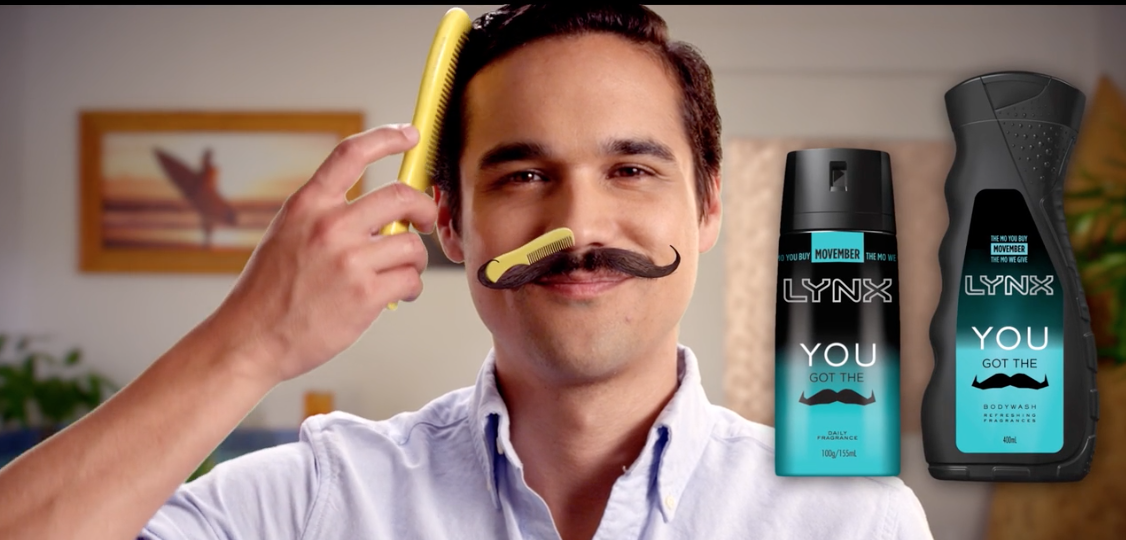
Image from our Lynx Movember Bumper project.
Can you tell a story in 6 seconds?
Bumpers – YouTube’s 6-second ads – were originally designed to be light, memorable touchpoints for mobile viewers. When YouTube first introduced bumpers, marketers responded with a healthy dose of skepticism: Is it really possible to get a message across in just 6 seconds?
But agencies and filmmakers collectively said, “Challenge accepted!” First, they needed to answer a few basic questions about the new format: Do call-to-actions still work? Is on-screen text useful? What are the best ways to show product?
New to Tongal? Learn How Tongal Works
and check out our Open Projects to get involved!
Trial and error, along with some friendly Sundance competitions, led to valuable insights and creative strategies. These experiments also dispelled a number of long-standing myths about the way people interact with digital ads. As it turns out, we can absorb a brand’s message in as little as 6-seconds, and also enjoy the experience! Brands began to embrace the new format once they realized how impactful it was – increasing awareness and reach, while also improving the user experience.
YouTube bumpers spurred innovation as well. Campbell’s Soup made headlines when they combined machine learning with the 6-second format to generate humorously relevant ads based on shows people recently watched. For example, after watching Orange is the New Black, viewers may get served a cheeky 6-second ad about prison food. Brands are also using bumpers to experiment with sequential storytelling.
What does this mean for Tongalers? To start, you may see more YouTube bumper-related Projects like this one from Lynx on our platform, so now’s a good time to brush up on your creative best practices for bumpers. We created this handy one-sheet to help you:

Here are a few things to keep in mind when making bumpers for YouTube:
Bumper ads work best when they’re designed specifically for the medium. It’s tempting to try cutting down a 30-second ad into 6-second bumpers, but reverse engineering rarely works. Bumpers require just as much pre-viz as a 30-second ad and should be treated as a separate creative assignment.
Think mobile first. A bumper’s natural habitat is mobile on YouTube. Develop shots and sequences that quickly tell the story in a mobile environment.
Simplicity is key. Distill your message down to a single idea, product feature, or punchline. There’s time to do one thing well, two things ok, three things. . . not so much.
Use well-designed shots and striking visuals to quickly establish the ad. Avoid including information that is critical to understanding your ad in the first two seconds. In those moments, the viewer is still trying to get oriented.
Think in series, rather than singles. Bumpers are incredibly versatile - they can be used to tease a new product release, amplify an existing campaign, or increase recall by echoing an ad people have already watched. Understand the brand’s goals first before making any creative decisions, then think about ways you can support their goal either through sequential storytelling or treating each bumper as a means of exploring different facets of the same message.
Can you tell a story in 6 seconds? The answer should be a resounding “Yes!” You just need to be tactical about it and understand how people interact with the format.