

We’ve all heard the romantic story of Cyrano de Bergerac, who composed gorgeously-emotive love letters to the beautiful Roxane on behalf of Christian, a total hottie who lacked the eloquence necessary to woo his lady love. And while Cyrano didn’t get the girl, he did get himself a three-book deal and a centuries-long reputation as a gifted wordsmith, willing to allow another to take credit for his words. He was, it seems, one of the world’s first ghostwriters, and he also serves as the perfect metaphor for the job.
As a ghostwriter, here’s what you don’t get: author credit. Here’s what you do get: a paycheck; often, a quite substantial one at that. So, if you’re willing to check your literary ego at the door, and write for the greater glory of whoever’s headshot will be on the book jacket, ghostwriting can be an exceedingly profitable option for you, either as a side-hustle to supplement your own creative pursuits, or as a lucrative writing career, all on its own.
For me, it’s been both. I’ve written plenty of novels for children and young adults under my own name (which, just for fun and in service of several NDA’s, I will not reveal). I’ve also produced IP projects for three of the Big Five publishing houses in NYC and a couple other publishers overseas. I’ve worked with a handful of individuals to bring their story ideas to life, as well as with film production companies, to write novels based on TV shows. So I guess you can call me Cyrano. Or better yet, Cyrano’s ghost.
How do I get my ghost on?
For unrepresented writers or those currently without publishing credits, a high-end, professional ghostwriting gig can be difficult to secure. While there’s no shortage of individuals in search of a ghostwriter to be found on writing sites and job-boards, you’d be wise to approach these opportunities with caution. Generally, these are people who have no connection to the publishing industry; they simply ‘have an idea for a book,’ which, for whatever reason, they can’t write themselves. They’re likely to be offering a very low flat-fee, or hourly or per-word rate for your services. Still interested? Okay, but just be sure to demand a formal, written contract, and run it by your own lawyer before signing. Agree on deadlines in advance. Prepare to argue, debate, and rewrite … a lot; your employer will likely have more faith in their idea than they have in your ability to execute it, so expect plenty of pushback and criticism, which will undoubtedly translate to more time and effort on your part. And after all that, it’s still anybody’s guess as to whether the book you write from this stranger’s germ of an idea will ever see the light of day.
Another option (which is essentially the reverse of answering those ‘seeking writer’ ads) would be to build yourself a website and offer your ghostwriting services to the masses. All the same caviats apply, although in this case, you’re the one establishing the ground rules. Similarly, there are several reputable ghostwriting networks and agencies to which you can apply. If you’re accepted, they’ll do the majority of the legwork for you (https://blog.reedsy.com/ghostwriting-companies/) and in return, you may have to share your fee.
The best possible scenario is to get yourself a good literary agent. These are the OG matchmakers in the publishing world. Their connections to editors at houses of all sizes and statures gives you a huge advantage. Celebrities looking to write a book, be it fiction, self-help, or memoir, will (almost) always reach out to literary agents in search of a ghostwriter. When a major publisher has an idea for a book or a series and is looking for someone to produce the material, they’ll do the same (this bring the added bonus of the book being guaranteed to be published—no rejection letters!). As long as your agent knows you’re interested in taking on IP work-for-hire opportunities (some writers aren’t), you’ll be considered the minute a project in your genre or area of expertise lands on their desk.
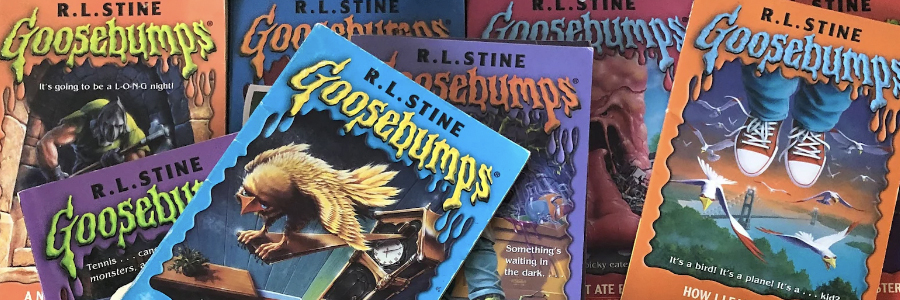
What are the specific demands of Ghostwriting?
You will likely have to ‘audition,’ for any ghostwriting project that comes your way. Even if you have a long list of titles in print, whoever is hiring you will want to see sample pages to determine whether your voice and sensibilities will mesh with their expectations for the story. This might come in the form of writing a chapter from an existing, detailed outline, or (if the book is still in the conceptual phase) they may expect you to freestyle a scene from a plotline you devise yourself.
Simply put, being a ghostwriter requires both creative sensitivity and a very thick skin. It is a very specific sort of collaboration, in which the ghostwriter must consider themself the second most important party. A good ghostwriter endeavors to deliver exactly what the author wants or envisions for the book. This is not to say that you, as the ghostwriter, shouldn’t offer suggestions, opinions, or ideas for how to approach (or not approach) the work. They are hiring you to do the heavy lifting, after all; you are ‘The Talent.’ But as a creative yourself, you know how emotionally-invested a person can be in an idea (with publishers, the attachment is probably less emotional than commercial), and it is up to you to honor their vision, while also nurturing it, enhancing it, and bringing it to life in a way both you and the author can be proud of.
Rest assured, the author or editor will not love every plot twist you improvise; they will not melt over every turn-of-phrase, or lyrical description, or line of dialogue you create. TAKE THE HIT, GHOSTWRITER. Delete it. Rethink it. Write it again, from a whole different perspective. If you truly feel what you’ve written is worth fighting for, then do so gently; present your argument, and if you can’t convince them, move on. Respect the boundaries of the ghostwriter/author relationship. It’s a complicated association but it doesn’t have to be an unholy alliance. Learn to say, ‘Good note,’ and mean it.
Why should I be a ghostwriter?
Imagine getting paid to hone your craft, while building relationships with editors that can lead to other IP gigs, and the money can be awfully good (in some cases, a percentage of royalties can be negotiated). Although anonymity is the soul of ghostwriting, you may get a grateful (albeit cryptic mention) in the acknowledgments, or at the very least, be allowed to include the work on your resume, which can be helpful in selling your own writing. But the best reason of all, is that your work will be out there, in print, entertaining and enlighenting, and you’ll know in your heart that (as Rostand in wrote in Cyrano), “All those beautiful powerful words, they were you! The voice from the shadows, that was you.”
Writers are working with the world's biggest brands on Tongal.