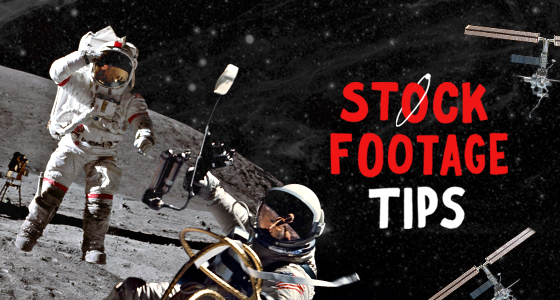
The recently-launched CineSpace Short Film Competition (check out the 2022 competition right here) challenges filmmakers to utilize existing NASA footage and images to create an original short film. This got us thinking: How can we help you make the best film possible using footage you didn’t shoot?
While many filmmakers think they have to completely build their film’s visuals from the ground up, time and budget constraints may necessitate they find alternative solutions. Enter stock footage! Learning when and how to use stock footage effectively can add another great tool to your filmmaker toolkit, and with some smart choices, stock footage can significantly add to your story and production value. Here, we explore some of the tricks editors can employ to seamlessly match stock footage with original footage.
When to Use Stock Footage
There are many occasions when using stock footage comes in handy. Some common uses include:
- Establishing Shots: An establishing shot is an extremely wide or very wide shot that typically occurs at the onset of a new scene and shows the audience where the characters are located. If you live in Small Town, USA, but your film takes place in Japan or the desert or the moon, stock footage makes it possible for your characters to appear as though they really are there without hopping on a plane (or a spaceship).
- Passage of Time: If a character in your film has a scene in one location and the next scene finds them in another place or time entirely, use stock footage to create a transition. By using time-lapse footage or speeding up your stock video, you can easily show time passing or convey day shifting into night.
- Scene Backdrop: Need your characters to be on a spaceship or a mountain top? Similar to using stock footage to establish your shot, you can also set your characters in just about any location you desire using stock video or photos, a green screen, and compositing in post.
Make Stock Footage Your Own
Now that you’ve found a clip you’d like to use in your film, it’s time to splice it in as smoothly as possible. Consider the following techniques for making the clip believable in the context of your film:
- Color Balance and Grading: If the cinematography of your original footage looks jarring next to the stock clip you’ve chosen, the fastest way to assimilate it is to color grade. Start by color balancing or adjusting the saturation of the primary colors (RBG) in your video. Next, color grade your footage to add or enhance the color of your image to reach your desired aesthetic - think of the process as sort of like adding an Instagram filter. This article gives more helpful tips for color grading.
- Sound Design: Most stock video is silent, so sound design is one way to really make the footage your own. Think about how adding sound effects or music could enhance your story or the viewer’s ability to buy into what they’re seeing.
- Add VFX or Original Footage: While you’ll often use stock footage as-is, it can also be thought of as a foundation that can be built upon. By compositing in original footage or adding visual effects, you can transform a ho-hum stock video into something special and right for your film. Need to show an alien invasion? Shoot mini flying saucers against a green screen and add them against a city backdrop! Need those aliens to shoot lasers at a skyscraper and burn it down? Add stock lasers and fire FX to your scene. You get the idea.
Notes About Licensing
No matter when or how you choose to incorporate stock footage into your original work, it’s important that you own the license to the footage and understand what that license grants you. For the CineSpace project, NASA has provided stock footage and images that you are free to use in your competition entry. For most other Tongal projects, you may use footage from our partner, VideoBlocks (we recommend using stock footage sparingly and judiciously). For Vendors other than Video Blocks, some tips:
- Don't purchase before the sponsor has approved the spot
- Don't purchase before allowing your Tongal team to look at the terms of the license you plan to purchase
- You must provide the receipt of your purchase specifying the type of license you purchased
We’re super excited to see what all our filmmakers and editors make out of the NASA footage provided in the CineSpace Short Film Competition, and we hope these tips inspire you to jump in and start creating something new!
Got any other great suggestions for playing with stock footage? Let us know your secrets down in the comments.