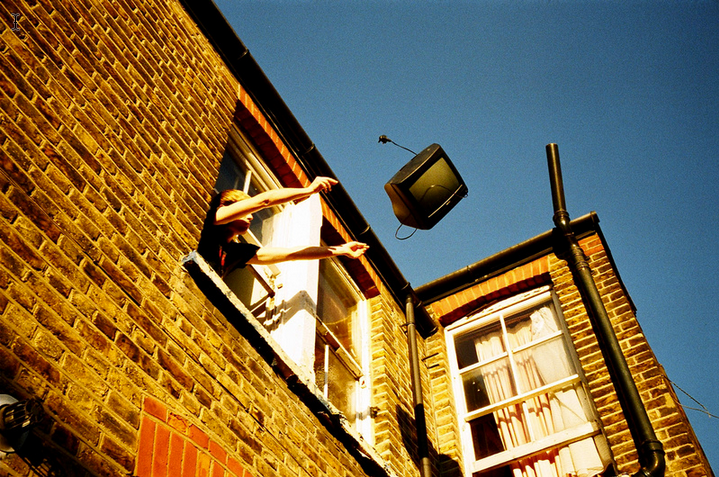
On February 19, 2015, The New York Post business section ran a story with this headline: Millennials Ditching Their TV Sets At a Record Rate
The article went on to make good on the headline: traditional TV usage has fallen at a rate of 10.6% among the 18-34 set between September 2014 and January 2015. This is on top of a steady loss-rate of 4% annually since 2012. Nielsen figures quoted indicate that an audience of 21.7 million viewers in 2011 is now only 17.8 million strong.
Ladies First? Late last year (November of 2014), AdAge reported a 13% fall among females in this age group – 17% for younger females (18-24) – during roughly the same time period (Fall 2014).
This is a market crash, right?
Sure looks like one to me. And so it appears we are now living in the midst of what can only be called an epic transition. With perhaps the exception of the NFL and The Oscars – the national / communal television experience is becoming a thing of the past. Reports that the NFL was in negotiations with Netflix for a package of Thursday Night Games have been quashed, but at this point, this feels like a stay of execution.
Nobody’s waiting – least of all Netflix. They’re projected to invest 5 Billion on content in 2016. They’re even raising $1.5BN in debt to finance it. That’s a huge bet and a major step to completely upending advertiser supported TV as we know it. Hey, they’re spending more than HBO, Amazon and Showtime did in 2014…combined. And as ESPN has just announced that they are going “over-the-top” – that is, straight to your lap – how long before the NFL follows suit? Set your iWatch…
Thus the money quote from the Post article: “If the TV as an anachronism trend holds, the implications for the media industry are huge, possibly causing a seismic shift in the $80 billion TV ad market.”
No surprise where these eyes are going – they’re going where Netflix, ESPN, and others are betting – investing – to move them. And why is it that the networks are so open to disruption? Perhaps it’s because of broadcast TV and broadcast TV advertisers unwillingness to do one simple thing: allow viewers to watch content on their own schedules.
The same is true in Hollywood. 2014 Domestic Box Office was lower than it’s been since 1995!Clearly, audiences aren’t interested in “window protection” – yes, absolutely, they’re interested in content, but not on your schedule.
This is NBC Universal’s audience research chief Alan Wurtzel – also from the NY Post story: “The change in behavior is stunning, the use of streaming and smartphones just year-on-year is double digit increases. I’ve never seen that kind of change in behavior.”
Less TV, But More Video: Wurtzel points out that the deterioration in TV viewing is happening at the same time that an up-tick of 22% in subscription viewing, via Netflix, Amazon, Hulu Plus, Vudu, iTunes and many more.
What’s A Brand To Do?
When you boil it down, there have always been only two ways content gets paid for: either a consumer pays for it, or an advertiser does. We don’t think the advertiser-paid / TV model will fade completely into the sunset. But it seems a certainty that profound change is ahead – and sooner rather than later. And with that inevitability, we’re guessing those who are planning, testing, and thinking about shaping rather than reacting to the new media environment will gain significant advantages in the immediate future.
SIX STEPS INTO THE FUTURE
Here are six steps we’re starting to see lots of brands talk about (and some even do!) in order to respond to TV’s “Skyfall”:
1. Stop Saying “Digital” when you’re talking about your marketing plans and strategy. We’re past that, right?
2. Think Holistically — ads alone won’t cut it; Youtube’s “hero, hub, hygiene" and several other models help marketers grasp the thrilling (but more complex) opportunities beyond “this year’s new spot.” The link takes you to a great case study courtesy of Brendan Gahan.
3. Find Your Tribe: The better you know the interests and passions of your crowd, the better you can serve them. Social Listening services like Networked Insights can provide a depth of insight that can guide action and reaction. They help brands know what their customers are talking about, where, and how –and also how they’re talking about the brand.
4. Think harder about that 3rd W. (Where?) Put more money and time into researching your ideal venues — and think about venues in relationship to your holistic strategy. By all means research and leverage programmatic capabilities – but use them to guide creative as well. Where you play should have everything to do with what you play, and vise versa.
5. More is More. Whatever your strategy is or becomes, a greater diversity and faster pace of output will almost assuredly be part of it. Gear up to create / sponsor / guide a lot more content. Look at platforms, partners…and look closely! And don’t be afraid to ask your tribe to help you create this content.
6. Action! Yes you have to think longer term, but you will learn more as you GO. Use the diversification of your markets and the fragmenting of audiences to increase your pace of experimentation. This is precisely the spirit that has put Netflix, Amazon and others in the driver’s seat.