
Every kid who grew up on Saturday morning cartoons in the 1990s has a commercial that never left, and for Joel McAfee that commercial was Hasbro’s Crossfire. “I have distinct memories from being a kid in the 90s and my brother & I seeing this commercial during Saturday morning cartoons and getting really excited for this game,” McAfee says. The over the top theme song has been “stuck in my head for 30 years,” so when Hasbro Games came to Tongal looking for filmmakers to remake it, he didn’t need much convincing.
The ask was an open bid for two :30 live-action recreations of Hasbro’s 1990s Crossfire and Operation commercials, reshot as vertical videos for Instagram Reels and aimed at parents who remember the originals. Hasbro called fidelity to the original spot “the core creative mandate” and warned that “You can’t simply center-cut the original 4x3 spots” for a vertical screen. McAfee’s team took on Crossfire.
McAfee credits the ad’s staying power to the way kids’ programming was packaged, since “you had a dedicated block of kids programming and so marketers could really lean into what they thought kids would enjoy.” They ran with it by “making a whole imaginary post-apocalyptic world out of a simple game.” His study of the ad began when Hasbro’s remastered theme arrived. “The first thing we received was the re-master of the crossfire theme song and it was without the opening voiceover so you could really hear that iconic organ opening,” he says, a melody he admits he had to look up and learned is “Toccata in D Minor.” He’s still amused by the mismatch. “It’s funny b/c it’s such a familiar halloween melody yet I don’t recall it being in there.”
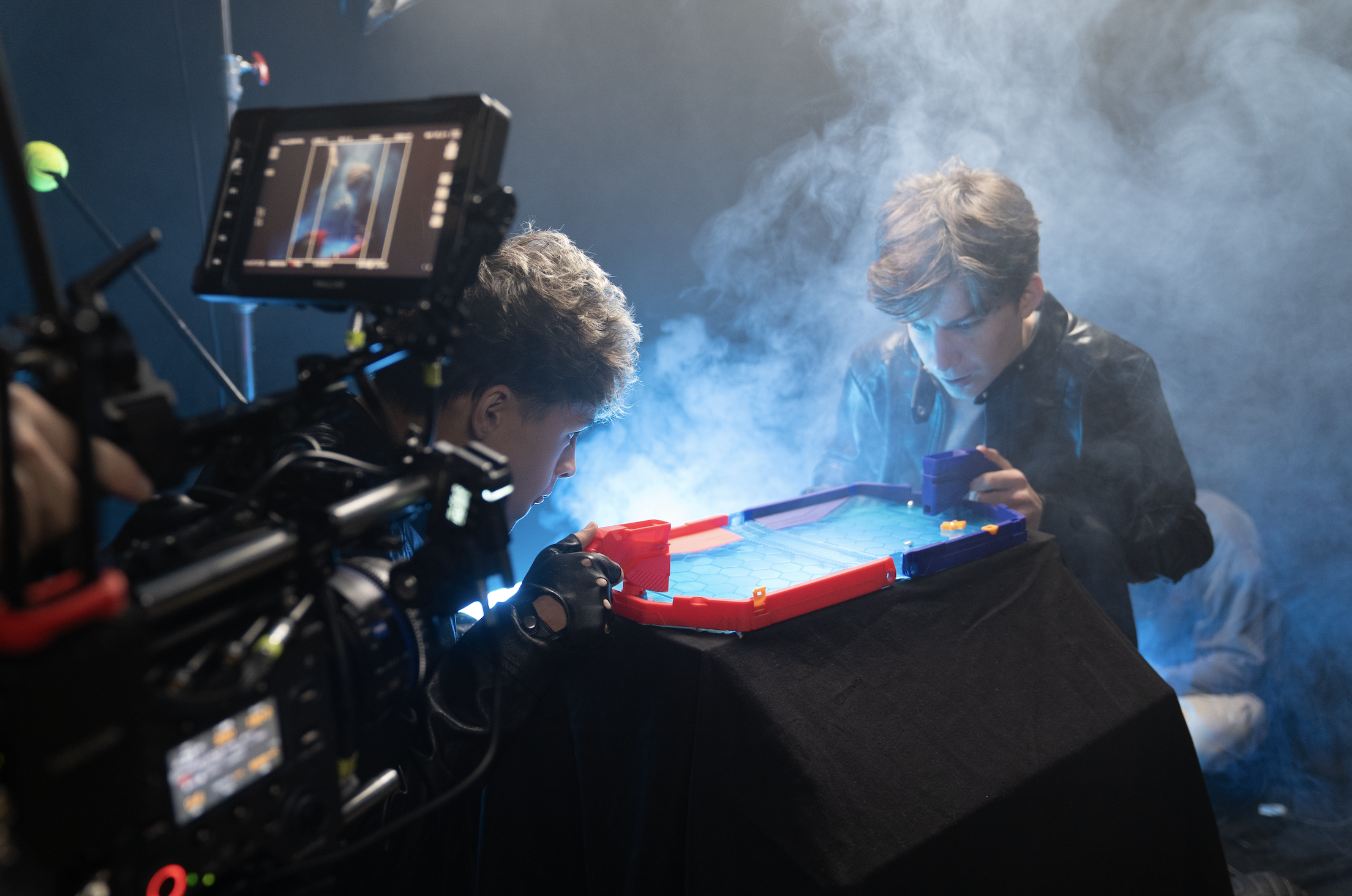
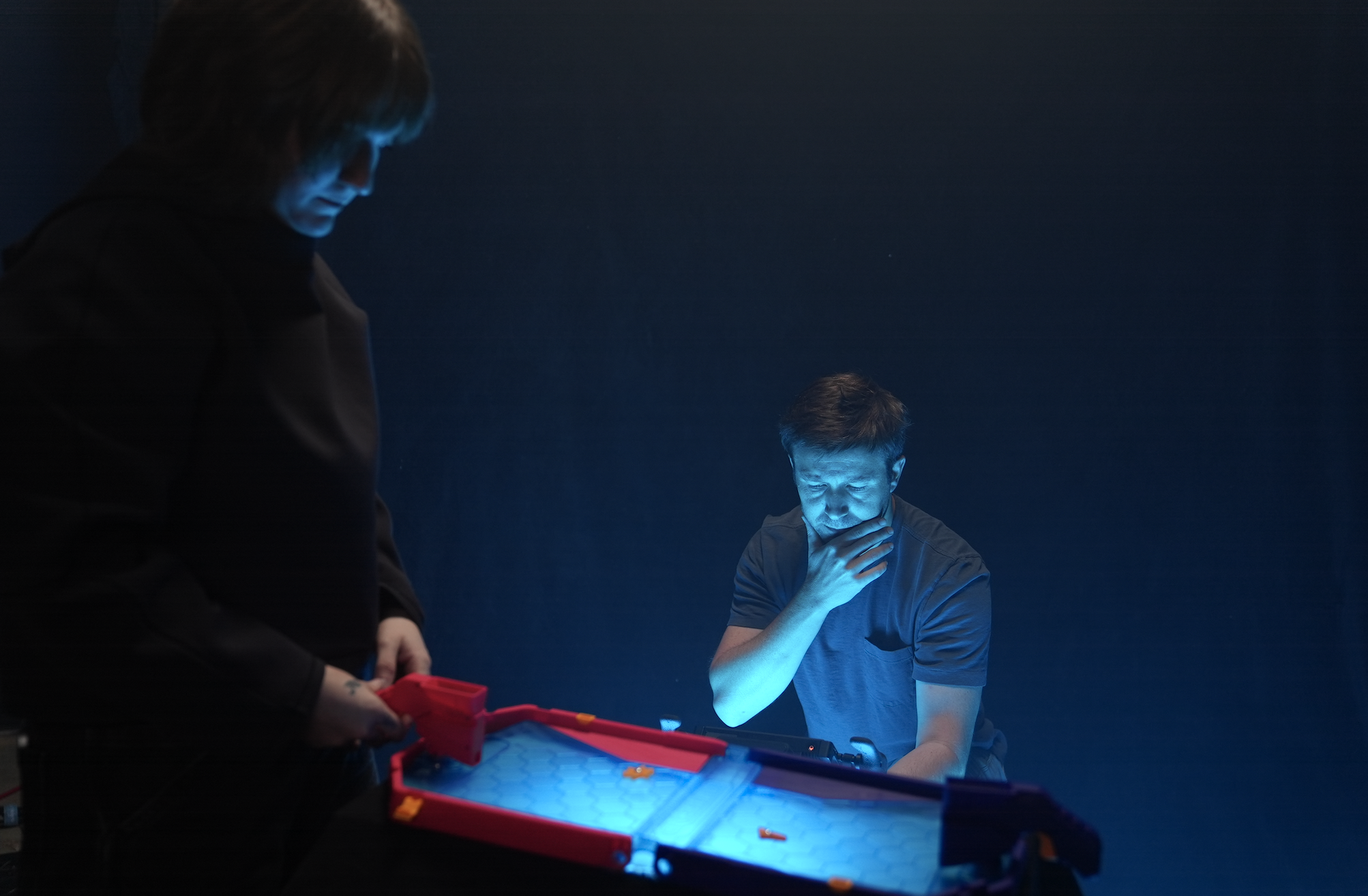
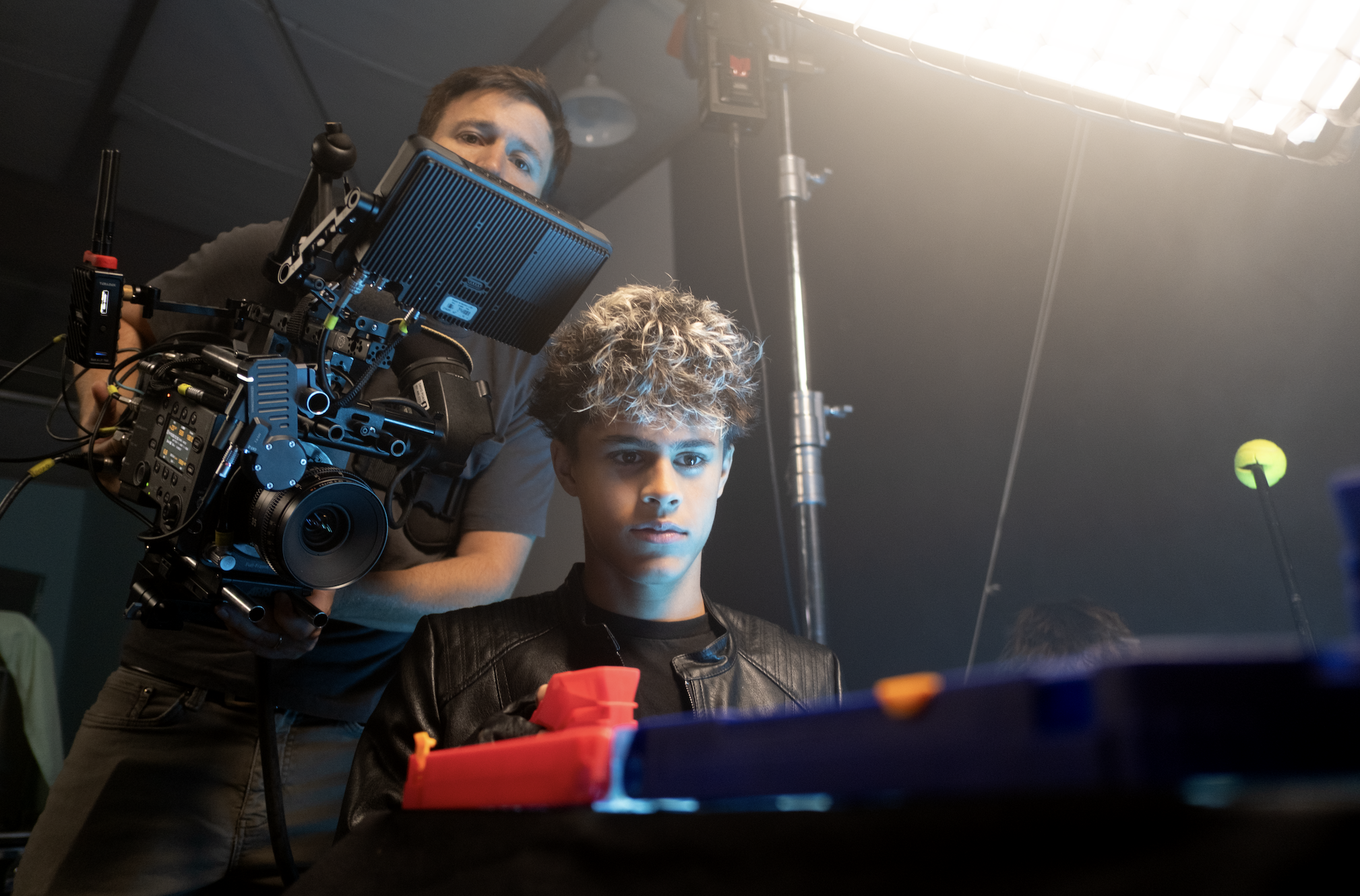
Hasbro’s mandate shaped every choice on set. “With the original directive being pretty clear that Hasbro wanted a shot for shot re-make, while reframing for vertical, we put a lot of effort into mimicking the original ad,” McAfee explains. The crew matched the outfits, composition, lighting, and direction as closely as they could, but the new game board forced a creative detour, because “the board was a see through blue rather than the vibrant orange of the original. It also folds up!” The team planned a light source underneath it and cracked the problem on set. “We had our set carpenter build a little light box the exact size of the board and we hid it with black cloth and threw a little LED tube light underneath and it was perfect.” The glow gave the board “a distinct look from the original.”
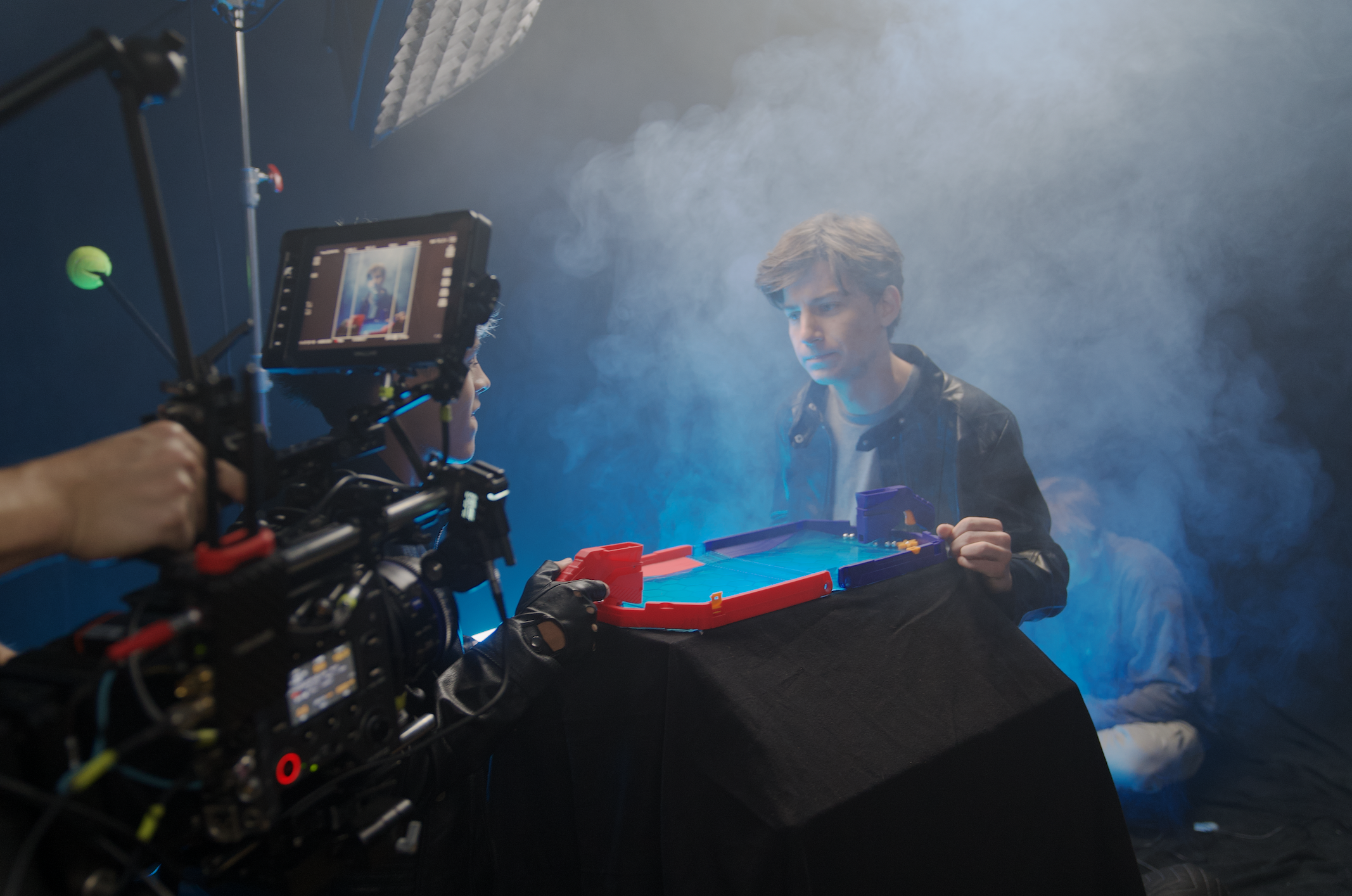
Vertical framing brought its own challenges. “One of the big challenges when shooting a horizontal game board vertically, you have to get creative with how to fill a frame without going too ‘TALL’ (it’s hard to break the habit of saying ‘wide’),” McAfee says. The visual recipe for the 90s look was simpler to state than to execute. “Haze, haze, and more haze!” he says, and he clearly enjoyed the detective work. “Honestly it was quite a bit of fun to challenge our team to analyze a low res commercial from the 90s and figure out what lenses and angles they used.” Cinematographer David Poag solved the board’s point-of-view shots with a rig McAfee describes in loving detail. “Our DP David Poag had us rig up a Dana Dolly under-slung on a crazy overhead rail system with his Sony Venice so nothing was in the way of the shot and the lens could be right down on the board. I think it ended up working out pretty well.” The team also “intentionally tried to keep many of the visual effects as cheesy as the original,” and the fisheye shots of kids playing at board height were “trickier than we thought they would be.” After studying the spot, both the cinematographer and the director suspected the original crew had built an oversized board for those moments.
Sound took plenty of work too. “When we started, Hasbro had already re-mastered the song so they had that ready to go - but it didn’t have that iconic voiceover and we had to source entirely new sound effects, which was a bit tedious,” McAfee says. When he directed the new voice talent, he kept a theory in mind. “Our memory of the original spot might be more exaggerated than it actually was in real life,” so he asked for a read that “turned it up a notch.” Plenty of the crew had history with the game, including McAfee and his brother, the director, the cinematographer, and a good chunk of the kids’ parents.
McAfee credits cable TV and the Saturday morning block for the “pure zaniness” of those spots, and he thinks our nostalgia grows from missing a time when there was “always some brand new and exciting toy, game, cartoon, or movie.” He points to Cobra Kai as proof that filmmakers can do more than copy the past. “You don’t have to settle for re-making a thing - you can reimagine it and bring about something entirely new.” His verdict on the ads themselves is a big one. “If all ads today were as original and fun as the toy commercials from the 90s, the world would be a better place.”
For McAfee, the project carried real emotional weight. He can’t express “how excited my 6 year old self would have been to know that one day he would get to be a part of re-making that iconic Crossfire ad,” and he says the whole crew shared his enthusiasm. “Likewise, our whole team was pumped to be a part and took this challenge seriously. Some of the most fun you can have on set is when you know your team is using their talents to the fullest.” Tongal gave them a chance to take on a project they’d never have had access to otherwise, and the result is a love letter to a commercial that has outlasted the game it sold.