
As part of our creative partnership with CinemaHow, the internet's home of breaking down film, the talent behind the hit Instagram channel is sharing extended analysis of some of cinema's greatest works with our Tongal community. Check out the breakdown of The Godfather Part II and Chinatown by CinemaHow co-founder Jamie Wrench here, elaborating on our recent collaborative reels diving into the cinematography of these stone-cold classics — both released in 1974. What a year for movies that was.
The Godfather Part II (1974)
Rarely in film can a case be made for a sequel being better than the original, but the debate between The Godfather Part I and II has been hotly contested now for over half a century. Part of what makes both films so excellent is the subtle visual storytelling on display from director Francis Ford Coppola and cinematographer Gordon Willis, elevating both films into true cinematic masterpieces.
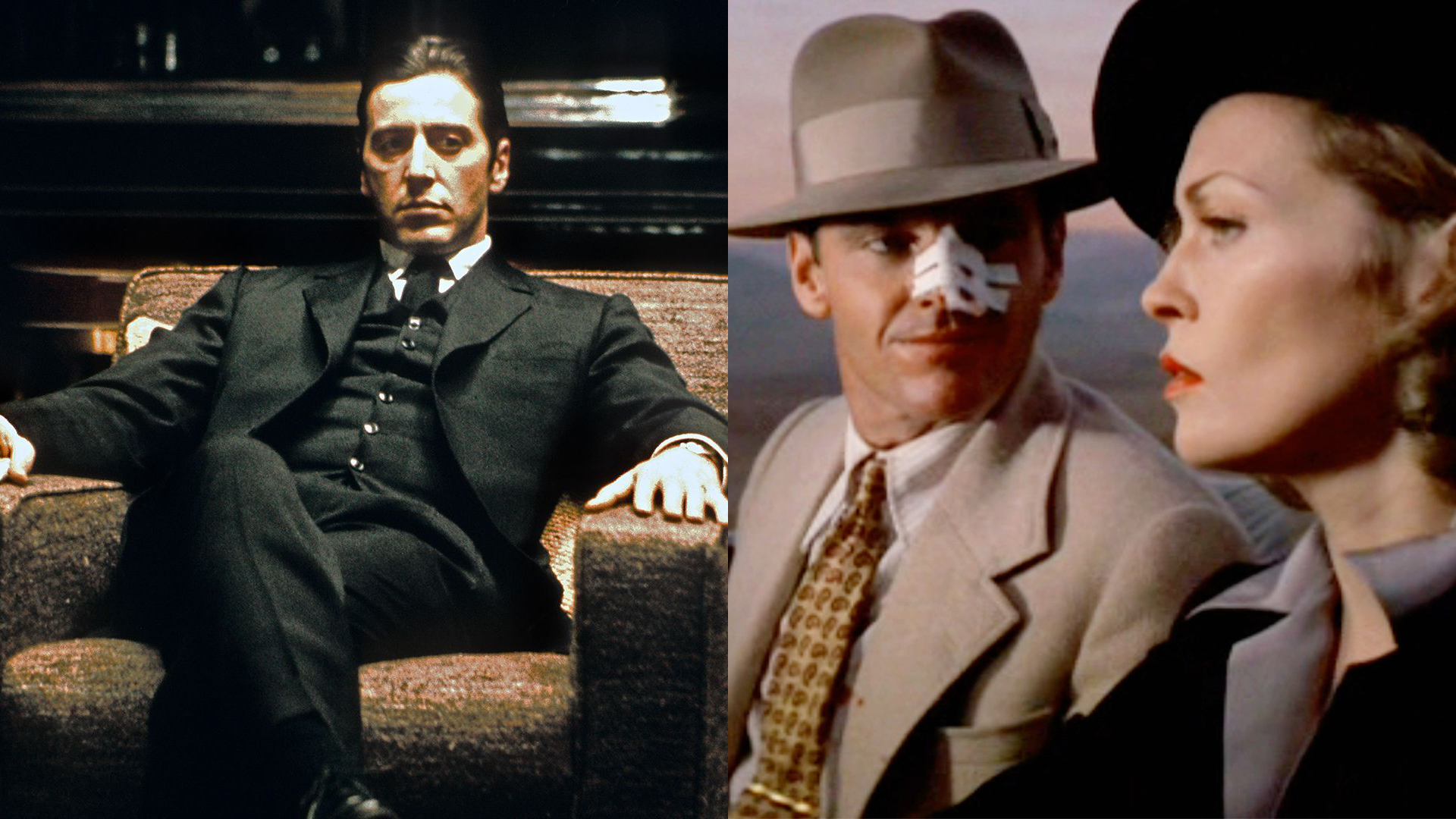
Whilst Part I follows Michael’s journey from initial innocence, to finally leading the Corleone family, Part II opens with an immediate expression of his authority. This particular sequence arrives in the opening minutes of the film, with Michael rejecting the attempted extortion threatened by his state senator Pat Geary. Whilst Michael himself remains relatively stationary throughout the interaction, it’s Geary’s thoughts and motivations that are reflected through the careful blocking and staging of Coppola and Willis.
Geary and Michael begin the scene framed in near-identical medium shots, creating a tense visual stalemate, but it’s the senator’s attempted, and failed, grasp for the power that cements Corleone as the victor of the interaction, shown through the careful positioning of the character within the fame. Through this early sequence, Coppola immediately establishes the Michael of Part II as cold-blooded and ruthless, whilst also drawing a parallel to the opening of the first film, presenting him in a similar manner to the infamous introduction of Vito Corleone in Part I.
However, although Michael and Vito appear visually very similar, Pacino’s character is at conflict, whilst Vito’s interactions portray him as caring beneath his hard shell, subtly indicating their contrasting character arcs across the two films. Vito quietly passes away whilst playing with his grandson at the end of Part I, whilst Michael concludes Part II with the assassination of his own brother and the abandonment of his wife and children, two juxtaposing fates, set up by their introductions as the “Don”.
It’s details like this, lying beneath the surface of quieter sequences, that, for me, cement The Godfather Part I and II as the iconic works of film that they are. Coppola’s ability to create such a symbiotic relationship between the two films, whilst at the same time presenting an entirely fresh narrative in the sequel, is something that we almost never see replicated to the same degree in modern cinema, and this opening sequence in particular precisely underlines this achievement.
Amidst a very competitive field, The Godfather Part II dominated the 1975 Oscars ceremony, winning six awards including Best Picture and Best Director.
Chinatown (1974)
After taking a closer look at this sequence, It’s no surprise that Chinatown (1974) earned an impressive 11 Oscar nominations, including a well-deserved award for its genius original screenplay. Jack Nicholson’s J.J Gittes enters the exchange anticipating an intimidating force in Noah Cross (John Huston), but is instead met with a man who, on the surface, appears bumbling and careless. Without the subtle visual storytelling offered within the scene, that’s all we’d assume of the film’s antagonist, but Polanski, along with cinematographer John A. Alonzo utilize careful blocking and framing to reflect the power that he truly holds.
My personal favorite detail is how, although we begin the exchange in a balanced two-shot, the composition shifts in favor of Cross after he demands Gittes to sit back down, increasing his presence in-frame in accordance with his increasingly imposing nature. The seamless nature of this transition makes the moment easily missable upon an initial viewing, creating a layer of subtlety that perfectly reflects the true terror of Cross.
Though only making fleeting appearances throughout the rest of the film following this exchange, his presence casts a shadow throughout the narrative, with his horrific actions continually uncovered by Gittes as the detective delves deeper into the plot’s complex maze of deceit. By the end of the film, Cross’ authority and control ultimately leaves Gittes hopeless and defeated, bookending a power dynamic established by their first interaction.
Alonzo’s visual approach to Chinatown was to reject the typical glamorous Hollywood aesthetic in favor of stark realism, offering a quiet approach to his visual storytelling. This simplistic style is clearly reflected in this sequence, with the cinematographer stripping away the complexities of camerawork to create one of the most chilling, calculated introductions to a villain ever put to the big screen.
Filmmakers are working with the world's biggest brands on Tongal.