“I think all directors should be animators first.” - Steven Spielberg
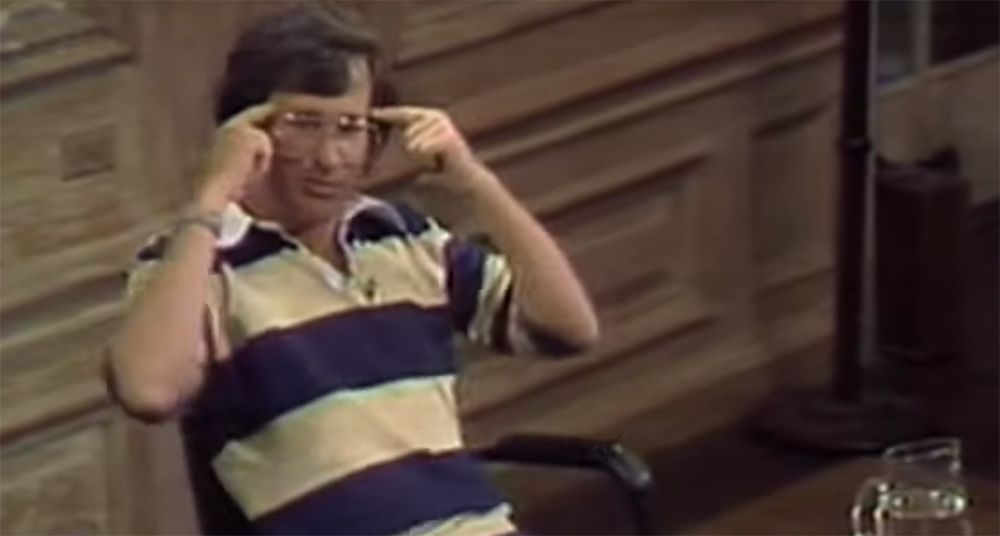
During a seminar at the AFI Conservatory, the highest-grossing film director in history admitted to being in awe of Disney animators because they need to know what they want before shooting starts. It was recorded in 1978 when Spielberg had only a few feature films under his belt, so was he on to something? Could thinking like an animator make you a more successful live-action director?
Every second of animation takes a long time to produce so there’s no room in the budget for unnecessary action or dialogue. All of the experimentation and improvisation is done during story development and, for the most part, the story, scenes and shots are locked before production begins. Essentially, the editing process happens during pre-production where teams of story artists develop the script into the finished product using storyboards. The storyboards are then edited into a sequence to create an animatic which is a finished version of the film with basic visuals, sound and music. The animatic is honed until it’s working. An animation director knows exactly what they are making and why they are making it when production begins and their main job is to keep consistency during the shoot, which can often take years.
In contrast, the live-action director can begin production with just a script and has the freedom to try out shots and dialogue during the shoot, bringing the story together in the edit. But is this really best practice? If the greatest thing you can do as a live-action director is give time to your actors then shouldn’t you do all you can to provide that time?
By arriving on set completely prepared, knowing exactly what you want from the crew and having a clear vision for the film, you will buy yourself that time. If you know your characters and their motivations at every moment then you can help your actors focus on giving the best performance, provide your cinematographer with clear staging and show your production designer why you want that particular shade of blue on the walls. The myriad of questions you are given every day will be easy to answer because you have already decided the reasons for your choices. And by sharing those reasons you are sharing your vision with your crew. They are all super talented people who, if pointed in the right direction, can offer incredible ideas and improve on your vision to make something truly special.
So, how can you be THAT prepared? It’s simple. Storyboards.
WAIT! Before you stop reading because you think you can’t draw, hear me out. You are already a visual person or you wouldn’t be interested in directing. You read a script and you see it in your head. All you need to do is compose a quick stick-man sketch of what you see. Think about the three planes, fore-ground, mid-ground and back-ground, and where your characters are positioned in the shot. You can work out your eye lines during this process, think about set dressing to enhance the story, plan camera moves and see how your shot choices are cutting together. These storyboards don’t have to be shared with your entire crew, although I would always recommend going over them with your cinematographer and editor before starting to shoot. Your messy, badly drawn scribbles are your blueprint for the masterpiece you see in your head. The process of putting your shot ideas down on paper will better prepare you than re-reading the script for the hundredth time. You’ve committed to a vision, you’ve thought about who your characters are and why they are behaving that way, and, you know exactly what you want to see through that lens.
Later in Spielberg’s interview he talks about storyboarding his own shots then working with a storyboard artist who makes them more readable. His own boards do communicate fairly well which goes to show that it’s not always necessary to have a storyboard artist. The process of drawing out a scene yourself can help you work through it and make it stronger, so you’re able to communicate as effectively as possible to your audience.
Poltergeist, Writer and Producer (and maybe Director?) Steven Spielberg
There are live-action directors who storyboard entire films themselves. Director Bong Joon-ho draws all his own storyboards and is currently planning to release his boards for Parasite as a graphic novel. His drawings are sketchy but very clear and you can see how he used a photograph of a chosen location and drew characters on top. This is a great way to make use of all those shots you took while doing reconnaissance!
Parasite, Director Bong Joon-ho
Ridley Scott is a director who began as an artist. He studied at the prestigious Royal College Of Art in London and is able to draw excellent storyboards, but it’s not always necessary to have fully rendered beautiful drawings. The most important thing is to make your storyboards readable… even if that is only to yourself.
Blade Runner, Director Ridley Scott
Rian Johnson is a live-action director who dabbled in animation when he first started out and now boards his own films. His drawing ability is minimal but his sketches clearly show his intentions and result in wonderfully cinematic images.
Knives Out, Director Rian Johnson
Storyboards are not just tools for communication, they are a place for a director to begin. The blank page is a daunting thing and overcoming it is a useful first step in preparing yourself. You make your initial decisions about the story and what you are trying to say in sketch form, thinking not only about what would make a good shot choice but why that choice is necessary and how it drives forward the story. This is Martin Scorsese’s approach as he uses storyboards to give himself the means to begin thinking about the film and not just the script. Again, his drawing ability is limited but effective.
Taxi Driver, Director Martin Scorsese
So, if you’ve never used storyboards before, try them on your next project (Ed Note: Grab the Tongal Storyboard Template here). Think like an animator and have your film finished on paper before you start. It’ll make you feel prepared and give you much more time on set for experimentation as you know the shots in the can will already work. It’ll also give you the opportunity to discover things that won’t work for your story before you even put foot on set. You don’t need to be good at drawing, you just have to know what you want to see.
---
Note From Tongal: “Why Live-Action Directors Should Think Like An Animator" is part of a series of Tongal Community-written blog posts that were originally sourced in the Tongal Blog Open Call Project. The views and opinions expressed in this article are those of the author(s) and do not necessarily reflect the official policy or position of Tongal. Read more Tongal Community-written posts here and then Pitch us a topic you'd like to write about for the Tongal Blog!


Ooh, an intriguing bit of trivia indeed!