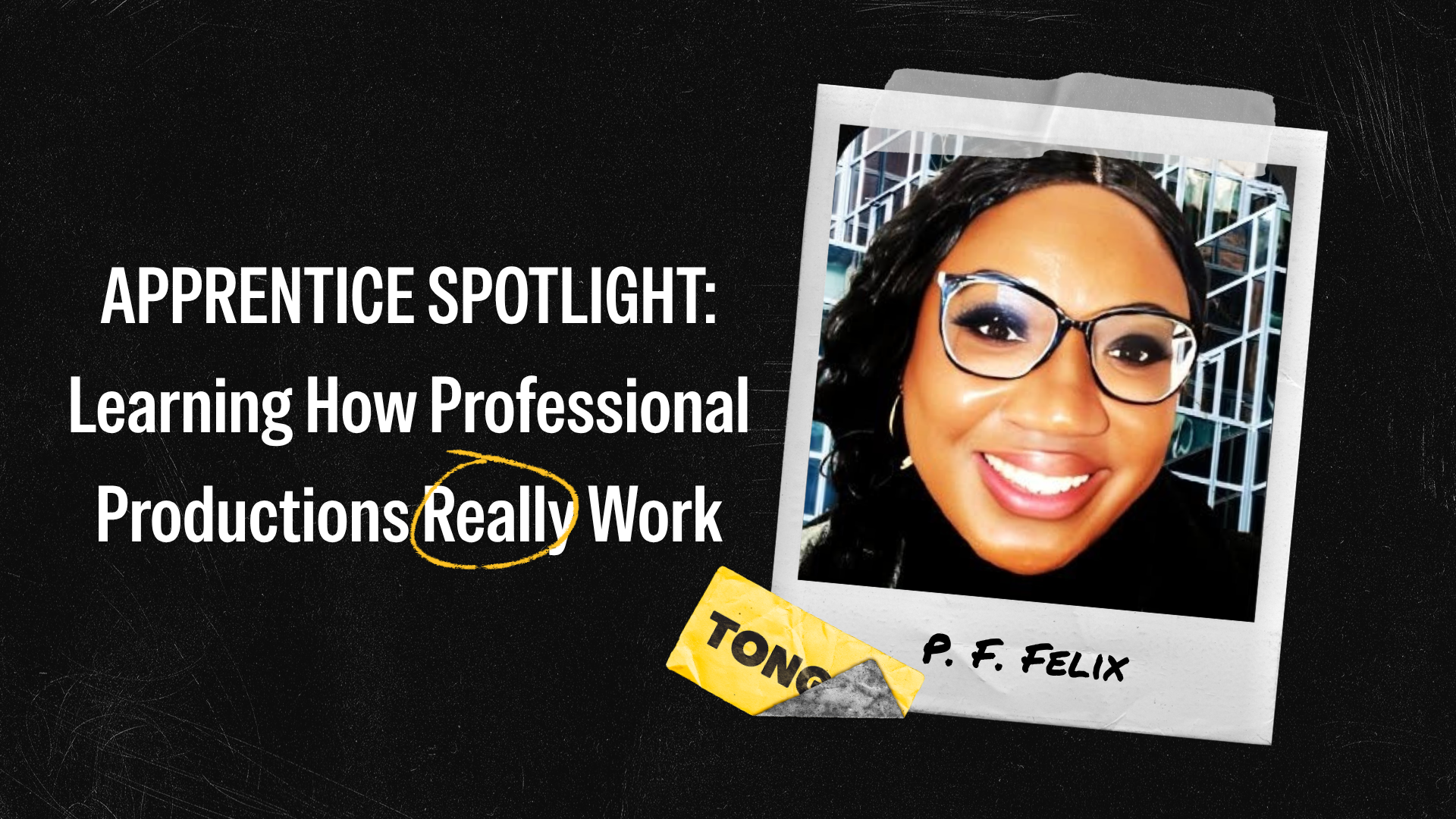

Recently I attended Tongal Talk given by Animation Director and Storyboard Artist Brandon Williams. His work is dynamic, blending color with motion in a way that defines each piece he worked on with its own life. What most struck me during the talk was his advice on character development and the choice of mediums. “Remember that your choice of medium affects how you portray your characters.” And that sentiment I could not agree more with. The way that I would be able to portray a character in a show would differ vastly from that of a book or comic. Allow me to explain:
Every Pride Month, somebody asks me how to write queer characters. I love the question. Truly. To be frank, mostly because I remember asking it to myself. As a queer individual, writing characters in way that felt natural often collided with the way that society often viewed me and other queer individuals. After spending years with Alice Oseman, Wendy Lian Martin, Casey McQuiston, Blake R. Wolfe, TJ Klune and more graphic novels than I care to admit, I’ve arrived at a conclusion that I found shockingly simple. Writing queer characters depends less on their queerness and more on the language of the medium itself. Allow me to elaborate:
Film and television speak one language. Comics and graphic novels speak another. Books speak another still. In every person lives ancient lexicon woven into the very fiber of what it means to be human, Romance. Over time I have slowly learned to understand the language presented by a particular medium.
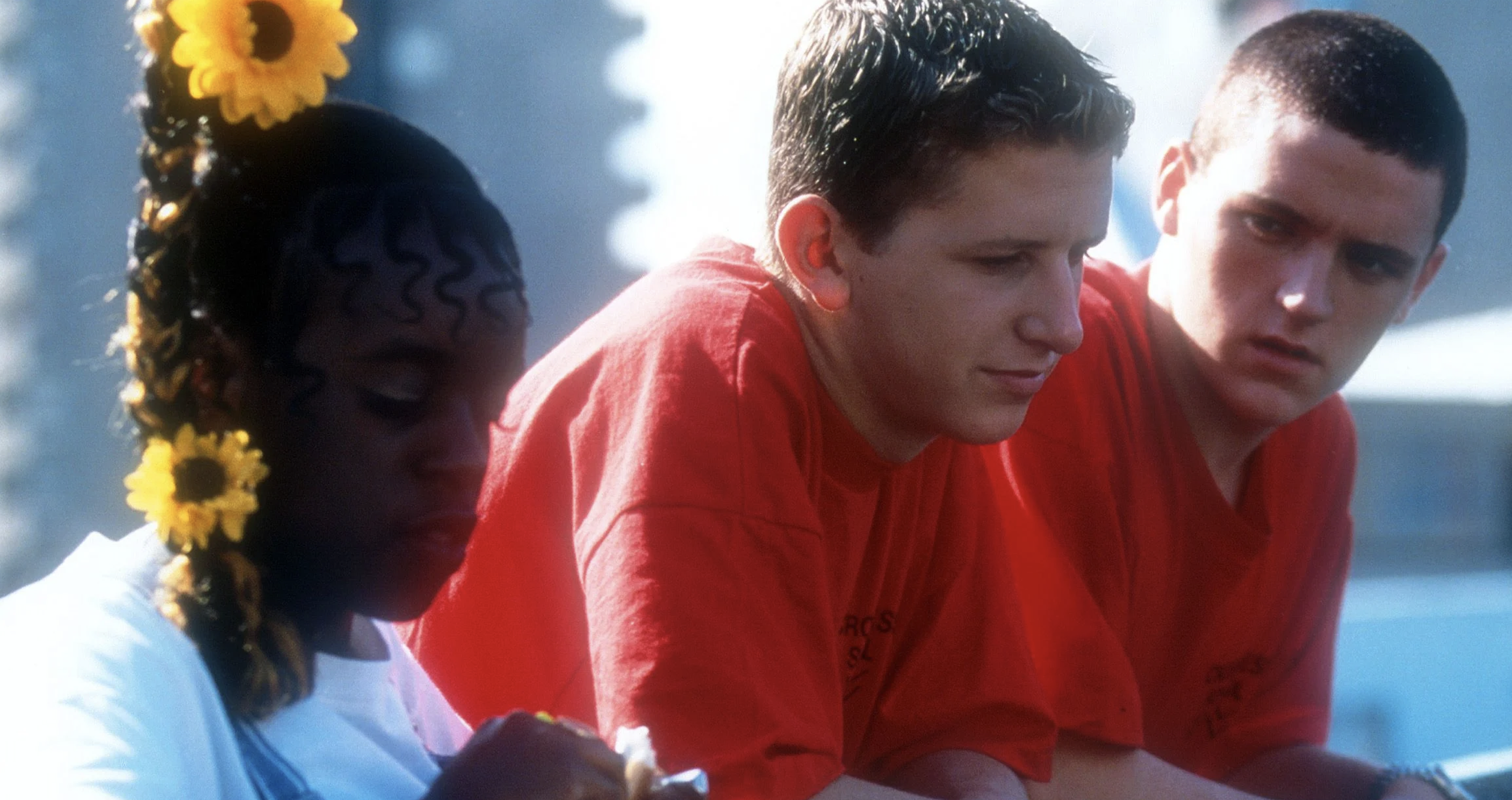
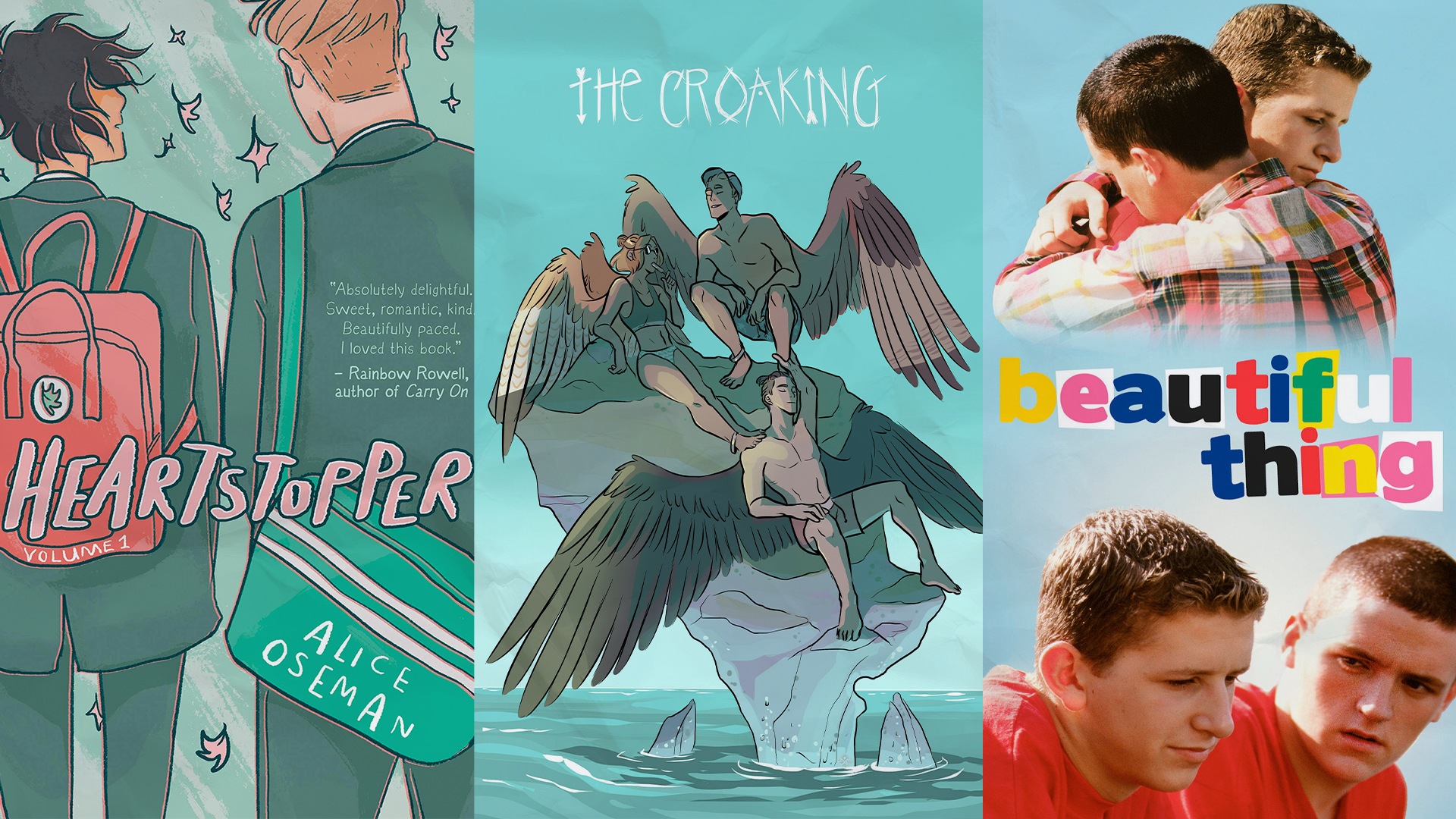
Beautiful Thing (1996) Dir. Hettie Macdonald
Hettie MacDonald and Jonathan Harvey probably taught me first. Witnessing Beautiful Thing for the first time was refreshing to watch protagonists Jamie and Ste given moments of respite to lean on one another as emotional scaffolding as two young adults in a world that would rather see them grow within the mold of conformity. All while filmed over a poignant soundtrack. The director and screenwriter set out to ensure that every character in the film is seen as any other person while still giving space for the deeper emotions that evolve when confronting class and conformity head on for necessary self-preservation. Film allows an audience to have a near omniscient view of a fated tale. The audience is aware the film will eventually end. It’s the journey, the trials, tricks, and triumphs protagonists live through that keeps audiences in their seats, not the prospect that in a few short hours their lives will continue as normal. Hettie MacDonald gave motion to the words (and a new life to youthful memories) of Jonathan Harvey whom stitched together from the depths of his mind, emotion, and I dare say his soul to quilt an ageless tale that continues to be a torch for many queer folks today.
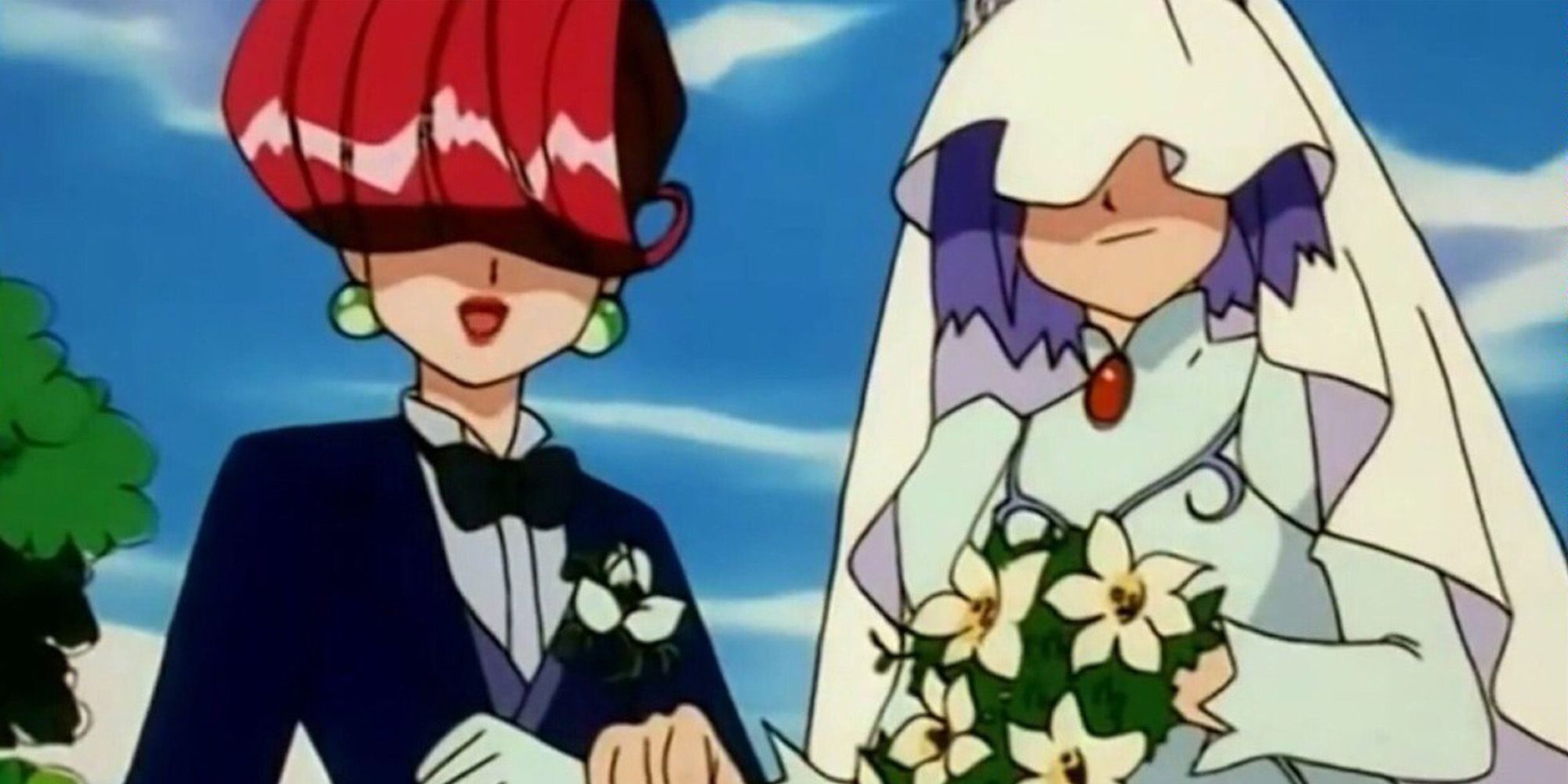
The Pokémon television show also taught me. I know what you may be thinking “Pokémon”? And to that I say, hear me out. Jessie and James of Team Rocket while not explicitly queer and portrayed as career villains, have always carried an unabashed quality to always be themselves. Their dedication to themselves, especially during assignments, is nothing to scoff at. It is no secret that Jessie and James will often be seen in disguise during their missions. And while a disguise for a villain is nothing out of the ordinary in a show “for kids”, the choice of disguise each character was drawn in allowed the audience to delve deeper into their personalities. Jessie never shied away from wearing suits and tuxes to give the team’s scheme of the week life. James seemed to contrast Jessie’s traditionally “masculine” disguises with more traditionally “feminine” disguises on several occasions being seen proudly in dresses, ball gowns, make-up, and all (and for our drag sisters out there, some might even say “beat to the gods”). Jessie was both charismatic and deeply sentimental, especially during her Pokémon Contest era. On multiple occasions apologizing to her Pokémon team for her perceived failures after. James was always allowed to be soft, gentle, observant, even taking up the role of the “smart one” reading information on the Pokémon of the week from encyclopedias or cards without reducing his role as “the bad guy”. Even the choice of almost always having a grass type Pokémon on his main roster gives the notion that he cares for his Pokémon the way he would a garden. While neither character is explicitly queer and are villains, Jessie and James of Team Rocket spoke to those of us whom may not have known how we feel about ourselves or knew how to express who we are. Jessie and James dared to continue being unequivocally themselves despite the weight of their less than favorable choices. Unequivocally expressive and thoughtful in the face of danger or sacrifice. And most of all: unequivocally human.
Comics and graphic novels are a language that allows art and dialogue to exist as cohabitants. The medium fuses phantasmagoric images with strategy, with listlessness, with resent, with fear, love. The ability for a writer to create images from words allows an artist to turn written emotion into action. Dynamism layered in the hues, fear in odd or disorienting angles, hate in the shading, desperation in the setting, lust in the lighting. These actions can be sequenced in writing with pages of exposition, context, and lore. When drawn, painted, sketched, even colored those qualities of exposition are stretched across a canvas, a panel, a two-page dynamic image allowing readers to feel what the artists are trying to convey and what the writers are trying to say. When artists and writers meld their thoughts and actions the result can breed characters that are allowed to love despite their fears. Even if we the reader see characters from the ground as they pass out or catch the profile of lovers finally looking into one another’s eyes.
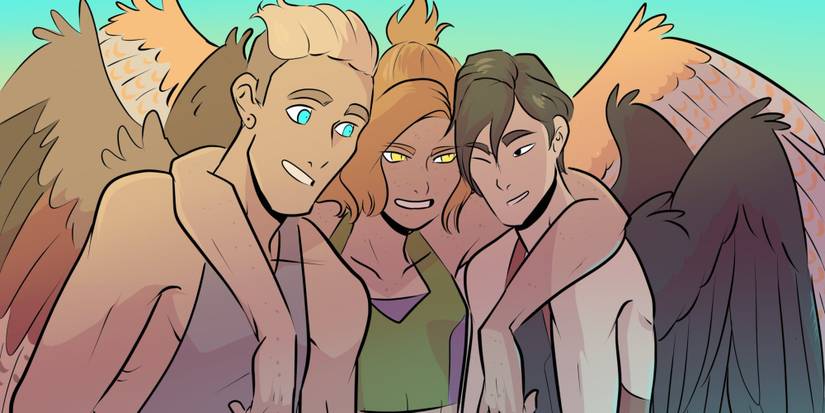
We live alongside their actions. Live alongside their thoughts, believe their convictions through the intensity of images accompanied by the revolution of conversation and ceaselessness of thought. Alice Osmen understood this. Wendy Lian Martin understood this. Megan J Grey understands this. In The Croaking set in a world where humans have bird wings, follows protagonists Scra, Ky, and Ree in their journey through the hierarchical system at The Roost: “the world’s most prestigious military academy” as described in the graphic novel’s blurb. Martin builds suspense and drives narrative with images alone. Giving the reader a passenger the seat tothe lives of our protagonists as they navigate through classes and a growing mystery that may just endanger them. All while still managing to find time to be held. Reminisce. Reassure. Protect. And most importantly remain fixtures in the lives of their friends, and loved ones. Ky is ambitious if even a little reckless. Scra’s secrets protect those he loves, especially ever protective Ky.
Readers know what Ree wants just by looking at her eyes, will she get what her sights are set on? The characters aren’t at the center of the story because of their queerness; it is but another feature of the (mostly human) lives they live. My belief is they are at the center of the story because of the complexities each character carries. Witnessing their change through conversation, exposition, and images morphed into a kaleidoscope of emotion chapter to chapter. It is a blessing living alongside characters who weren’t scrutinized for being queer.
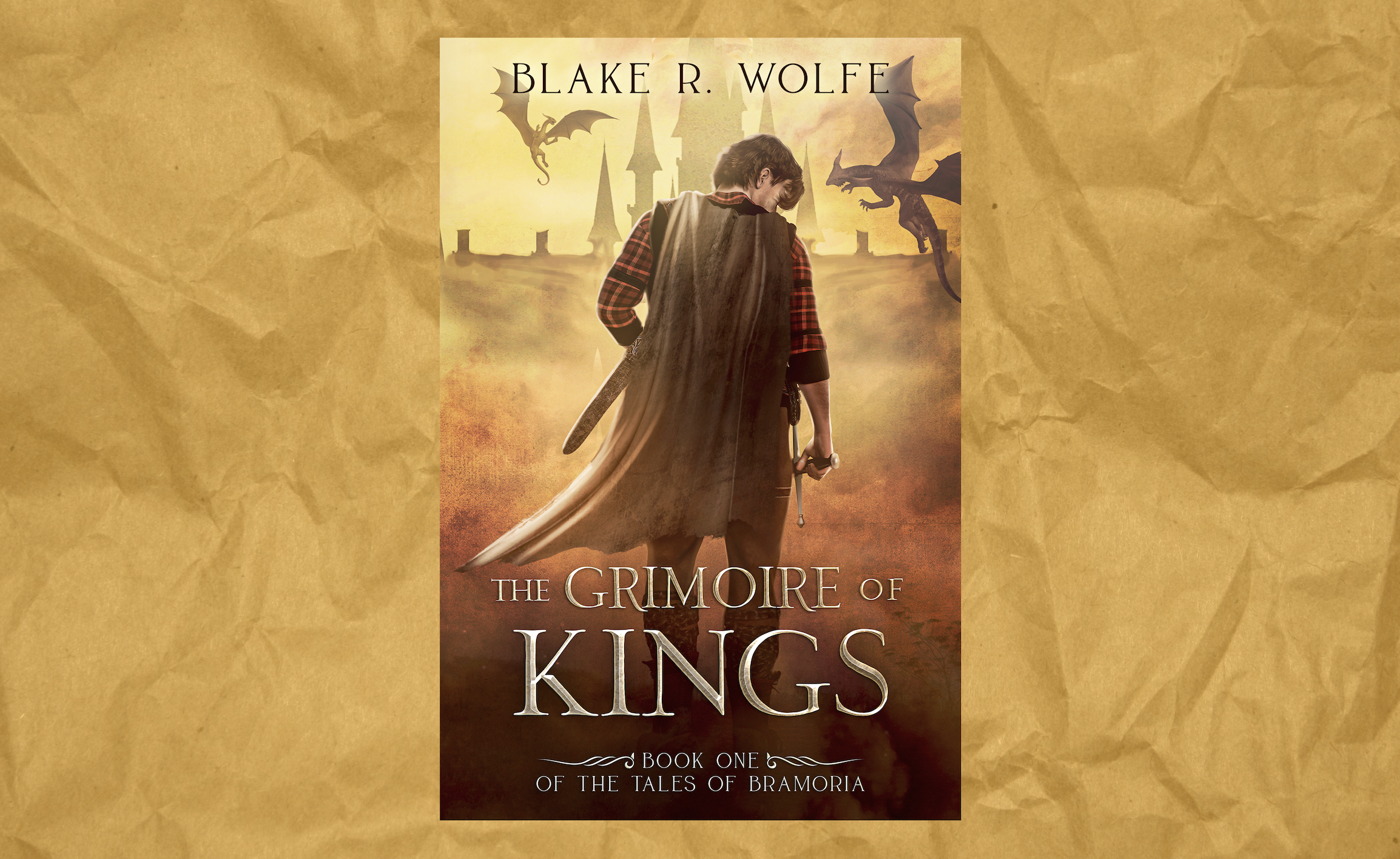
The Grimoire of Kings from The Tales of Bramoria by Blake R. Wolfe
Books offer readers time. Time to chew each thought sentence by sentence. The time to experience a chase second by second. Time to hear the pulsation of a character’s thought millisecond for millisecond. These qualities allow books to capture the imagination of a reader way that allows the reader to set the stage in their mind, describe what they’re reading with their lives. The Tales of Bramoria series showed us what that time could do. How little less than a year can feel like hundreds in the face of dangers in a foreign realm. The characters are allowed to feel the world they’re now living in. Chase scenes feel like they are occurring in a bubble of water made entirely out of the character’s desperation for safety and the reader’s mind. I would wince and grimace at the injuries the characters faced at times. Felt somber as they missed home, missed friends, missed comfort. Books allow readers time to sit with discomfort on the reader’s terms. This is equally true for comfort. A hug, warm glances toward a love interest, fond memories shared over plates of warm food around a fire. These qualities allow readers to use their lives, experiences, fears, discomforts, and/or comforts to build the images as their eyes consume each sentence by the letter.
What does the language of the medium you prefer mean to you? Queerness has a meaning that is greater than the breadth of its known history. Humans have been queer since, well, humans! Megan J Grey understands this. Blake R. Wolfe understands this. Wendy Lian Martin understands this. Alice Oseman understands this. Humans are the center. The rest grows from there.
Which I find is a peaceful thing to keep in mind during Pride Month.