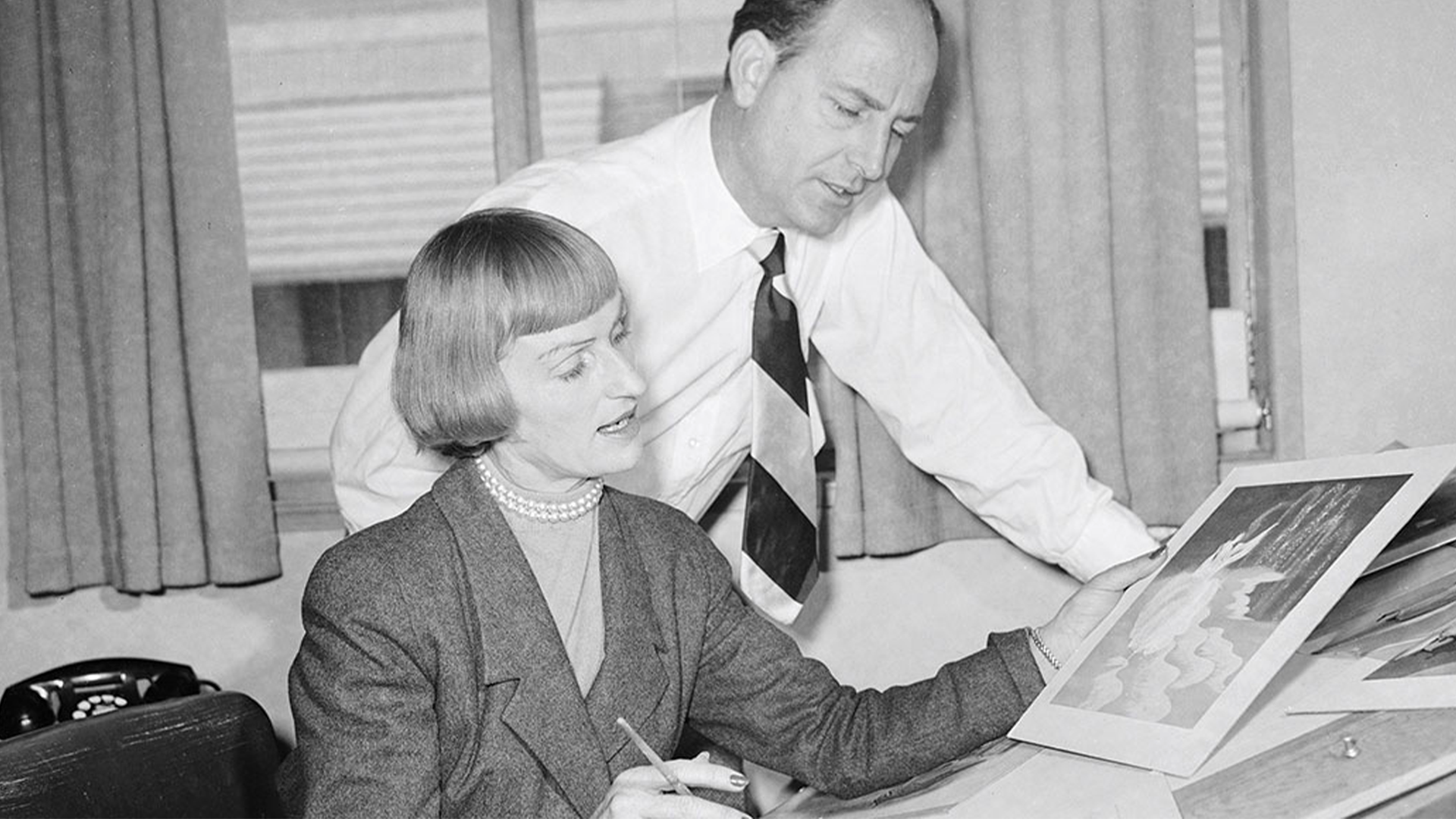
Mary Blair… perhaps there is no better example of a sorceress within the film industry. This revolutionary artist breathed life into dozens of animated worlds. She’s a true architect of imagination. Her work fundamentally reshaped how animation uses color, design, and mood to tell stories. Many of the visual strategies that are now standard in animation, such as color scripting, stylized abstraction, emotionally driven palettes, owe an undeniable debt to Mary’s daring vision.
Born in 1911 and trained at the Chouinard Art Institute, Blair entered the animation industry during a period when realism dominated studio aesthetics. Background art at major studios tended to learn more towards what we might call “painterly naturalism”: this featured muted tones, atmospheric depth, and carefully rendered environments meant to disappear behind character animation. But Blair disrupted that model. She flattened spaces, intensified hues, and made color expressive rather than imitative and bland.
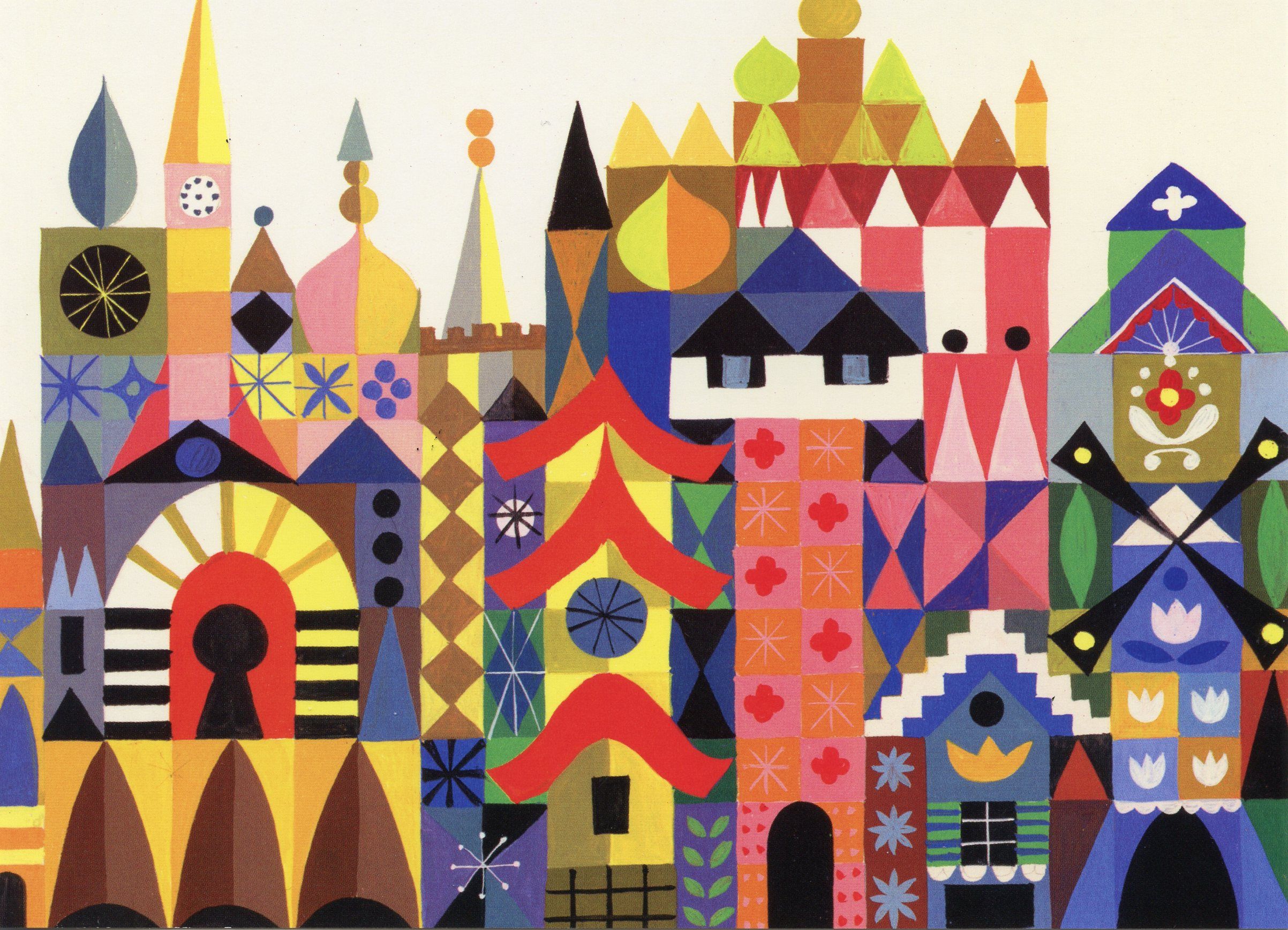
It's a Small World by Mary Blair
Her transformative influence emerged during her years at Disney in the 1940s and 1950s. After traveling to South America in 1941 on a State Department goodwill tour led by Walt Disney himself, Blair returned with a new chromatic confidence. The saturated textiles, folk-art inspired geometries, and bold contrasts she encountered abroad unlocked a more graphic sensibility in her work. You can see this shift begin vividly in Saludos Amigos and The Three Caballeros, where her color starts to turn kinetic and rhythmic rather than merely illustrative.
But it was in the 1950s that her influence crystallized into something truly foundational. In Cinderella, Blair’s color styling defined the film’s emotional arc. The cool melancholy of Cinderella’s servitude gives way to luminous, almost operatic blues and pinks in the iconic ballroom sequence. Her dramatic midnight transformation is both a narrative shift and chromatic revelation. The film’s iconic visual identity, still replicated in merchandise to this day, as well as theme parks, and branding, is completely inseparable from Blair’s palette decisions.
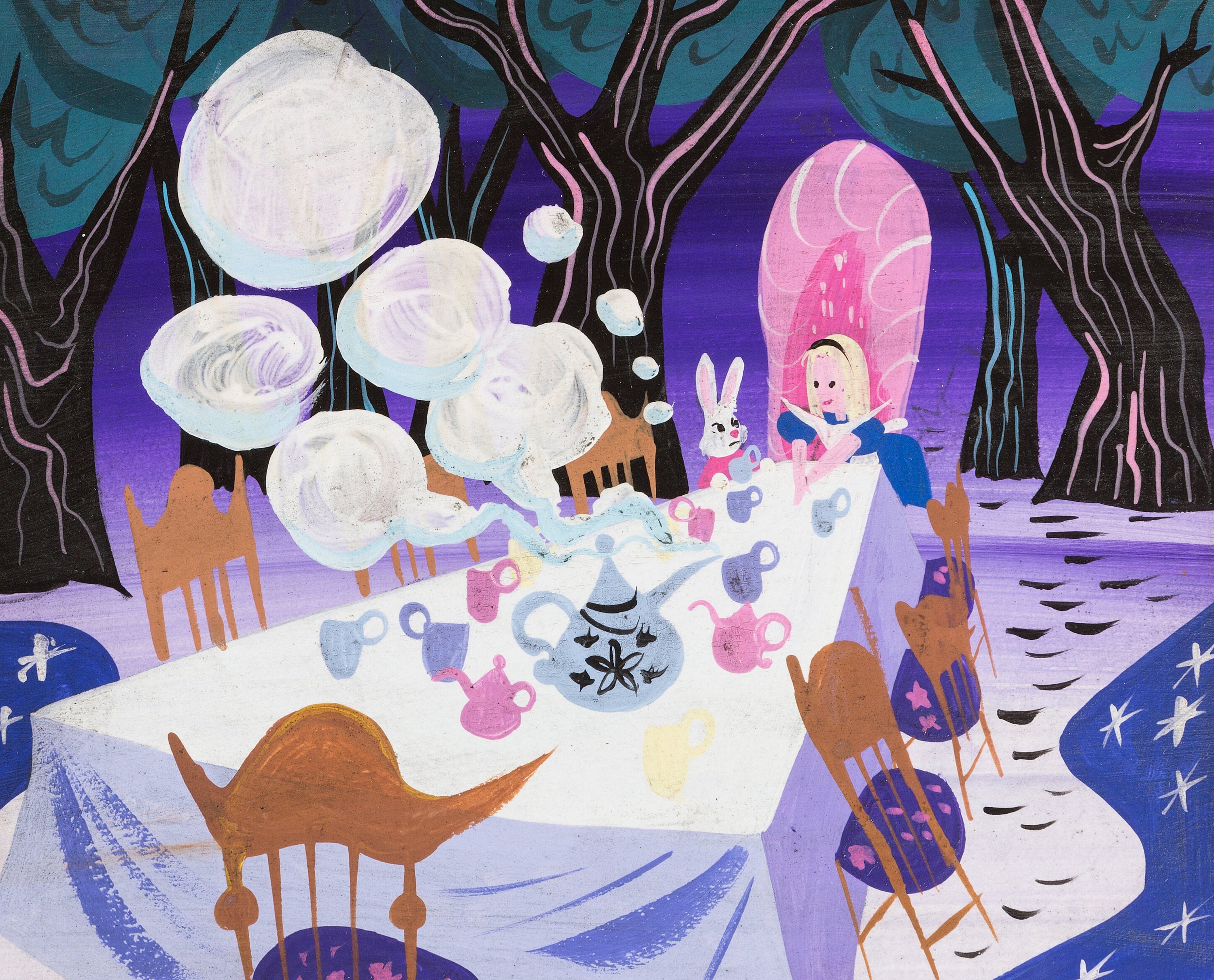
Alice in Wonderland Concept Art by Mary Blair
Her work on Alice in Wonderland may be even more radical, and her concept sketches can be found in artists dormitories around the academic world. Lewis Carroll’s surreal narrative found its perfect visual counterpart in Blair’s flattened perspective and high-contrast color blocking. Under her eye, Wonderland is a living illustration; bold, graphic, emotionally heightened. Modern animation’s comfort with stylization and its willingness to depart from realism in favor of mood, traces directly back to Blair’s experiments, just like these.
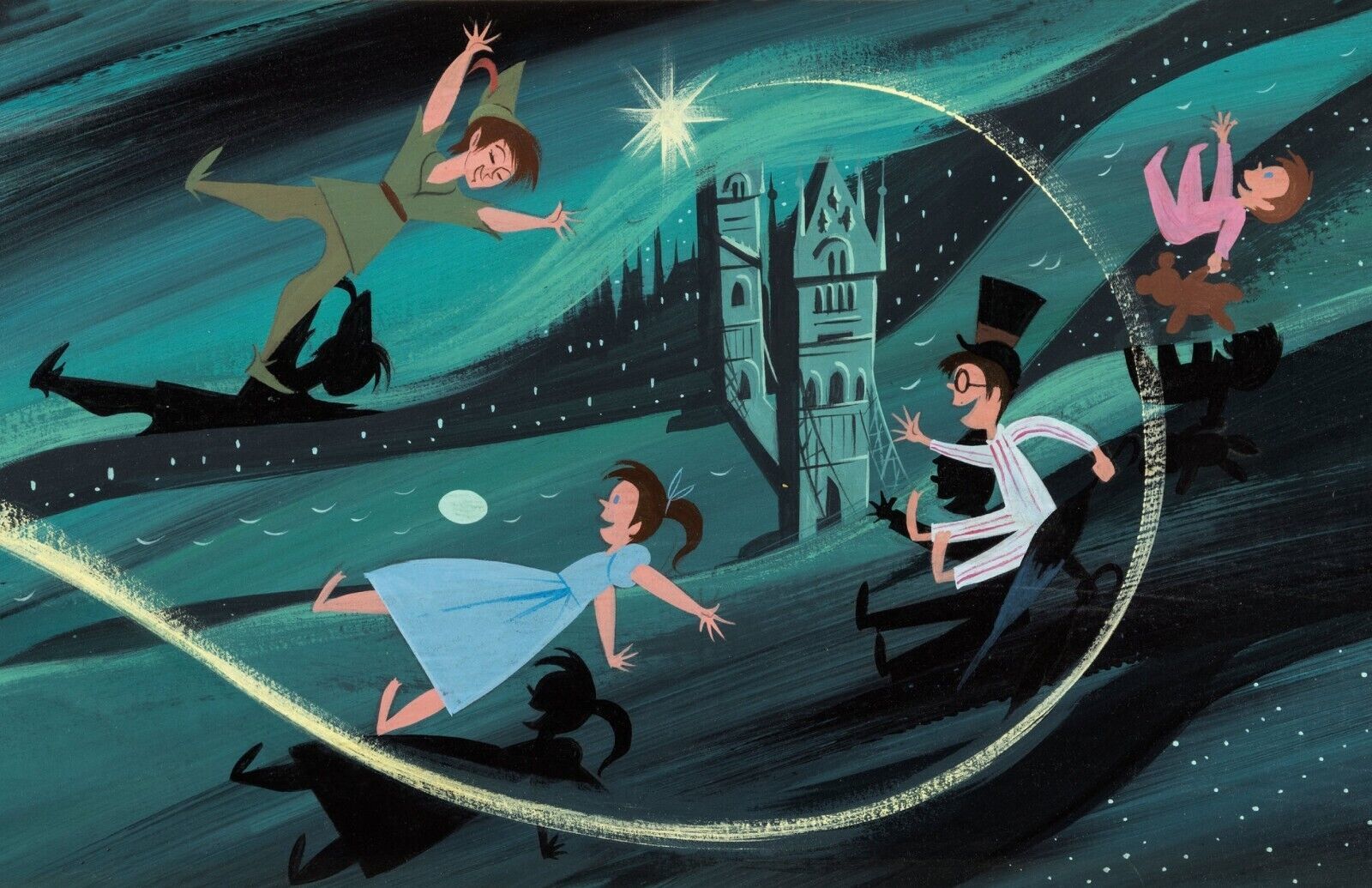
Peter Pan Concept Art by Mary Blair
In Peter Pan, her influence is felt in the theatrical color staging of Neverland. The deep jewel tones and simplified shapes helped codify a more design-forward approach to animated world-building. Today’s animation studios routinely begin projects with color scripts, which are sequential paintings mapping emotional tone scene by scene. While many artists contributed to the development of that practice, it was Blair who was among its earliest and most persuasive champions. The very idea that a film’s emotional journey could be charted through hue progression is now an industry standard and without her advocacy for bold, expressive palettes, that evolution would likely have taken a very different path.
Beyond individual films, Blair’s legacy is perhaps most visible in the realm of themed environments. Her design of It's a Small World, created for the 1964 New York World’s Fair (yes, you read that right), redefined what immersive attraction design could look like. Instead of realism, she once again embraced stylized geometry: simplified children of the world rendered in brilliant pinks, aquas, and golds. The attraction’s graphic clarity, global iconography, and cohesive palette became a template for future theme park design. Without Blair’s visual language, Disney parks might have leaned far more heavily into literal architectural reproduction rather than bold, illustrative environments that we all love today. The almost storybook quality that now defines many Disney attractions can be traced directly to her sensibility.
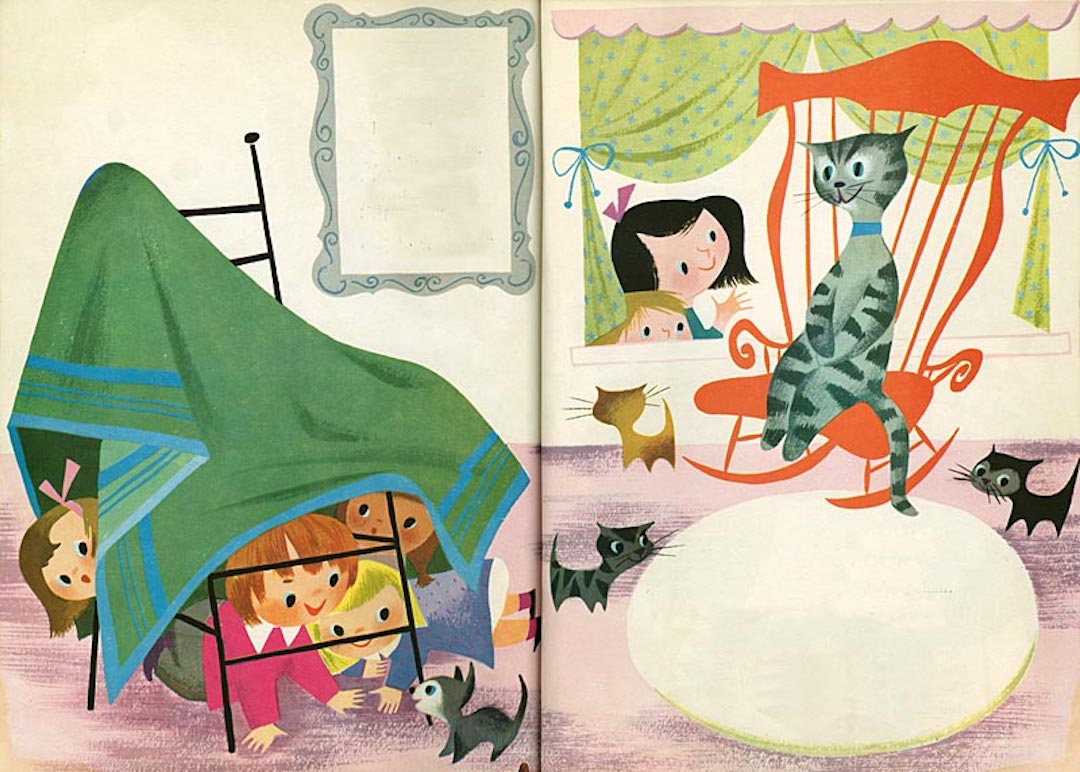
I Can Fly by Mary Blair
Her impact also extends into Disney publishing, advertising, and merchandising. Blair illustrated many children’s books and developed visual motifs that continue to influence Disney’s brand identity. The company’s embrace of vibrant mid-century modern design, which is now nostalgically celebrated, owes much to her aesthetic courage during an era when safer, softer realism would have been the easier path.
It’s important that we take a moment here to note how groundbreaking this was within studio culture. Blair worked in a male-dominated industry that often-favored technical draftsmanship over expressive abstraction. She held firm to a vision that was more “modern” and unapologetically bold. She expanded what was permissible in mainstream animation. Today’s audiences accept stylized worlds as natural; from flattened fairy tales to graphic, color-forward animated features. That acceptance did not emerge in a vacuum. It was earned by artists like Blair who insisted that design itself could carry narrative weight.
So, what would animation look like without Mary Blair? Well, it might be more muted, more literal. It would definitely be less emotionally chromatic. The integration of modern art principles into mainstream animated storytelling and the confidence to let blocks of saturated color dominate a frame, might have arrived later, or differently, or not at all in the same way.
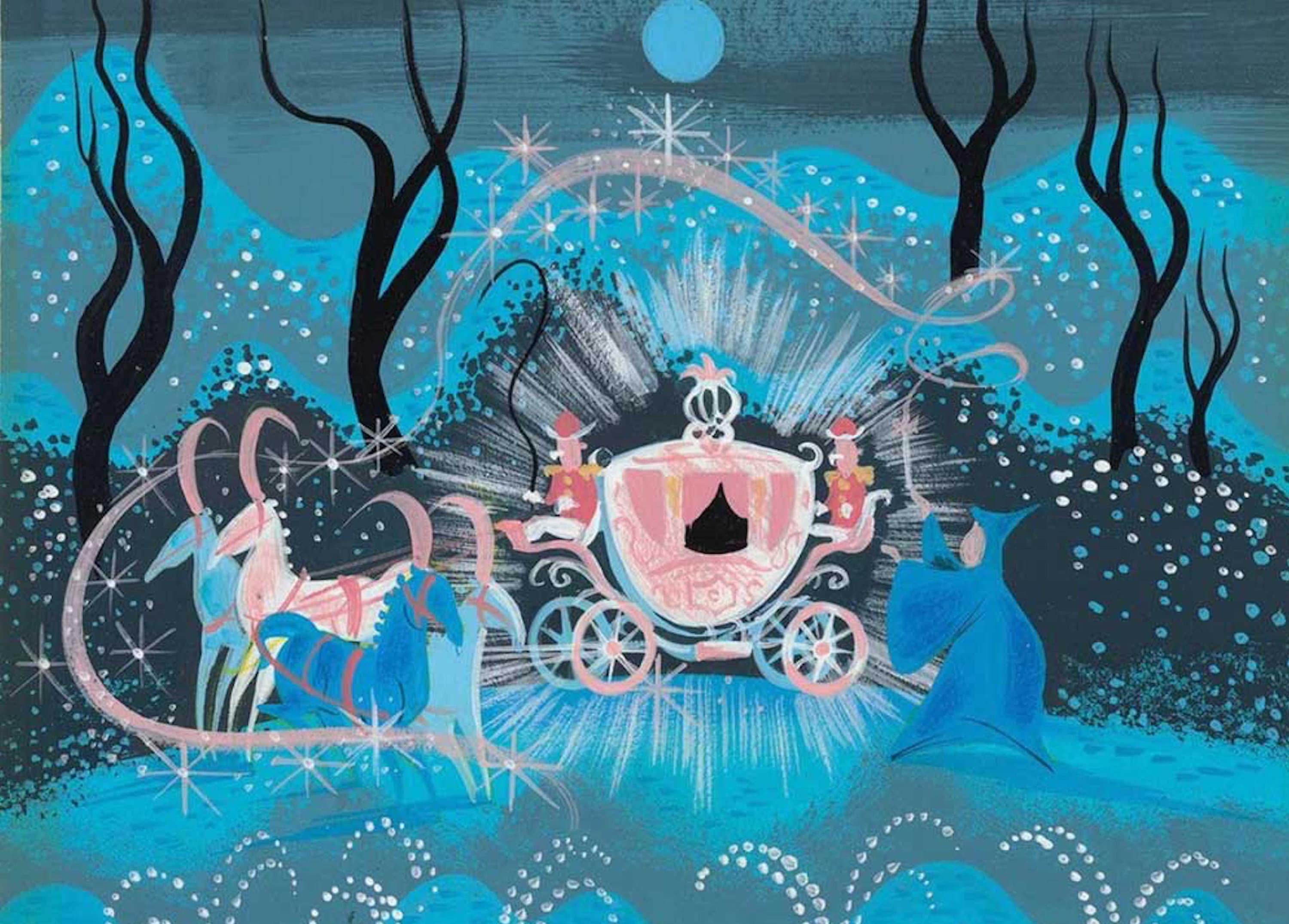
Cinderella Concept Art by Mary Blair
Her work endures for so many reasons, but she stands out now more than ever, because her work altered the grammar of visual storytelling. She consistently proved that children’s films could be compositionally daring, not just driven by shapes representing motion. She proved that abstraction could enhance clarity and that optimism could be expressed through disciplined design rather than any form of saccharine sweetness.
To stand before her Cinderella concept paintings or float past her murals in It’s a Small World is to witness a worldview rendered in pigment; structured and playful, simplified and emotionally expansive. Her legacy lives in every animated sequence that dares to be bold with color, in every theme park environment that favors graphic cohesion over realism, and in every production designer who maps emotional beats through hue before a single frame is animated.
Mary Blair redirected the history of animation. Through color, she built worlds, and in doing so, she ensured that the worlds we continue to imagine are brighter, braver, and more expressive than they might otherwise have been.
Filmmakers are working with the world's biggest brands on Tongal.