There was a time when horror was just a soft unsuspecting knock on the door or maybe a creak in the hallway. Now, the world has moved on from masked killers and the things that go bump in the night. You could say that the world has become accustomed to these scares or that we’ve gravitated towards something more sinister. Something so diabolical and relentless that even the most skilled of final boys and girls don’t stand a chance against. That thing is grief.
Contemporary horror fixates on grief because grief refuses to have the usual resolution. This idea allows filmmakers to explore fear without relying on the dark antagonist alone. Three recent films illustrate this shift with unsettling clarity: Talk To Me, When Evil Lurks, and Sinners. Each of these films present grief as an active force, shaped and intensified through cinematography that refuses to let the audience have a moment's rest, even after the screen goes black.
Horror Isn’t About Death Anymore
When you look back at the early stages of horror, you’ll find that most of the classics centered on the anticipation of death. The Haunting of Hill House picked off its guests one by one while Pamela Voorhees did the same to the oblivious campers of Crystal Lake. This formula gave birth to what many claim to be the golden age of horror. Modern entries, however, focus more on the trauma that has already reshaped the protagonists' inner lives. The emotional struggle of trying to fit in or the strength to uphold their spirit after a tragedy. But how do you make this into horror? Cinematography is the key and it’s what carries much of the weight when it comes to sharing the characters' confinement with the audience, both physical and emotional.
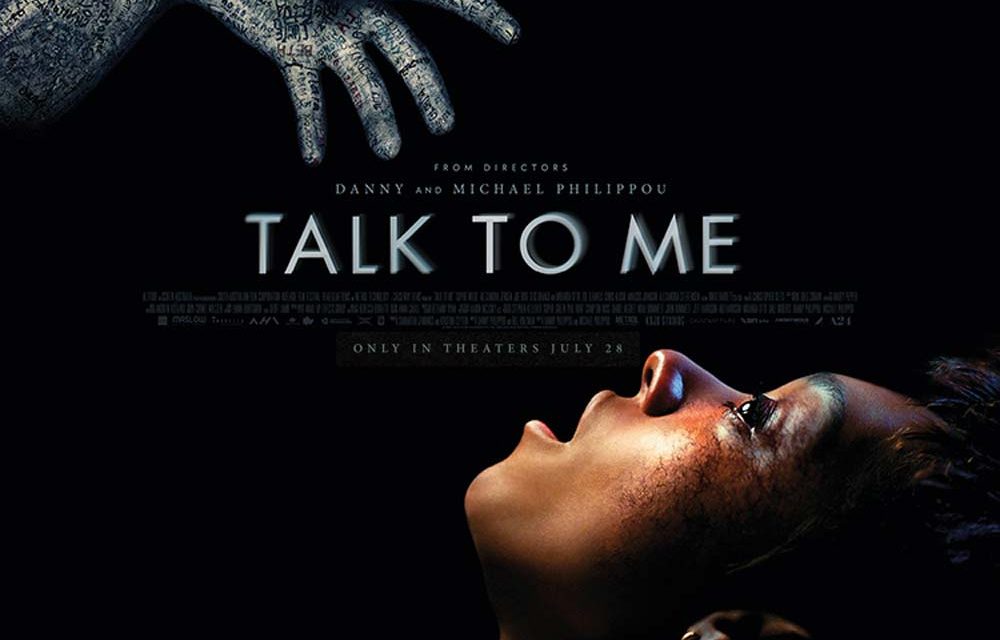
Talk To Me - Grief as a Party Trick
At first glance, Talk to Me looks reckless. Rowdy teenagers, a cursed object, and the
pressure of proving one's worth by willingly facing an unspeakable evil. But beneath the
chaos, is a profoundly sad film about a girl who can’t let go. Mia (Sophia Wilde) is painted as a young girl chasing thrills but in reality she’s chasing her late mother and the idea that she can still talk to her even after death.
Cinematographer Aaron McLisky shoots the film on a ZEISS Supreme Prime, giving every shot an invasive closeness that brings the audience face to face with pure evil throughout the movie. McLisky also works with different POVs between Mia and the hellish entities, giving us a look into the madness from both sides. By doing this, the horrors arrive almost in obscure frames, keeping the audience on the edge of their seat and truly preying on the vulnerability that Mia has. The cinematography hones in on Mia’s desperation in a way that drives the narrative a little further than your average jumpscare and the camera doesn’t play favorites when it comes to exposing the beautifully dark world that Mia taps into over and over again.

When Evil Lurks - Grief as Contagion
When Evil Lurks gives us a community that understands the rules of the evil at play yet still fails to outrun the consequences of going against them. This alone solidifies the film as being one of the most unique, and gruesome, pieces of horror in the world today. And the cinematography behind it is icing on the blood-drenched cake.
Cinematographer Mariano Suarez frames the rural Argentine landscape with brutal
clarity. Shot with a combination of mostly high-end digital cameras, Suarez heavily relies on the wide shots in order to give the audience the sense of vulnerability. And while the violence in the film refuses to hold back, the camera work expertly lingers on the aftermath of the evil events and follows the family as they try to survive through it.
Like many cinematographers, Suarez is patient with his camera work. Strategically building the tension as the film progresses then lets you sit with the consequences for an uncomfortable amount of time, which in turn suggests that grief is like a virus; easily spread and hard to shake. One bad decision will infect the next and by the time the character realizes what they’ve lost, the damage has already multiplied.

Sinners - Grief as Inheritance
Sinners has taken the world by storm and refuses to let it go from its dark chokehold. The record breaking film has all but established itself as a masterclass in storytelling. And while the writing is superb throughout the entire film, the real magic comes from the cinematography.
Shot by Autumn Druid Arkapaw using a 65mm Ultra Panavision and IMAX camera,
(quite impressive!) the film effortlessly uses light and shadow to bring not only the dark tale to life but the personality and emotion of all the characters as well.
Arkapaw’s handling makes the darkness feel deliberate. The use of warm tones clashing with darkness creates a visual tension that mirrors the characters’ internal conflicts as well as the present conflict throughout the film. It’s a visual language that implies culture and the camera use reinforces the sense that these characters exist within a world where darkness comes from both sides of the same coin.
So, Why Is This Happening Now? We’re living in an era defined by collective trauma. Pandemic loss, cultural instability, and a constant awareness of mortality paired with very little guidance on how to
process it. Filmmakers have seemingly stepped into this reality by presenting this trauma as a newfound darkness that no one talks about. And as we can see from these three films, the cinematography plays a crucial role in this new age of horror.
Each of these films treat loss as an active force rather than some B-story used to elevate a character's motive. Horror has officially been reborn into an era where the monsters are not hiding in the shadows waiting for their next victim. Instead, they’re holding space within the protagonist, using their emotional turmoil as fuel for their evil agenda. And the only way to present this new batch of evil is through amazing cinematography.
Filmmakers are working with the world's biggest brands on Tongal.