
Original Artwork by Luisa Garcia
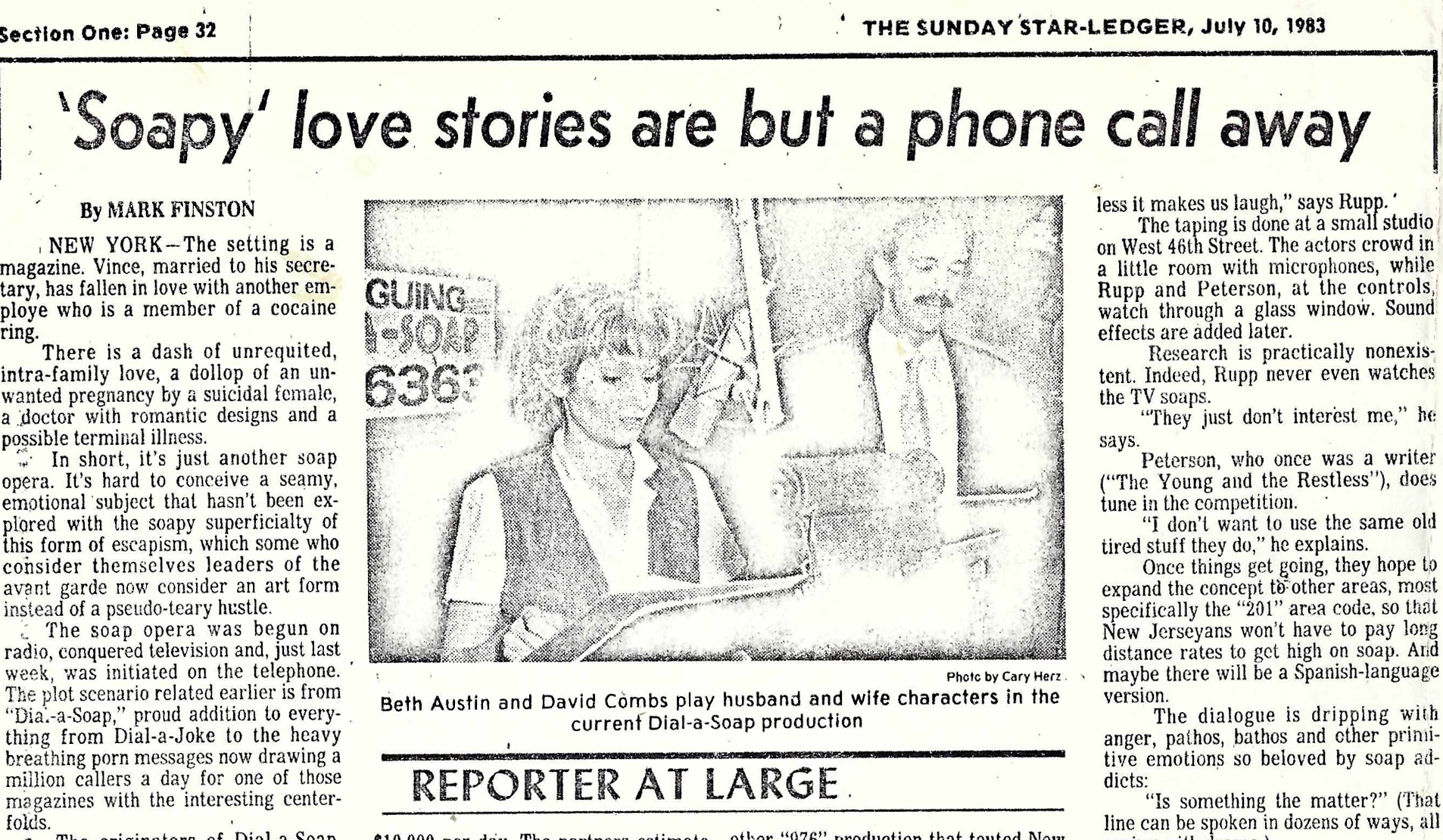
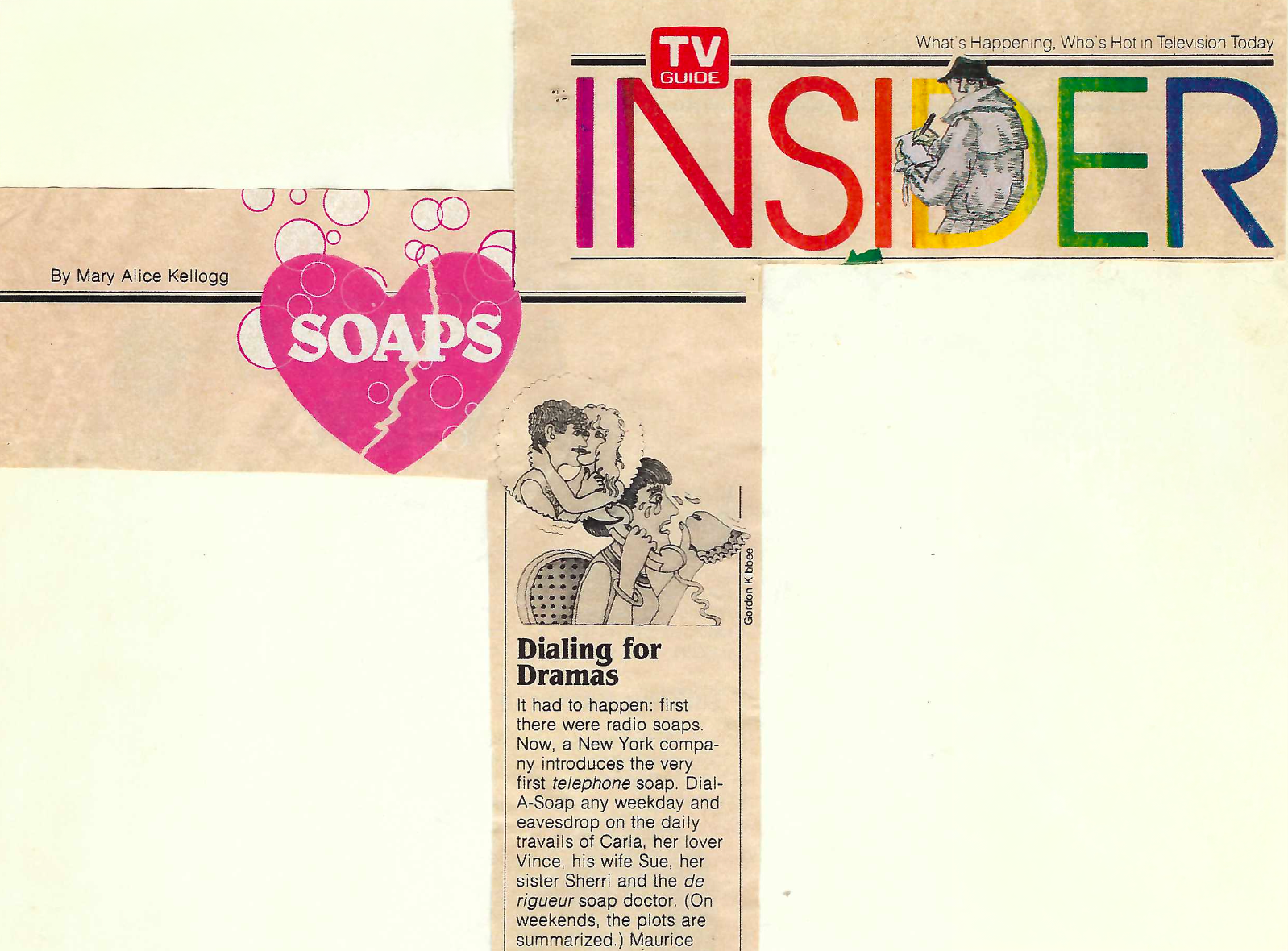
Sitting down with Bob Pomann and Maurice Peterson is akin to stepping into a time capsule of New York’s experimental media scene in the early 1980s. Before podcasts, streaming, and TikTok there was Dial-A-Soap, a one-minute soap opera you could call on the telephone. It was funny, melodramatic, and revolutionary.
Together, Bob and Maurice reminisced about how the project came to life, the madness of working with analog tape, and how those ideas still echo today. What Maurice and Bob created was wholly original, both in scope, story, and format. They worked with the tools they had and leaned into them with some amazing talent, not unlike so many Tongal Creators. Among that talent was Glenn Close, who appeared in their Haunted Lines as the character Maggie.
Discovering Archive Content and giving it new life is a hobby of mine, so getting to share this with the world again for Maurice and Bob, is really important. They were making "short content" long before the internet. It's a moment in time, brought into the future on another platform perfectly fit for it. I hope people enjoy and share it as a reminder that sometimes all you need is an idea, talent, and a few tools.
1) What was the original spark that made you believe soap operas could work over the telephone?
Maurice Peterson: Well, this goes way back. At first, it just wasn’t possible to make a recording start at the beginning when someone called — you’d drop into the middle of a tape. But then around ’81 or ’82, this new digital system came in that actually let us start at the top and end at the end. That’s when we thought, ‘Hey, we could do a soap opera like that!’ My co-writer, John, really had the first idea, and from there we just ran with it.
Bob Pomann: Yeah, I remember that. I was working in a recording studio — I must’ve been 17 or 18 — and Maurice was already doing work with Broadway folks. When that new phone system came in, it kind of clicked. It was like, wait, we can tell stories this way.
2) What made you choose the “eavesdropped phone call” format for the show, rather than a traditional narrator?
Bob Pomann: Because it was perfect for the medium. You were literally listening on a phone, so it made sense to make it sound like you were overhearing someone’s call, like you weren’t supposed to be hearing this conversation.
Maurice Peterson: That was the whole fun of it, we wanted people to feel like they just stumbled into the middle of the action.
3) Can you walk us through a typical production cycle for one week of shows, writing, recording, editing, etc.?
Maurice Peterson: John and I would meet up and just try to make each other laugh. We’d throw around these over-the-top ideas — who’s cheating on who, who’s pregnant, who’s lying — and then we’d trim it all down to 57 seconds flat. I’d call in our cast of Broadway actors, we’d record every week or two, and then hand the tapes over to Bob. We would do a recording session once every two weeks.
Bob Pomann: Yeah, and we would have him act together, too. But I was cutting all of this together on analog tape — We were recording on this old four-track machine, the same kind that the Beatles used for Sgt. Pepper. I’d do all the sound effects myself, reversing tape, layering, anything I could think of. You know, there wasn't a big library, so I was doing a lot of Foley work without even knowing I was doing Foley work.
Maurice Peterson: We would have a new episode Monday through Friday, and then on the weekend, we would have an update in case you missed it.
4) How did you find and cast the voice actors for the project? Were you leaning into camp, or playing it straight?
Bob Pomann: We’d really be looking for someone who's not corny when they read corny lines.
Maurice Peterson: Right. These were Broadway people — the best in the world. Some of them were stars, others supporting, but all seasoned performers. They wanted to do it because it was fun. It was a little bit of money. It didn't take a lot of trouble at the time, and they could talk about it. It was good for their careers at that moment.
5) How do you write something emotionally rich and melodramatic… in under a minute?
Maurice Peterson: *laughs* Mostly trial and error. We’d just write until it felt right, then trim until we hit the time. You had to get the setup, emotion, and punchline all in one go.
Bob Pomann: Yeah, and we were always thinking about timing — we knew exactly how long 57 seconds was. They weren't writing long things and then cutting it down. I think they were very conscious of that.
Maurice Peterson: So, we would just, you know, make each other laugh and then say stop. But everything had to end with a punchline. Everything had to lead to the next episode.
6) Did you ever intentionally parody soap opera tropes, or did the show lean more into genuine homage?
Maurice Peterson: Well, soap operas are just your basic everyday life condensed, you know, everyday drama. Our first big twist was a woman saying, “Vince, I’m having a baby!” right as another call breaks in. *laughs* It was all tongue-in-cheek but never mean-spirited — we loved the genre.
7) Do you remember a favorite ridiculous cliffhanger or plot twist you wrote?
Maurice Peterson: Not really, since we just came up with them, you know, every day. We just came up with something new, you know, we’d try to top ourselves — how can we make this even crazier, even more dramatic? But at the same time, we really cared about the characters. They were ridiculous, but they had heart.
8) This was an early form of micropayment entertainment, basically a few cents per call. Did you see it as a sustainable media business model?
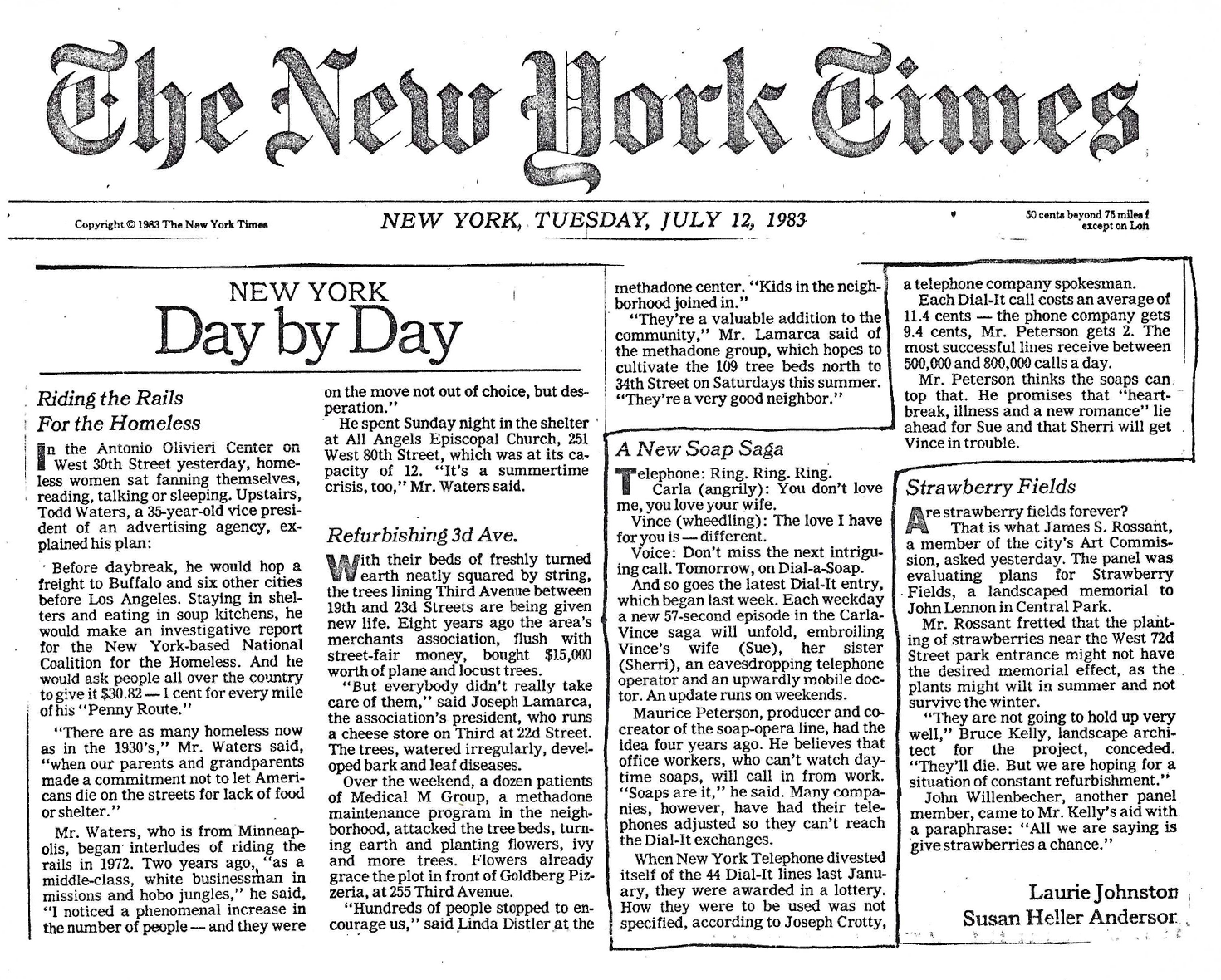
Maurice Peterson: Well, we thought it was going to be great, and we actually generated a tremendous amount of money. However, the New York Telephone was taking most of it. They were charging 15 cents per call. We got over a million and a half calls in six months, which was amazing- yet we only got a cent and a half per call. So, it didn’t exactly make us rich, and we didn't own the line; we had to split that with the car advertising company that owned the line.
Bob Pomann: Yeah, but that was actually great because they put advertisements on the taxi cabs, which helped. But still, it’s not a lot of money to pay a lot of people.
Maurice Peterson: Even when it was going, we just had enough money to pay our bills, pay our cast, and have a little leftover for ourselves; it wasn't enough. So, we had to call it quits.
9) What was your relationship like with New York Telephone and the lottery system for 976 numbers?
Bob Pomann: Honestly, we didn’t deal directly with them. There was this weird lottery, a tiny ad in The New York Times — and a lot of insiders at New York Telephone grabbed the lines first. We ended up working through one of those early owners. It was a wild time.
10) Did you ever run into resistance from telecoms or moral watchdogs because of the genre or format?
Bob Pomann: Not really any resistance — but eventually, companies started blocking 976 calls from office phones. People were calling us at work and running up bills!
Maurice Peterson: Oh yeah, office workers loved it.
Bob Pomann: That was a scandal for a little bit. Once that got shut off, those calls stopped coming.
11) Did you see Dial-A-Soap as a successor to radio drama, or as something entirely new?
Bob Pomann: Radio drama was dead in the States by that time. Nobody was funding it anymore. So, I wouldn’t say *successor* — It was just so hard to make any money from a radio drama back then. I stopped beating my head against the wall because I loved the radio. I wanted to be Steven Spielberg, yet I was doing sound. Dial-a-Soap was more like a reinvention.
12) Were you surprised by who your audience was?
Maurice Peterson: We figured everyone would want to listen, but like we mentioned earlier, office workers really took to it. It was their little one-minute break, a quick escape in the middle of the day. And the funny thing was, everyone imagined the characters differently. Some of my friends thought the whole cast was black; everyone made it their own picture.
Bob Pomann: Yeah, that was the beauty of audio. It left room for imagination.
13) Looking back, how do you think Dial-A-Soap fits into the larger history of media innovation?
Maurice Peterson: Well, we were doing the world’s first tele-opera. It was a bright little light that burned fast and went away. But it made people happy and proved something new could work. In a way, maybe a tiny ancestor of the podcast.
Bob Pomann: Yeah, we weren’t thinking about ‘media innovation.’ We were really just trying to make something with what we had.
14) Do you ever think about reviving the concept today, in the age of podcasts, smart speakers, and voice AI?
Bob Pomann: We actually tried! During the pandemic, Maurice recorded new scripts, and I used AI voices for testing. It’s fun tech, but you still need a storyteller behind it — AI can’t replace that. If we brought it back now, we’d keep it short, two or three minutes at most.
Maurice Peterson: Totally. I’d love to do it again — something like Dial-A-Soap but modern, maybe for YouTube. People still crave short bursts of story.
15) How did this project stretch you creatively, especially compared to your work on The Young and the Restless or Homework?
Maurice Peterson: Well, with Dial-a-soap, we had to learn to just get someone's attention right away and then sum it up immediately. So, you had to do something really dramatic, and come up with a story that leads to a cliffhanger in less than a minute. It was fun to do, and we didn't really get bored with it. We kept on entertaining each other for all that time until we had to call it quits.
Bob Pomann: For me, it was all about learning how to do a lot with a little. We didn’t have digital tools, just tape, blades, and our ears. It was exhausting, but man, I learned everything I know about sound from that time.
16) What advice would you give to a young creator trying to invent a new format for storytelling today?
Maurice Peterson: You can’t force invention. We didn’t sit down and say, ‘Let’s change the world.’ It just happened because we followed a fun idea. If you believe in it and do the work, it’ll find its place.
Bob Pomann: And don’t be afraid to fail a little. Every creative experiment teaches you something. Keep trying new things, even if they don’t make you rich. That’s where the joy is.
Filmmakers are working with the world's biggest brands on Tongal.