

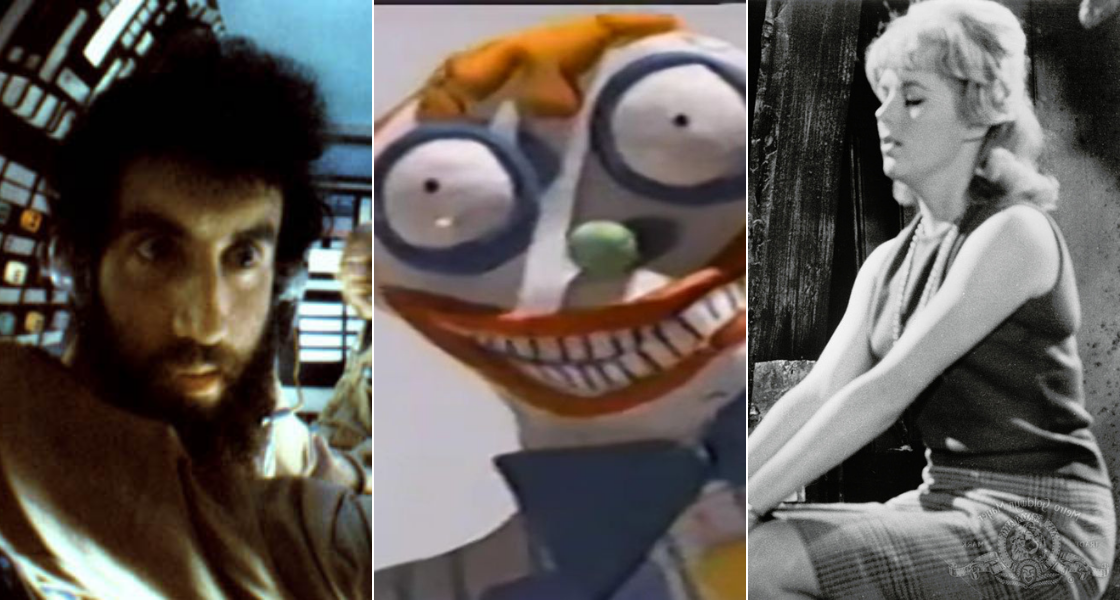
Everyone has heard of the films Star Wars and Raiders of the Lost Ark, but how many people are familiar with Dementia 13 or Dark Star? In the following article, we will take a look at the early works of famous directors, like James Cameron and Steven Spielberg, who have come to define modern cinema and how their debut projects helped them gain the attention of major studios. Many of these films are “diamonds in the rough” that showcase the early brilliance of their directors and have consequently become cult favourites. Let’s take a walk down memory lane and examine some of the cinematic creations that these Hollywood filmmakers crafted before they became legends of the industry.
Francis Ford Coppola, Dementia 13 (1963)
Francis Ford Coppola is Hollywood royalty, having helmed such cinematic masterpieces as The Godfather, Apocalypse Now, and Bram Stoker’s Dracula. His movies are both critically and commercially successful and are considered the gold-standard of auteur filmmaking. However, few people have seen his first foray into film titled Dementia 13. Coppola both directed and co-wrote this horror gem which was produced by B-movie legend Roger Corman. The film focuses on the Halorans, a wealthy and corrupt family that lives in a secluded mansion on an isolated property. The story begins when John Haloran suffers a heart attack during a boating trip, and his wife, Louise, tosses his body overboard and then tells his family that he is away on a business trip in the hopes of collecting his inheritance (which can only occur if he is still alive). When she visits the Halorans, expecting to be given her part of the estate, she discovers that the family is an odd clan of eccentrics. The Halorans are still grieving the death of their youngest daughter, Kathleen, who drowned in a pond as a child years earlier, and they hold an annual ceremony to commemorate this event. However, this year there is an axe-wielding maniac roaming the grounds seeking revenge for this event and it is doubtful that Louise will survive through the night. Despite its modest budget, this film offers an impressive tale of bloody revenge and is an interesting counterpoint to the more gritty and dramatic works Coppola would create later in his career.
James Cameron, Xenogenesis (1978)
James Cameron is one of the most famous directors working in Hollywood today and has created some of the most visually spectacular films of the last century, including Titanic and Avatar. Despite his celebrated status, few members of the public have seen his first attempt at filmmaking, a fun short film titled Xenogenesis that explores home cleaning in outer space! Shot on a shoe-string budget and allegedly paid for with credit cards, Xenogenesis tells the story of a woman named Laurie and an engineered man named Raj who are sent into orbit to search for a new place to begin life. Once they arrive at their destination, Raj explores the location and discovers a robotic cleaner that views him as an intruder and begins to fight with him. Just as Raj is about to be killed, he is rescued by Laurie who is equipped with a spider-like pod that helps her crush the robot and save her lover. In this film we see the same ingenuity and vision that would be exercised in Cameron’s later films such as Terminator and Aliens, and it is no wonder that he has gone on to set the bar for top notch visual effects in Hollywood.
John Carpenter, Dark Star (1974)
John Carpenter is considered horror royalty having defined the genre with such classics as Halloween, The Thing, and In the Mouth of Madness. However, his first feature film was, in fact, a satirical science-fiction tale titled Dark Star that chronicles the experiences of a group of astronauts aboard a doomed spacecraft. In this film, a crew of men is tasked with a 20-year mission to destroy unstable planets and, due to a series of mishaps, the ship self-destructs and kills almost everyone onboard. Dark Star began as a student project at the University of Southern California and eventually developed into a feature length film with a budget of $60,000. Though it was not an enormous commercial success, we can see the creativity and strong sense of atmosphere that would feature in Carpenter’s more celebrated works.
Steven Spielberg, Firelight (1964)
Firelight marks the first feature film of genius filmmaker Steven Spielberg, who has created such movie classics as Jaws, Raiders of the Lost Ark, E.T., and Jurassic Park. Spielberg produced this film at the age of 17 for $500 and generated a single dollar profit when it was screened at a local theatre. The film is set in the fictional town of Freeport, Arizona and follows the story of scientist Tony Karcher and UFO believer Howard Richards as they investigate sightings of coloured lights in the sky. At the conclusion of the film, it is revealed that aliens are responsible for these phenomena, and they plan on transporting the town to their home planet of Altaris to create a human zoo. Only a short clip of the original 135 minute film has survived and it is unlikely that the remainder of Firelight will ever be found. Despite its budgetary restraints, this movie demonstrates the visual imagination synonymous with Spielberg’s later blockbusters and many of the themes from Firelight would be further explored in his film Close Encounters of the Third Kind.
Quentin Tarantino, My Best Friend’s Birthday (1987)
Quentin Tarantino is possibly the most famous and celebrated director operating in the American film industry today. Fusing Hollywood glamour with independent grittiness, his movies are beloved by audiences, and his style has influenced an entire generation of filmmakers. Tarantino’s first feature film has consequently become the stuff of legends due to the fact that large portions of it were never shot and it was ultimately left unfinished. Tarantino not only wrote, directed, edited and co-produced My Best Friend’s Birthday, but he also starred in it as Clarence, an Elvis-inspired playboy. The film revolves around the antics of Clarence as he tries to cheer up his friend Mickey who is dumped by his girlfriend on his birthday. Despite the film’s micro-budget of $5000, My Best Friend’s Birthday showcases Tarantino’s inventive directing and witty dialogue that we would later see in such classics as Reservoir Dogs and Pulp Fiction. Shot in black-and-white, only 36 minutes of the original film have survived, and thankfully this material has been made available online for his devoted fans to enjoy.
Tim Burton, Hansel and Gretel (1983)
Tim Burton is one of the most eccentric and whimsical directors to work in Hollywood, creating such spectacular films as Edward Scissorhands, Big Fish, and Dumbo. Burton began his career at Disney, and while there he produced a number of Gothic short films including Vincent and Frankenweenie as well as the bizarre TV movie Hansel and Gretel. This experimental reimagining of the classic children’s tale features live-action as well as Burton’s trademark stop-motion animation. The set designs featured in Hansel and Gretel are inspired by German Expressionism mixed with the candy-coloured palette of Pop Art. Filmed in 1983, the movie features an East Asian cast, a transgender mother, and a witch so disturbing that she rivals Pennyworth from It. The film’s overall look is highly reminiscent of many of Burton’s more well-known works such as Pee-Wee’s Big Adventure and Beetlejuice. Despite the inventive visuals and unique sensibility of this TV movie, it was only aired once and thankfully has been preserved online for contemporary viewers to enjoy.
It’s encouraging to know that these titans of the industry began as fledgling directors, no different from you and I, toiling in the independent film circuit with few resources and great ambitions. One quintessential quality that is present in the early works of all of these filmmakers is a passion for cinema as well as a unique style and singular voice. Despite any flaws present in their early work, these directors persevered and were able to master their craft and gain the attention of major studios. I know that the next time I’m on a film set and experience technical difficulties, I will think of these directors and take inspiration from the tenacity and will they’ve demonstrated in the face of adversity.
__
Note From Tongal: This blog is part of a series of Tongal Community-written blog posts that were originally sourced in the Tongal Blog Open Call Project. The views and opinions expressed in this article are those of the author(s) and do not necessarily reflect the official policy or position of Tongal. Read more Tongal Community-written posts here!