
At the beginning of 2019 I left my agency, which catered primarily to fashion clients. I had built a career directing campaign videos and editorial films, but I wanted to push my career towards more narrative commercial projects, short films, and features. Having done a few projects for Puma and Adidas, I thought that sports would be a perfect transition from fashion. It’s quick-paced, youthful, gritty, leaned toward mixed media, and had more narrative opportunities. I spent a year pitching to production companies and brands - some I’d worked with, and some I reached out to cold. Out of the dozen or so pitches I did that year, I had a good record of moving to the final rounds, but I never won the bid.
After evaluating and reevaluating, I realized I needed to make my reel more competitive, so I decided to shoot my own spec.
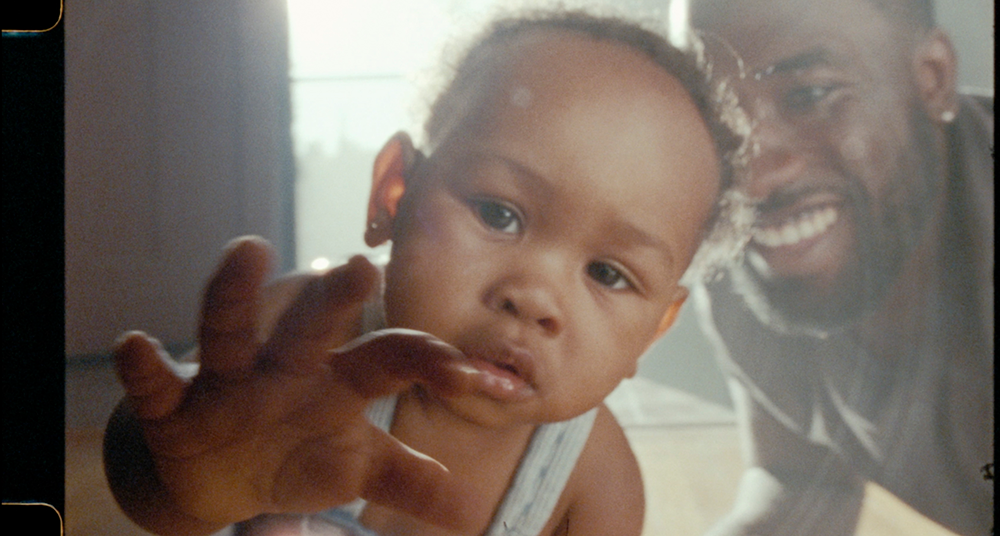
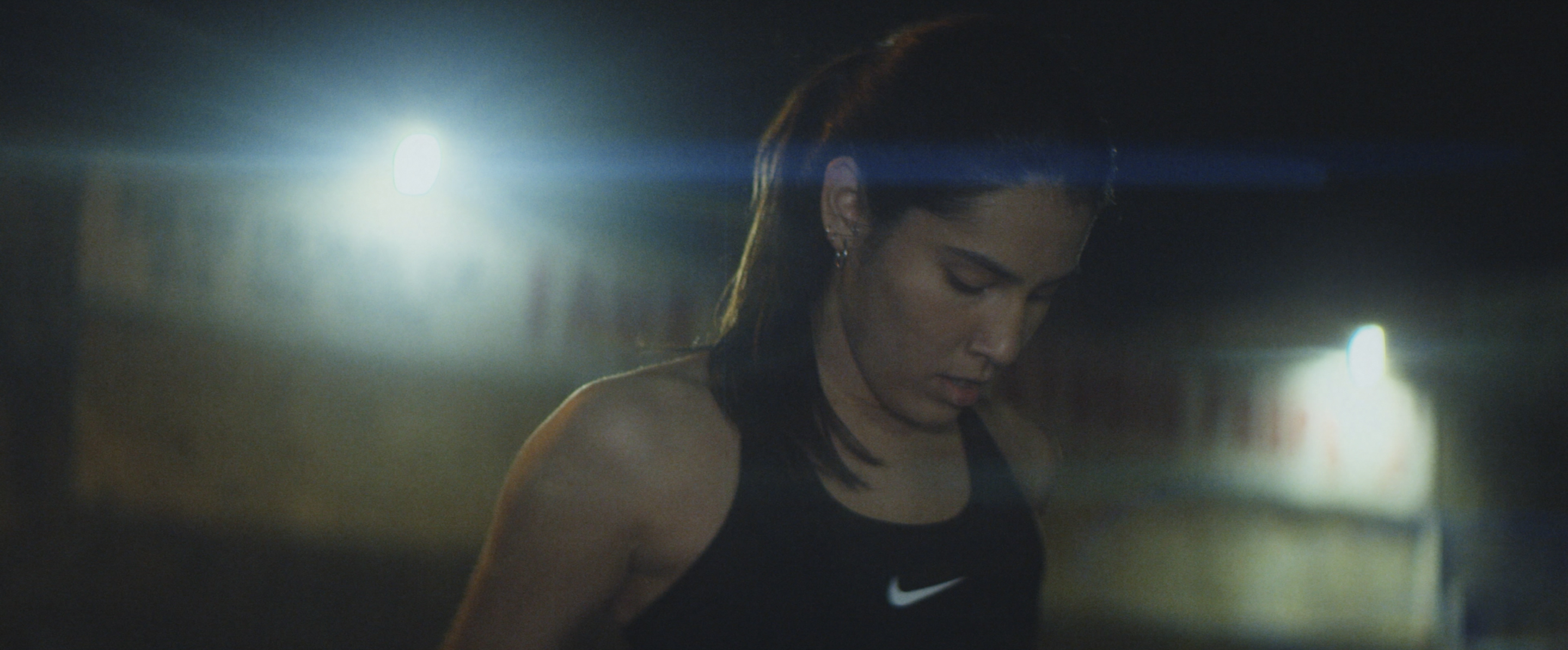
I was very calculated in how I approached my spec. As someone who had worked largely in the more abstract world of editorial filmmaking, I desperately needed lifestyle visuals on my reel, so the concept I went with had to include slice of life scenes, an emotional through-line, and an overall narrative arc, but it still had to pack a kick-ass, visually stimulating punch. I decided to write a script of vignettes that I could cut together as an anthemic and inclusive sports story. It would be scenes of active, everyday life, and titled, “We Are Athletes.”
'Airwaves' still by Stone Shannon
For decades, the spec commercial was an aspiring director’s calling card, and it had a history of launching careers. It seemed to me that everyone knew someone who had directed a spec, but when I actually reached out, the number of directors I could find with a spec was pretty small. It felt more and more like an urban legend than a common path to success. I wondered why that could be, and one possibility I considered was that some directors might be unwilling to admit to making a spec. Maybe they thought it was somehow a failure to admit that your own personal projects and innate storytelling style were not enough to get you noticed. Or perhaps making a spec meant admitting that you were pursuing a commercial career, which some people think should only be a fall back when your career as a feature film director fails - an extremely lucrative side gig that you happened to fall into on your way to the Oscars. Those kinds of people tend to think commercials are not an artistic or respectable pursuit that’s transferrable to the feature world.
Either way, directing a spec meant choosing to put time, money, and favors towards getting noticed for your commercial directing ability.
I personally love commercials. I love directing them, and I love watching them. I love working with brands and finding that section of overlap in the Venn diagram of concept and creativity. I don’t see commercial directing as a back-up. It’s something I am simultaneously pursuing alongside my narrative career, and I am certainly not the only one with this positive opinion of commercial directing - far from it. There are many signs that the greater film world is respecting commercial work, or at the very least, finding ways to collaborate with brands in meaningful and emotionally honest ways. It’s recognized as a viable medium, providing new opportunities and platforms for artistic expression and recognition. You need only look at the Spike Jonze directed Apple commercial Welcome Home starring FKA Twigs, or the Jil Sander series directed by Wim Wenders, to know that things have very much shifted.
Spec directing stigmas aside, when I finally decided to shoot one the next problem became logistics. There is shockingly little current information about how, what, and when you should consider directing a spec. And once completed, what to do with it? Even the narrative examples on spec directing are minimal. An article written by Toby Wosskow, whose spec ad was picked up by BMW for a Father’s Day campaign, is a good read, but it leaves out how exactly he was able to get the final product in front of BMW to begin with. In my research, I came across one site called Spec Bank, and it had the most informative interview with Jeff Nicosia, a former ad agency copywriter and creative director, who was also one of the founders of Group101 Spots, a collective for unsigned commercial directors. He gave detailed advice on what to shoot and what not to shoot, how to find the right concept, and pitfalls of spec directing.
Jeff feels that the key to a spec's success is that it needs to either be extremely conceptual, or incredibly visually interesting. You want your viewer to feel that they would have never thought of telling that story or selling that product in that specific way, or they would never have thought to shoot it that way. It should feel clever, maybe shocking or surprising, and it should definitely cater to defining your original style as a director. All that being said, I think there is an equal emphasis on visuals when it comes to the commercial genres I am interested in. But the main point being that originality is the key.
Now, if you’ve managed to concept and shoot an entirely original spec, what do you do with it? Without a personal connection, getting your spot in front of an agency or a brand is a nightmare. Agencies have worked for months if not years on campaign concepts and have strategic releases planned far in advance. These campaign concepts have been through focus groups, client meetings, deck revisions, and seen by every eyeball on staff. The idea that your spec is going to seamlessly fit in to this plan is more than unlikely. Jeff suggests, and I would fully agree, that it is best to choose a much smaller brand when considering making a spec. He remarks, “it’s kind of like a cover band playing 'Stairway to Heaven’ - everyone will compare it to the original.” Either start with a lower bar or choose the brand that best suits your style as a director and accept from the beginning that it will never be bought or recognized by the brand. It will only exist on your site as a proof of concept, but it will still make a nice addition to your reel, so you can still be satisfied with that accomplishment.

'Airwaves' still by Stone Shannon
Unfortunately for me, my spec was intended for Nike, Footlocker, or Dick’s Sporting Goods - three of the biggest sports brands in the world. I started by making a list of every contact I had made in the last 7 years of freelancing, and my 3 years working at Vice. I tried to connect them all back to one of the three brands. It meant creating an exhaustive Google spreadsheet, but despite much kindness from many in my network, it was ultimately fruitless. It involved over 100 emails, LinkedIn messages, Instagram DMs, and more than a few of the dreaded cold call. In our digital-dependent world, God help you if you can only find a phone number, because people are truly and wildly disoriented when you cold call them. Just try it, and see how it goes!
Other options for recognition include competitions and editorial platforms. Few competitions have spec categories though, so it usually has to be entered under a “personal project,” but my guess is that a spec submission will feel strange amongst the short films. I chose to submit to the Young Directors Award, the ADC Awards, and the Saatchi and Saatchi New Directors Showcase, among others. As for editorial platforms such as Nowness, Short of the Week, Directors Library, Directors Notes, etc… it turns out they are not interested in airing spec projects. In my experience, they will only consider short films, personal projects, and branded commercials.
So, what was learned? Specs are hard to do right and unlikely to succeed in this current media landscape. Especially in the way you intend, and despite your best efforts to justify all the hard work, time, and money that went into making it. The chances of connecting with someone at your chosen brand, having them watch your spot, and then choosing to buy it is improbable. Editorial platforms are not interested in airing this type of content, and competitions are by nature very cut-throat. This all sounds defeatist, but it doesn’t mean that I regret making it, not in the least. As with any project, I learned an immense amount about my style and where I want to go as a director. It was still an invaluable lesson that put me in the room with many production companies and future clients. I met with EPs and agents, including the very helpful Jeff Nicosia, who all helped me to gain perspective on what the success of a project means. After all the feedback I decided to entirely dismantle the edit and re-cut it has a short film, which ironically has nothing to do with sports. It’s titled “Airwaves”.
Even if this whole exercise still sounds bleak, it’s proof that there is an amazing amount of competition out there and even though that makes my pursuit more challenging, it is also responsible for raising the standards for commercial content. Directors are challenging what a commercial can be and that’s pretty exciting to watch and be a part of. We are now in an era of personal projects, short films, and music videos. These are the respected and recognized mediums for emerging directors. It is a direct result of competition and hopefully a sign of increasing authenticity.
--
Note From Tongal: "The Value of a Spec Commercial" is part of a series of Tongal Community-written blog posts that were originally sourced in the Tongal Blog Open Call Project. The views and opinions expressed in this article are those of the author(s) and do not necessarily reflect the official policy or position of Tongal. Read more Tongal Community-written posts here and then Pitch us a topic you'd like to write about for the Tongal Blog!