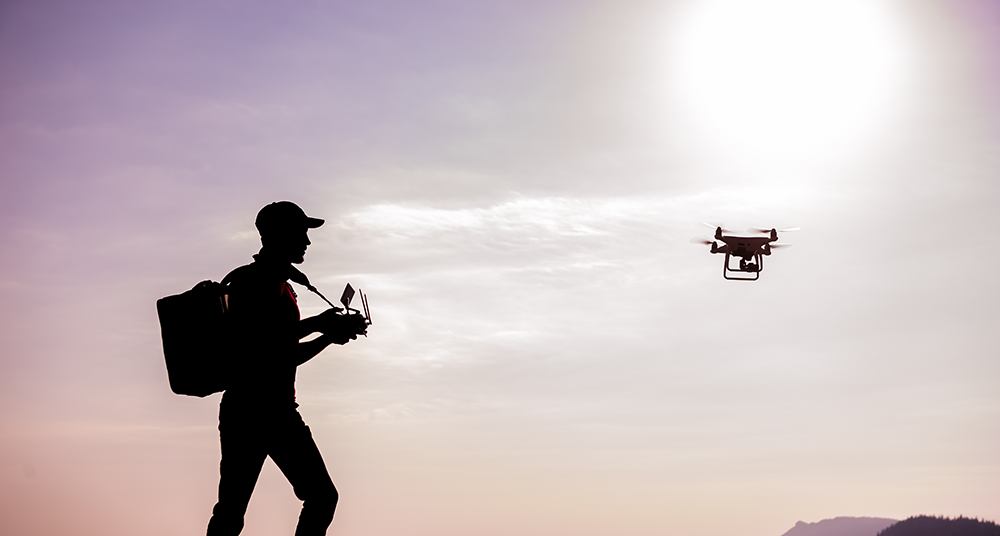
Previously reserved for tech enthusiasts and the military, drones have become more ubiquitous on sets looking to heighten a particular moment or establish a vast space, in a dynamic way. While exciting to add to your filmmaking toolbox, drone cameras and their operation teams can be expensive, so it’s important plan out how you want to use drones to make the most out of your time and get as much coverage as you can out of each shot.
Like any other shot you use to craft your story, drone-work should be approached with a sense of creative “story-showing”. I say this because drones are best for showing a lot…all at once. Like the adage “show it, don’t tell it” when crafting dialogue, this also goes for your camerawork, especially when using big camera moves that come from equipment like drones, Russian arms, technocranes, etc.
There are a couple of different thought processes that should dictate your approach to directing your drone and the coverage you want to capture for any given shot.
Pick Your Moment
Think About Storytelling, Um, StorySHOWING
Think about story first! Think about the moment or story point that you want to punctuate with a drone shot. Then, consider what the camera will be adding and supporting by how you decide to shoot it. How can you convey the most story and show something different using this unique camerawork? This will dictate what the drone will be covering as well as its movement. And there should be movement. The best thing about drones is the ability to float above everything (without renting a helicopter) and their smooth, sweeping movements that evoke a sense of excitement and intrigue.
All The Feels
Think About What You Want Your Audience to Feel and Learn
Once you’ve come up with how your shot will support the story, consider the scope, movement, and perspective you will need to turn the picture in your head into reality. Does the drone simply need to move across a space to convey a bunch of information, or does it need to be a part of the action, getting the audience as close to the moment as possible, maybe an explosion? Consider the exact plane and height of the audience’s vantage point. Are we meant to take in the scene from an impossibly high “god”-like point-of-view or should we be enveloped in the situation itself? Both shots could convey a single moment but would tell two very different stories and evoke different feelings.
Maybe the drone will heighten a moment of chaos while also orienting the audience to the layout of an action sequence, like in this scene from 911: Lone Star where a power outage causes multiple accidents at a busy intersection. The drone is used both to clarify information as to what is happening and to give the viewer a sense of urgency by enhancing close-up action/POV shots. By using the drones to convey both the large scale scenic shots and more intimate shots, the audience gains a larger understanding of the gravity of the scene. Drone shots can also cover quieter, more poetic moments like in this scene from the most recent season finale of Better Things, reflecting a theme of hovering helicopters that had been established throughout the season. Yes, drones can be poetic!
Practice, Practice, Practice
Think About Space and Movement
After you’ve figured out your shot list in prep, schedule time on set to practice with the drone crew. Choreograph the drone’s movement in collaboration with the drone operators using sight points from the ground. An example of good choreography direction might be, “Have the drone make a sharp sweep left at that telephone pole and then shoot up once it passes under the bridge.” Allow the operators to play through the shot a couple of times before rolling as you oversee the monitor to make sure it feels right.
A good movement principle (for drones and in general) is to turn any straight line into a diagonal or curving one. It automatically makes the movement more interesting. Beyond that, though, consider the camera’s relationship with the object that will be captured on camera. Is this a shot to convey information to the audience in a fun way or is this a moment where we should feel intimate with the subject or maybe feel almost too close to a moment that we never thought we could get near? Should the drone enter a small space that a human with a camera couldn’t get to? Again, practice makes perfect. Some of these maneuvers are difficult and while drone operators are great at what they do, make sure to give them the time to get the movement into their muscles. It may look like a video game on the monitor, but it’s harder than we all think.
Safety Monitor, Reporting For Duty
Think About Set Safety
As always, remember that safety is the number one priority. Drone operators should always create space for the drone to take off and land, usually demarcated with a landing mat and cones. Before rolling, allow the drone operators to call “Drone Up!” to alert everyone that a small machine with sharp blades is about to fly up into the air. After the shot is finished, allow the same moment for operators to call “Drone Landing!”. At the top of the day, AD’s should make the company aware of this as well when laying out the day’s work.
100 Feet is Way Better
Think About New Creative Ways to Use Drones
Finally, drones have found a new kind of relevance to our current socially distant situation where crew filmmaking has become a safety hazard. Creators are finding ways to use drones to mimic more traditional camerawork without operators having to be physically present with the camera or subject. While a perfectly static drone shot for an intimate indoor moment or dramatic close-up seems contradictory to the whole point of drones, right now, it might be the best option for those who have access to them. Recently, The Late Late Show with James Corden captured a duet performance with Liam Payne and Alesso from both of their homes (in different countries!!!) doing just that.
Drone story-showing is a dynamic way to convey plot and character moments in an unexpected way. Drone shots add more movement and excitement to montages and transitions and can evoke heightened emotions to further engage your audience. Make the most of your drone and have a great time flying high in the sky!
--
Note From Tongal: "The Sky Is The Limit: Directing Process for Drone Camerawork" is part of a series of Tongal Community-written blog posts that were originally sourced in the Tongal Blog Open Call Project. The views and opinions expressed in this article are those of the author(s) and do not necessarily reflect the official policy or position of Tongal. Read more Tongal Community-written posts here and then Pitch us a topic you'd like to write about for the Tongal Blog!