

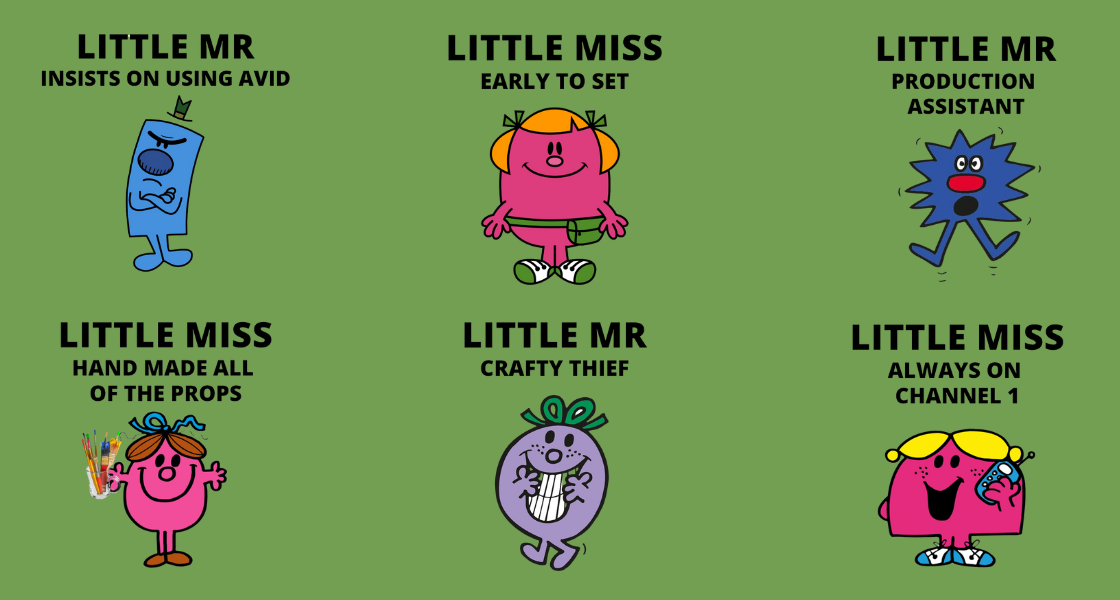
Whether it’s your first time on set or you are a film production veteran, set etiquette highly important. In my experience, knowing set protocol has been essential to getting re-hired by the same team for the next shoot. If you've never been on set before and are worried you might do something wrong, don't be! I'm sharing some of my tips to help you on your way.
Things you can do to ensure a great start:
Healthy & Safety
You may be asked to show proof of vaccination or a negative test before arriving to set, and/or be asked to wear a mask on set. Whatever the protocol may be, make sure you follow it to a T.
Points... If you're carrying anything remotely pointy, fragile, or bulky, announce it clearly.

Learn the Rules of the Set
Many productions offer onboarding documents which lay out expectations and clarify the rules of the set. Make sure you read and understand the rules before showing up.

Read the Call Sheet
Make sure you have read through the ENTIRE call sheet and have familiarized yourself with the most crucial details.

Show Up Early for the Call
Being early allows you time to familiarize yourself with the location, meet other crew members, and offer a helping hand if needed.

Dress Appropriately
100% of the work you do is going to be practical. Dress comfortably because you will be running around all day and you need to be at your best/ feel good while doing it. Be very careful about colors. Bright shirts (such as yellow, white, and even light grays) can affect the lighting of a scene by adding undesired color shades.

Introduce Yourself Properly
On your very first day, take time and introduce yourself to anyone and everyone. Don’t, however, expect that they all will learn your name. This is the rule of good manners. The right introduction is the best way to set contact with your crew and ensure that the upcoming working process goes smoothly, friendly, and fun.

Be Polite, Be Respectful
Whatever role you have on set, you need to be polite and accurate with everything you say and do toward your colleagues. Make sure you treat everyone present as a human being, and be aware of what everyone brings to the table. Try to learn everyone’s name and treat them with the respect they deserve.

Be Humble
As excited as you might be to spread the good news about the amazing projects you're working on, your time and focus should be used to support the project that has brought you to set. Be friendly, but remember that this is probably not the best time to pitch a script (as delightful as we all agree it is).

Stick to Your Assignment
Every department is designed to have precise control of a certain aspect of the filmmaking process. Always check with your department head on what is expected, stay in your department, work only with items you know how to handle. If something seems to be in your way, it doesn’t mean it is. Every single object on-set has its place. If you don’t know where some prop or item belongs, my advice to you is to avoid touching it.

Pay Attention
Production work often entails making quick decisions based on all available information. If you are on the wrong page of the script or setting up in the wrong area, you are letting valuable times slip away. You need to follow not only what the director says, but also carefully listen to the rest of your crew. If you’re an assistant, then you'll want to know what goes where and who loves what.

Be Understanding
Whatever you’re asked about or told to do, “I understand,” is the best answer. In addition to the “I understand” response, it’s always beneficial to repeat part of the question or direction in your answer because this signals to the person who asked you something that you got the point.

Be a Ninja
Ninjas are always in the right place at the right time doing their job perfectly. They remain quiet, composed, and unseen when needed. Being quiet on set means not only stopping any talking when the camera is rolling, but also turning your cell phone off and not asking non-related questions.

Don’t Disappear
Never disappear from a set without telling anyone! Regardless of your role in the whole film production process, if you’re there, then you’re essential.

Know the Language
Using proper language onset is not just a part of the film set etiquette, but an essential skill for any filmmaker. Make sure you learn the lingo common for the whole film industry, as well as specific vocabulary present on your set only.

Communicate Errors Conservatively
If you see something that appears to be a mistake, say something quietly to your immediate superior. Let your boss go to their boss, who can quietly say something to the next person up the ladder.

How to Get Hired Again
Leaving you with these quick tips to impress your co-workers and earn an invitation to work with them in the future:

__
Note From Tongal: This blog is part of a series of Tongal Community-written blog posts that were originally sourced in the Tongal Blog Open Call Project. The views and opinions expressed in this article are those of the author(s) and do not necessarily reflect the official policy or position of Tongal. Read more Tongal Community-written posts here!