
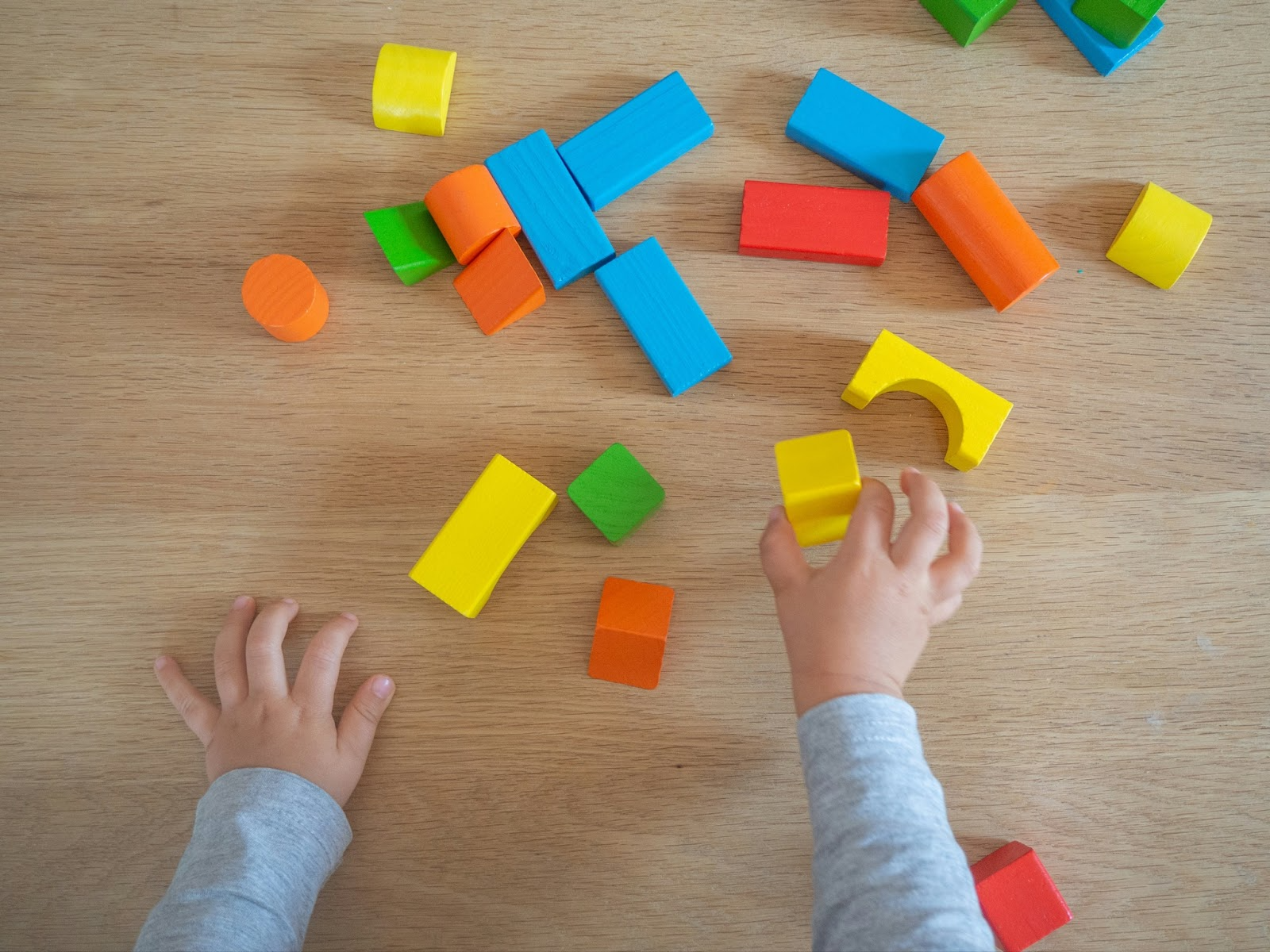
When we’re young, everything is playtime.
We discover letters through song.
We count numbers with blocks.
We go to recess and learn to be parents, doctors, and teammates.
Creativity is an opportunity to play, learn, and grow.
That can sound like an obvious statement, but it can get lost in the day to day reality of clients, invoices, deliverables, and yet another Zoom call. When crafting stories is also your food money, it can be hard to find those parts that still glitter.
Some of my best work comes from when I try out something new or add some spontaneity around my work. In one of my early creative successes, I took a risk and wrote a quick pitch for something due at midnight that night. I was stuck in a rut of corporate motion graphic explainers and boring graphics packages, so I wrote something with puppets and humor and all the things my portfolio was lacking.
Through that I was able to expand my collaborative field, try out a production with puppets and custom music, which was a creative departure from my usual day-to-day work. That one film —with a pitch I wrote in a couple hours — became the launch point for my entire video career. And it was just me “having fun.”
Do paperwork, build that process
This isn’t to say that you should ignore the very real administrative tasks of your business. Have solid processes for invoices, contracts, and communicating your production timeline. Make this as easy and automatic as you can. This is the grease that makes everything go smoothly. There are more options than ever to help coordinate your administrative side. Find one that works with your flow and stick to the process. It needs to be as automatic as brushing your teeth or turning on a light.
Find a way to change it up
One of my favorite Youtubers has started a series called “I Roll It, I Review It.” He has a set of dice and assigns streaming platforms, genres, and rows to the dice. He then watches the movie, and does a micro review. It’s been a great way to find new films, especially smaller indie and international films. There’s just so many dang quality films out, and it can be hard to choose or even know where to start. Giving over the choices to a randomizer like dice can introduce new ideas into a stale production.
Some ways to change it up and play with your work
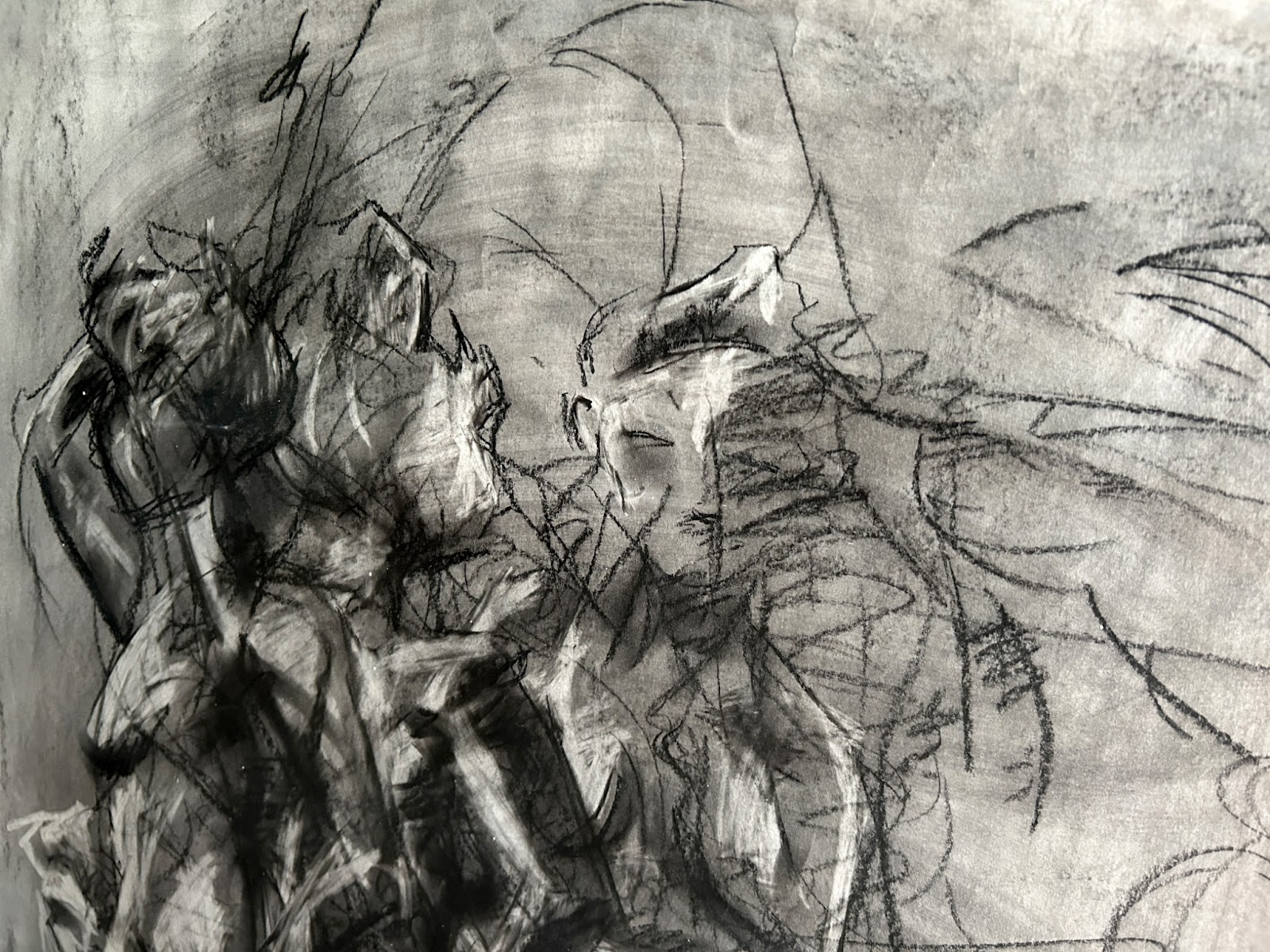
A life drawing from high school where I had to layer my 1 minute, 5 minute, and 10 minute drawings on top of each other.
1. Timeboxing is an easy way to start out. In school, we used to do warm up drawings that only took a minute, then we’d get five minutes, then ten, and finally, a full hour to work on a drawing. Seeing what you can do with a ticking clock removes some of the pressure to get it perfect and makes you focus on the most important elements. I’m especially fond of this one. Even if the idea is bad, it’s an idea. And it didn’t take too much time.
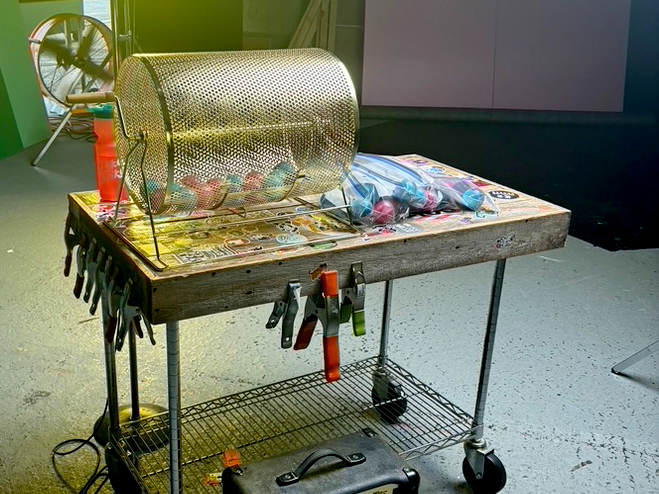
I also run a film festival where teams of filmmakers pull random genres out of a gold drum. They have a weekend to make a short film.
2. Randomize your elements and inputs. Try to find ways to inject a little spontaneity. Like the dice example, you can give up a little of what you would usually do and leave it to chance. Use a prompt generator, switch the genre, pull a random prop out of a hat that you must include. Having a thing you have to include can change the trajectory of the project, leading to surprising results. Folks like the crew at Drawfee present tons of ways to inject new elements into their art and even publish books of their favorite prompts.
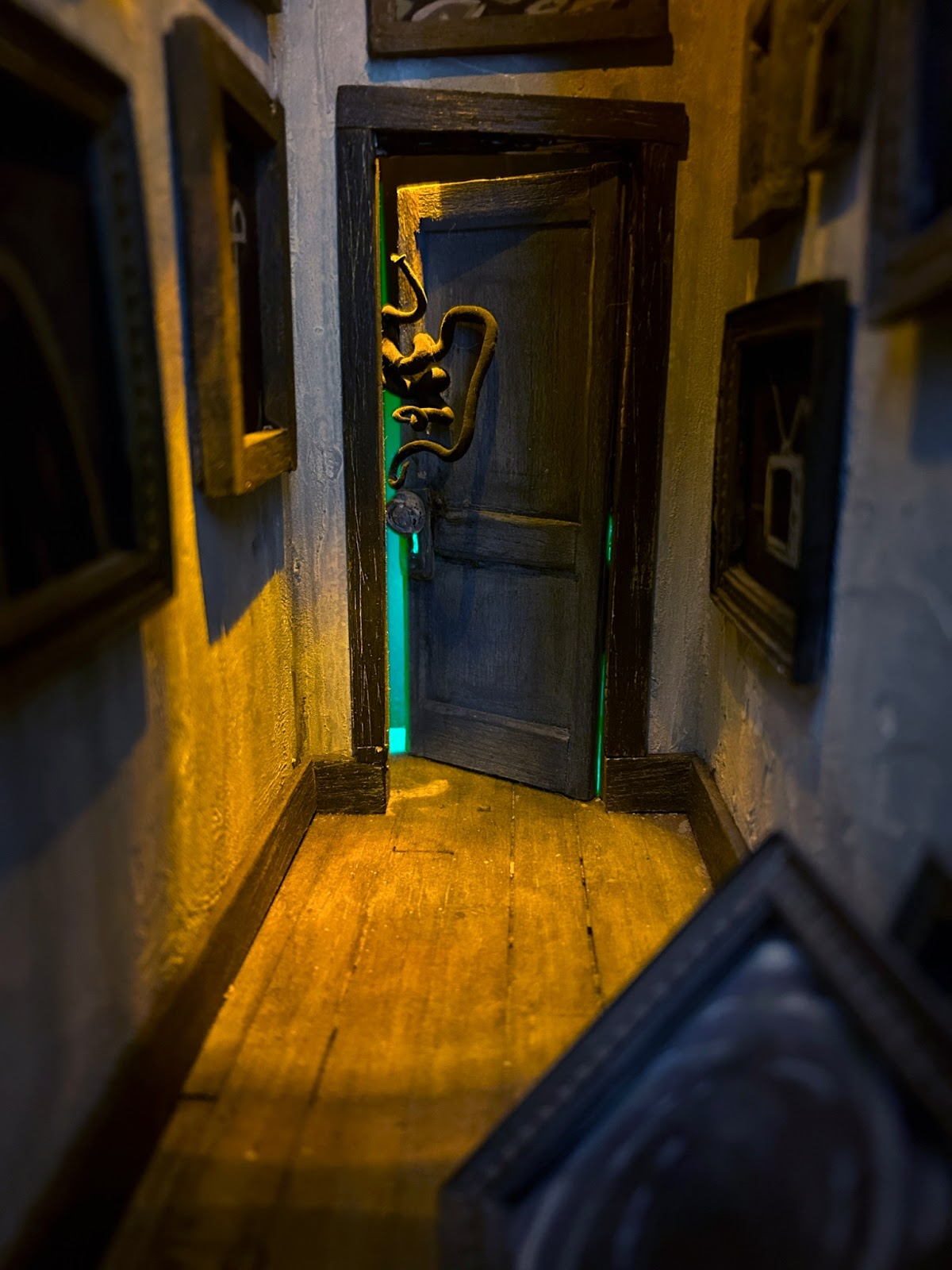
Miniature set I made for fun. Initially the tiny hallway didn’t “work.” But once I added a dozen tiny paintings the whole scene worked and it went from a dollhouse to a real scene.
3. Teach yourself something new. Your work, like you, should grow and change over time. Want to learn how to cook? Make a cooking video. Trying out a new sport? Make an illustrated guide of the rules. Don’t worry if you’re bad at first. As Jake the Dog says, “Suckin’ at something is the first step to being sorta good at something.”
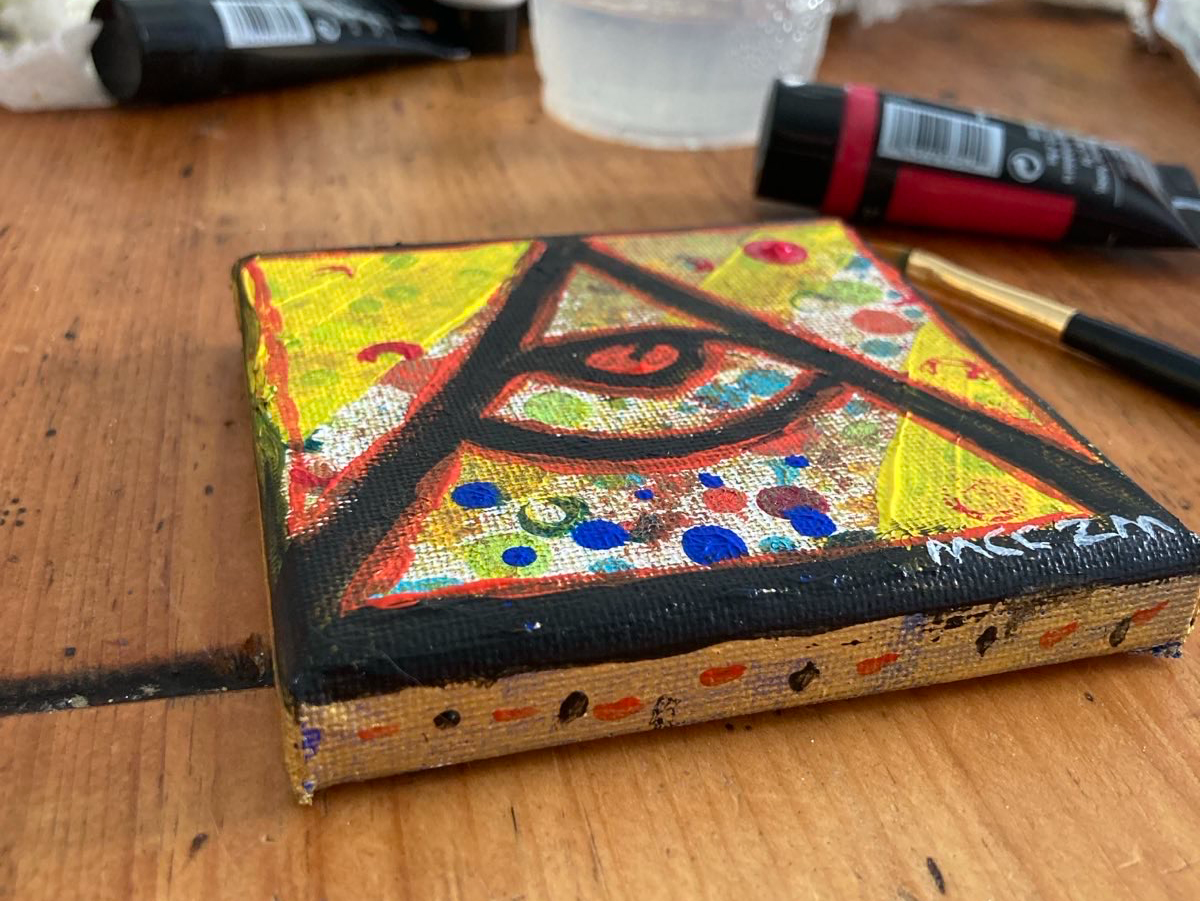
This painting was made by my nephew, plus four adults all trading the canvas around and adding a little bit. Each artist had 15 minutes to add something.
4. Make something collectively. There’s an old art game called an exquisite corpse. Don’t worry, it’s not gross. It just means that every one adds a little bit to the final piece. In one of the original forms of the game, someone drew a head, and the next person drew the torso, and so on. I love doing these games with kids because it teaches them to not be precious about what they’re making, and see how other’s contributions can improve a piece. For filmmaking, try making a story where each sentence is made by a different person. Or build storyboards from pieces clipped out from magazines.
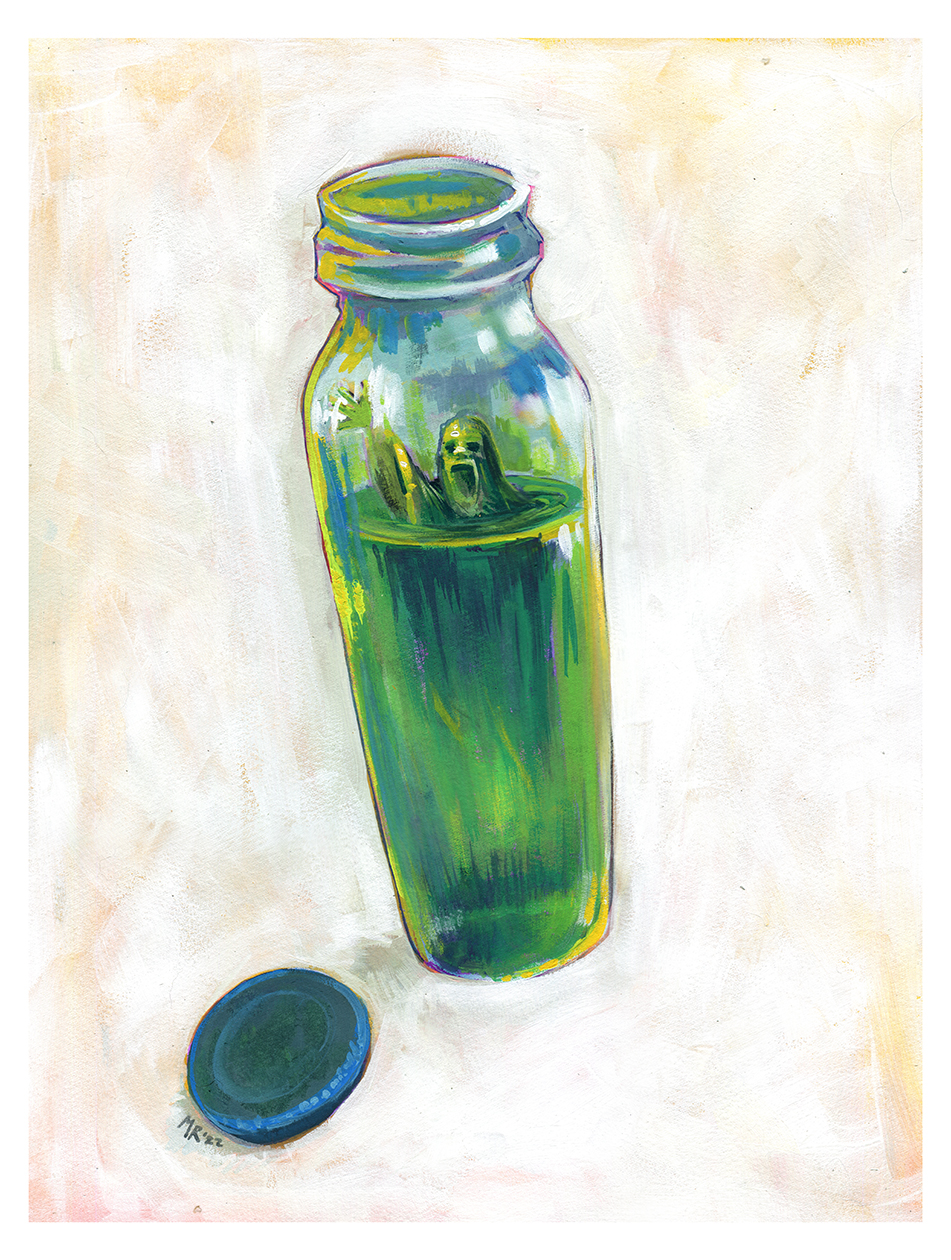
This is a cover for a book I’m working on. I created this when I had some writer’s block. It’s based on an obscure B-movie from the 80s, and helped me figure out some of the imagery I wanted to work with.
5. Fan fiction is another ripe area for exploration. A lot of my commercial work is subtle homages to my favorite songs, books, television shows, and movies. I use puppets because I love the Muppets, I work with local musicians because I love their music--I’m always looking for ways to put my influences into my work. It’s not just about loving these things, but keeping those cultural moments alive and contextual for the next generation. I was born in the latter half of the 20th century, but even I know Clark Gable’s classic line from It Happened One Night. That’s all thanks to Chuck Jones giving it the iconic Bugs Bunny. (The phrase is “What’s Up, Doc?”)
Celebrate your wins
This one should be obvious, but we’re all guilty of worrying too much about the future. When you win a pitch, complete a project, or get something good in your life you must celebrate it. Marking those little wins trains your brain to enjoy the process. If every project is a push over the finish line, ending in collapse, you’re only training yourself to hate the thing you used to love. And, it can make you more successful!
“Research shows that recognizing small successes activates the brain’s reward system, which releases dopamine and reinforces positive behavior. This process fosters a sense of accomplishment and progress and boosts self-efficacy and self-esteem. Thus, when people celebrate their achievements, they are more likely to remain motivated and pursue further goals, creating a positive feedback loop of success and satisfaction (Wang et al. 2017).” - Psychology Today, Ray Parker.
Take breaks
Prioritize downtime, hobbies, and non-work time. Once you start getting paid to be creative, your real job is protecting yourself from burn-out. Tend to yourself like a cute little plant growing in the cracks of a city sidewalk.
Taking time away from work will enhance not just your physical wellbeing, but gives you time to get fresh inputs. New types of art, music, and ways of working. One of my favorite examples is how farming led to the invention of the television. This totally different industry led to a really big insight. It didn’t come from the inventor shoving his face deeper and deeper into the problem. Getting out —literally touching grass — led to a powerful invention.
Try to find ways to play when you’re writing a script, shooting a video, or crafting a design. Work that feels like play makes you a better, more resilient, and happier creative professional.
And, rest!
Creatives are working with the world's biggest brands on Tongal.