

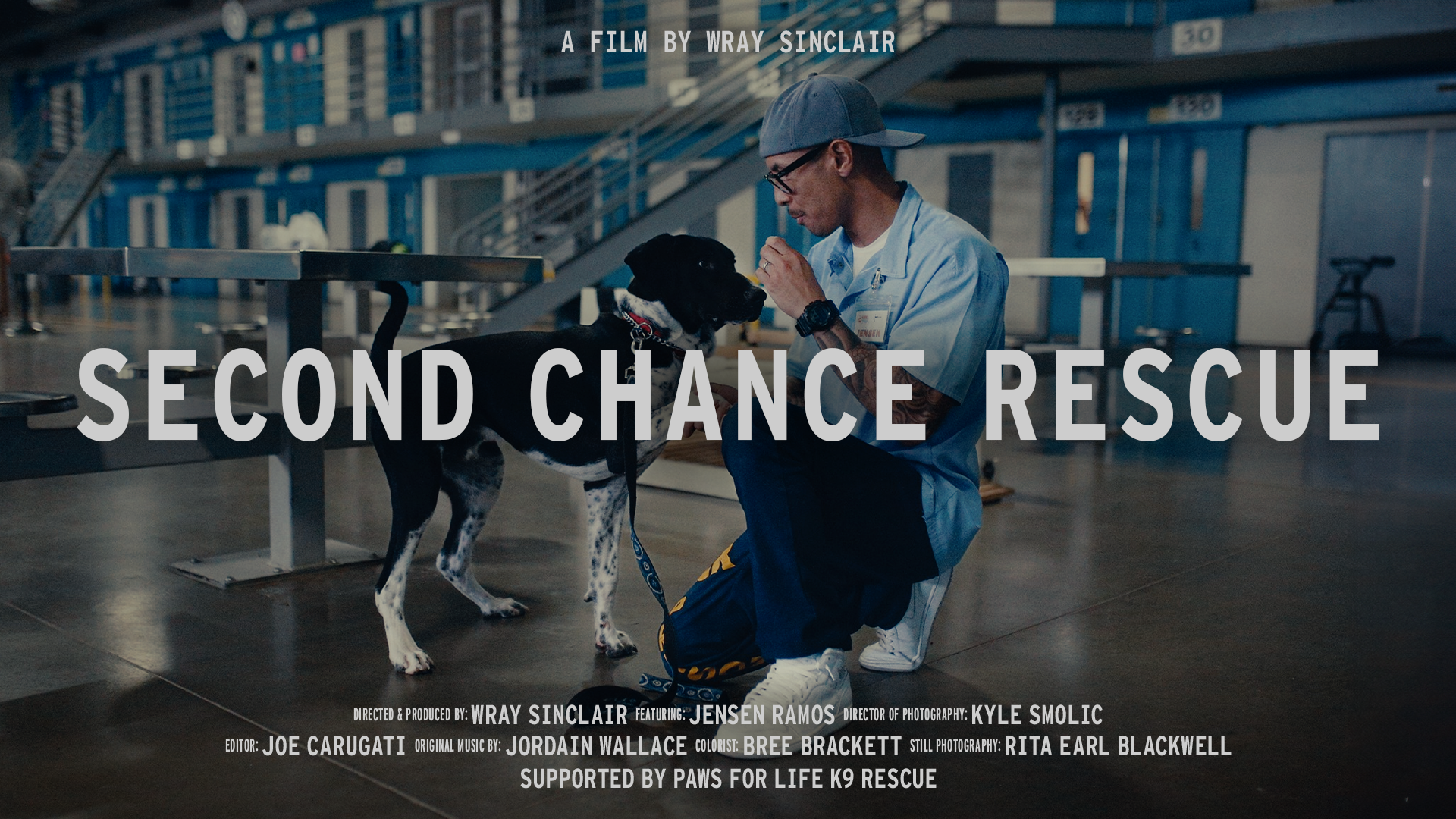
Today, it’s hard to imagine Jensen Ramos as a gang member. With his groomed mustache and trendy glasses, Ramos looks more like a school teacher than a criminal.
If you picture a man convicted of attempted murder and given three consecutive life sentences, Ramos looks nothing like that. Yet that is his story, which he shares with honesty and grace in the documentary Second Chance Rescue, the winner of the Grand Prize in the Hero’s Journey Story Challenge, a short film content hosted on Tongal in collaboration with Boulder Crest Foundation and Atlantic Pictures.
“[Gangs] had an identity,” Ramos recalls in the film, his cadence patient and thoughtful. “It made me feel good to commit crimes, especially when [fellow gang members] started acknowledging me for the crimes that I committed.”
This dissonance lies at the heart of Second Chance Rescue, a short nonfiction film by Los Angeles-based photographer and director Wray Sinclair. Over the course of nine-and-a-half minutes, Ramos describes his journey from an angry, rebellious teenager to a successful dog trainer, loving husband, and father.
The documentary was awarded first prize from more than 80 artful and heartfelt submissions to the short film contest, which celebrated stories of Posttraumatic Growth. The winner was announced on June 13, Posttraumatic Growth Day, an annual commemoration established by Boulder Crest, a nonprofit which provides free programs for those who have experienced trauma, and focuses on turning struggle into strength. As well as receiving the $10,000 Grand Prize, the film will be screened next week at a special event at Ludlow House in New York City, alongside other films honored in the competition. The panel of judges included Forrest Gump producer Wendy Finerman and American Ninja Warrior host Matt Iseman. Check out Sinclair's winning film here.

Wray Sinclair
Remarkably, Second Chance Rescue was Sinclair’s first film. Raised in Virginia, he moved to L.A. eight years ago to work as a photographer. “This was my initial push into directing,” says Sinclair. “I wanted to do documentary project about a local nonprofit. Now I split directing and photography, 50/50.”
During his first few years in California, Sinclair was constantly busy with shoots, leaving him with little free time. But when work was hit by COVID in 2020, Sinclair decided to pursue another lifelong interest: fostering dogs. He’d grown up with dogs and was drawn to a Mission Hills-based nonprofit, Paws for Life K9 Rescue. The organization has many different initiatives, including a prison program, which trains inmates to work with animals.
After two years of volunteering, Sinclair introduced himself to the founder of Paws for Life and proposed a documentary about the prison program. The founder loved the idea and recommended several potential candidates for an interview. Sinclair had interacted with Jensen before and the two had become friends, so he seemed like an obvious choice.
“Because I was fostering dogs, we’d had tons of conversations,” says Sinclair. “We knew each other, Jensen just didn’t know what I did for work. He was very open about his past and wanting to make a good impact on the world.
“He ended up getting married in prison, and then getting out and having a kid. The inmates all have interesting stories, but no-one had a story as deep as Jensen.”
Ramos entered the prison system in 2002, fully expecting to spend the rest of his natural life in maximum security. Participating in the Paws for Life program requires exemplary behavior, and Ramos was eventually admitted. He came to excel at dog training. “It gave me something I never thought in life I’d ever become,” Ramos says in the film.
Ramos married his girlfriend, Jennifer, while still incarcerated. In 2020, California Governor Gavin Newsom commuted his sentence, and Ramos now owns his own dog-training business. He and Jennifer also have a young daughter, and in the film’s most emotional sequence, Ramos expresses regret about having to explain his past, including 18 years behind bars, to his child.
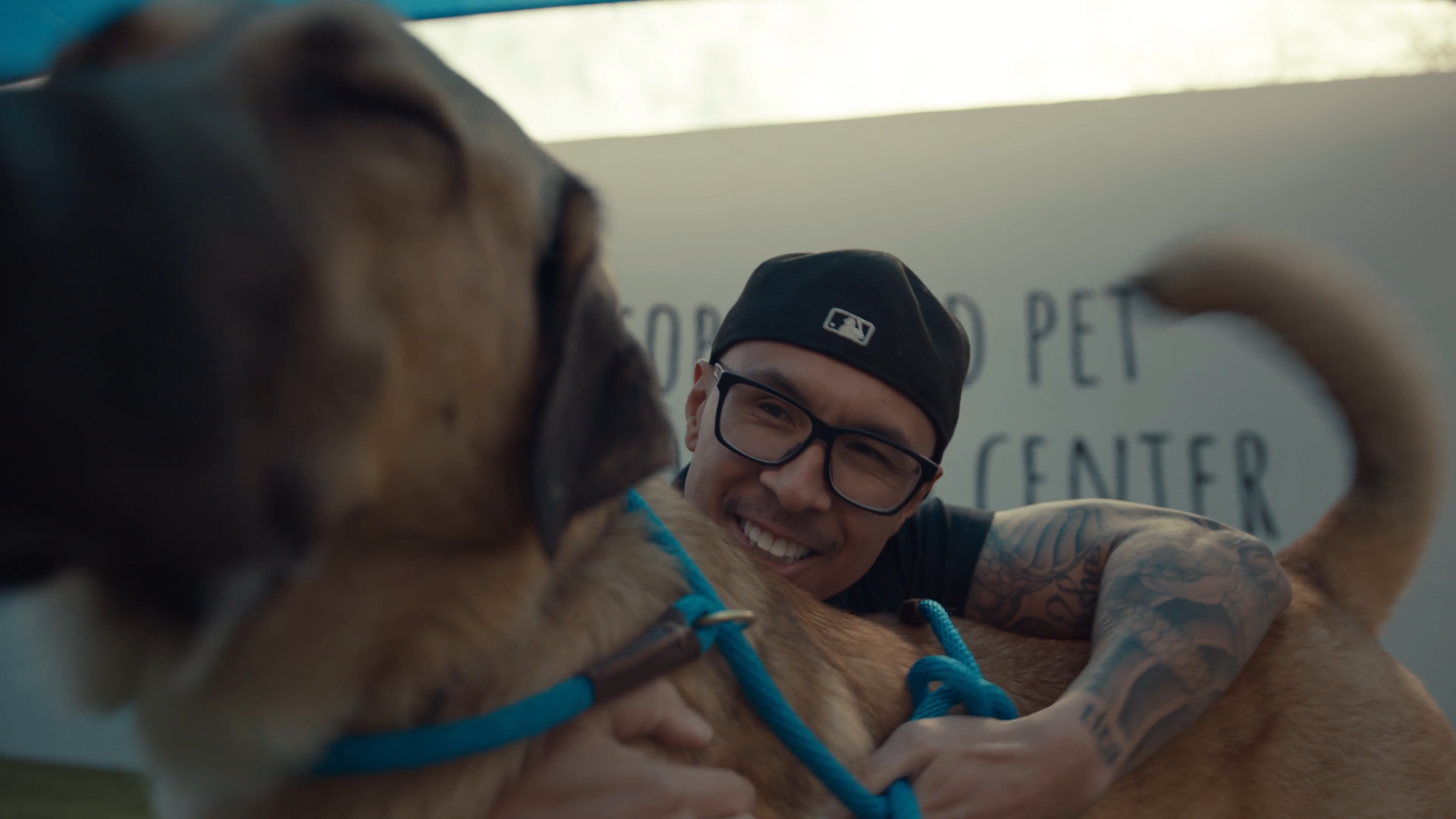 Jensen Ramos
To capture this extraordinary story, Sinclair gathered a barebones crew and filmed a two-hour interview with Ramos. They then spent at least two additional days shooting around the city, including a favorite overlook of downtown Los Angeles, Ramos’ own home, and inside of the prison. To round out the narrative, Sinclair recreated some moments in a studio setting.
Sinclair values his relationship with interviewees, and he begins projects with regular and long conversations. “The most important thing, for all my subjects, is establishing trust,” he says. “I was approaching taking pictures the same exact way I do directing. I was never this crazy gear guy. I still shoot on an eight-year-old still camera. It’s always about the subject and getting them comfortable.”
Sinclair says that Ramos was pleased with the final film, which covers such diverse themes as troubled youth, gang initiation, the prison system, rehabilitative programs, and the redemptive power of love and forgiveness. He had no expectation that the documentary would win the Hero’s Journey prize — but is happy it is reaching a new audience.
“It was more of a surprise than anything else,” Sinclair says. “I tell the stories that I want to hear, so I’m not concerned about the audience or who thinks what about it. I make it for myself, at the end of the day. But I’m happy that it resonates with other people.”

Behind the scenes in L.A
Throughout Second Chance Rescue, there is an unspoken but clear subtext: By training rescue dogs, Ramos also transformed himself. This is one of Paws for Life’s goals, and also aligns with Boulder Crest’s mission of helping people to find new strength amid adversity. But neither the filmmaker nor subject had truly identified this ripe metaphor until they started talking.
“To be honest, that came out later,” says Sinclair. “As a filmmaker, I want to expose people to these lives. I want them to think about what it means to be incarcerated. You shouldn’t look at these people in a different way. They’re humans, just like us. I’m not anti-prison. But I think everyone deserves a second chance.”
Filmmakers are working with the world's biggest brands on Tongal.