A preloader in the shape of a lightning bolt
Blog > Post

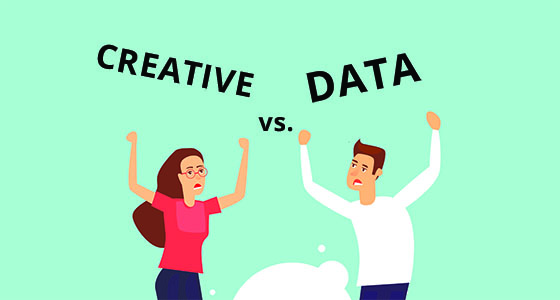
Creative Marketers and Data Nerds Duke it Out

Sarah Evans
Sarah Evans
Feb 22, 2018


Note From Tongal: "Creative Marketers and Data Nerds Duke it Out” is part of a series of Tongal Community-written blog posts that were originally sourced in the Write What You Know Tongal Blog Project. Read more Tongal Community-written posts here and stay tuned for more opportunities to Pitch a topic and write for the Tongal Blog!

---


The struggle is real when it comes to DTR’ing (defining the relationship) at work. But I don’t mean office dating. As a researcher lucky enough to be welcomed into advertising agency environments, I have found it fascinating to navigate the relationship between creatives and data scientists/researchers (and those of us with identity crises in between). Are we friends? Frenemies? Batman and Robin, or Wile E. Coyote and Road Runner?


Perhaps as a byproduct of how the lines in the sand are drawn in the current, more traditional, business landscape (i.e., big “consultancies” vs. Madison Avenue advertising agencies and talent), data and creativity are often pitched as at odds with each other. Data makes ads bland. It makes them vanilla. It doesn’t win awards. From-the-gut creative is tenuous. Unsophisticated. Out of touch.


But, might it be a false dichotomy? Need the increasingly important and prominent role data is playing in the advertising conversation be a threat to creativity?


From my view, people in either “camp” are missing out. As are their clients by extension. Research and creative ideation are both means to bigger and more important ends – behavior and behavioral change. They’re tools, and no one would try to build a house with only a hammer in the toolkit. Messaging is most powerful when data application is leveraged to enhance communication creativity and its impact.


With a few best practices in mind, you’ll be well on your way to translating data into powerful creative.


  1. “Audience-centered” isn’t (just) a buzz phrase. User-centered design dominates conversations about web design and product development, but these are types of communication tools at their cores. User-centered design carries tremendous value applied more broadly in the marketing and communication context. Influence and behavioral change start with a thorough understanding of your audience and key drivers of behavior (or lack thereof). Data reveals these drivers and helps you prioritize them. Understanding the audience’s values barriers, emotional connections/baggage shapes the way you connect and communicate with them – regardless of format or channel.                                                                                                                                                                                                                                                                                                       
  2. Audience insights come in all shapes and sizes – and can be obtained quickly and cheaply. Putting the audience at the center of your creative ideation process doesn’t require a huge research process. There is a wealth of data publicly available (at no cost) that can be leveraged quickly in the early stages of ideation. For example, a recent Tongal project aimed to “empower [consumers] to embrace their oral care.” Where to start? One possibility would be leveraging the wealth of information published by the Centers for Disease Control and Prevention (CDC) on oral hygiene through their Behavioral Risk Factor Surveillance System (BRFSS). Through BRFSS, CDC conducts more than 400,000 health-focused interviews each year across the U.S. – a powerful, free, and easily accessible tool to help you develop an effective audience and message strategy. Data provides the building blocks for a creative execution that will pull the right levers to influence change.                                                                                                                                                                         
                   
  3. Data is only as useful as its application. At the end of the day, there’s much more to decision making and behavior than rational thought and logical arguments. People need to feel something – and creative is the best way to generate that. The questions are: (a) Is the communication generating the feelings you thought it would, and (b) Will the information resonate in a way that will move the needle? Data-driven strategy lends confidence to your resounding affirmative answer… but done correctly, research and data are the (show-stopping) behind-the-curtain support to center-stage creative.


The power of big creative ideas can’t be underestimated nor can the value of research and audience insight. The people and the organizations who embrace the grey so to speak are the future of advertising and marketing. Here’s hoping we’re on the path to dropping the boxing gloves and bridging the (perceived) gap between art and science. For our clients, their audiences, and their missions, it’s a match made in heaven.


New to Tongal? Learn How Tongal Works 
and check out our Open Projects to get involved!

Comments
(No Comments. Login or Sign Up to join the conversation!)
Page Sizes: