


You’re about to begin production on your first film, and all you need is the right investor to make your vision a reality. In the following article, we will discuss some of the tactics you can employ to attract individuals to your project and convince them that your film is a wise and profitable venture. Specifically, we will look at the differences between a grant and a private investment, how to compose a professional film pitch as well as the role that tax credits can play in a production budget. Once you have mastered these tactics, you will be ready to head out into the market and begin pitching your idea to the masses.
View your film as an investment as opposed to a loan

It is important to communicate to potential investors that your film is an investment opportunity as opposed to a loan, and therefore they are not guaranteed a return on their money. Numerous factors such as the national economy, the condition of the film industry, and screening/distribution opportunities can affect the financial success of a film. Also, it is extremely helpful if you can attract some seed money (approximately 5-20% of your budget) prior to approaching investors as it will inspire confidence in your project and help elevate the profile of your production. Ultimately, it is important to view your relationship with investors as a business transaction (even if they happen to be close friends and family members), and you should therefore maintain meticulous legal paperwork throughout the process of producing your film.
Shoot a low-cost trailer to attract investors

When trying to attract investors to your project, it is wise to produce a cheap trailer that will offer viewers a clear understanding of the tone and look of your film. Using your phone or a DSLR camera and casting friends and family members, you can compose a professional looking short film on an extremely limited budget. For example, the Coen Brothers shot this microbudget fundraising trailer for their first feature film “Blood Simple” in order to appeal to investors. This practice is also effective if you plan on launching a crowdsourcing campaign to raise money for your project through an online platform such as Indiegogo or Kickstarter.
Know your audience

It is essential to know your audience when you are pitching a film to potential investors as their background will dictate the manner in which you approach them as well as how frequently you update them on the status of your production. For example, if you are speaking to individuals who have not previously invested in films, you will need to provide background information about how film productions operate and avoid industry jargon. Whereas if your potential investor is a savvy producer who has previous experience investing in films, you will want to be respectful of their time by making your pitch compact, direct and intelligent. In either situation, it is wise to give the investor a clear idea of what your finished film will look like through the use of visual aids and you should therefore formalize your pitch in the form of a Powerpoint or Prezi presentation. Try to avoid cliffhangers and instead offer the investor a clear outline of exactly what will happen in the film, your target audience, the budget for your project, your requested investment and your projected sales figures.
The importance of tax credits
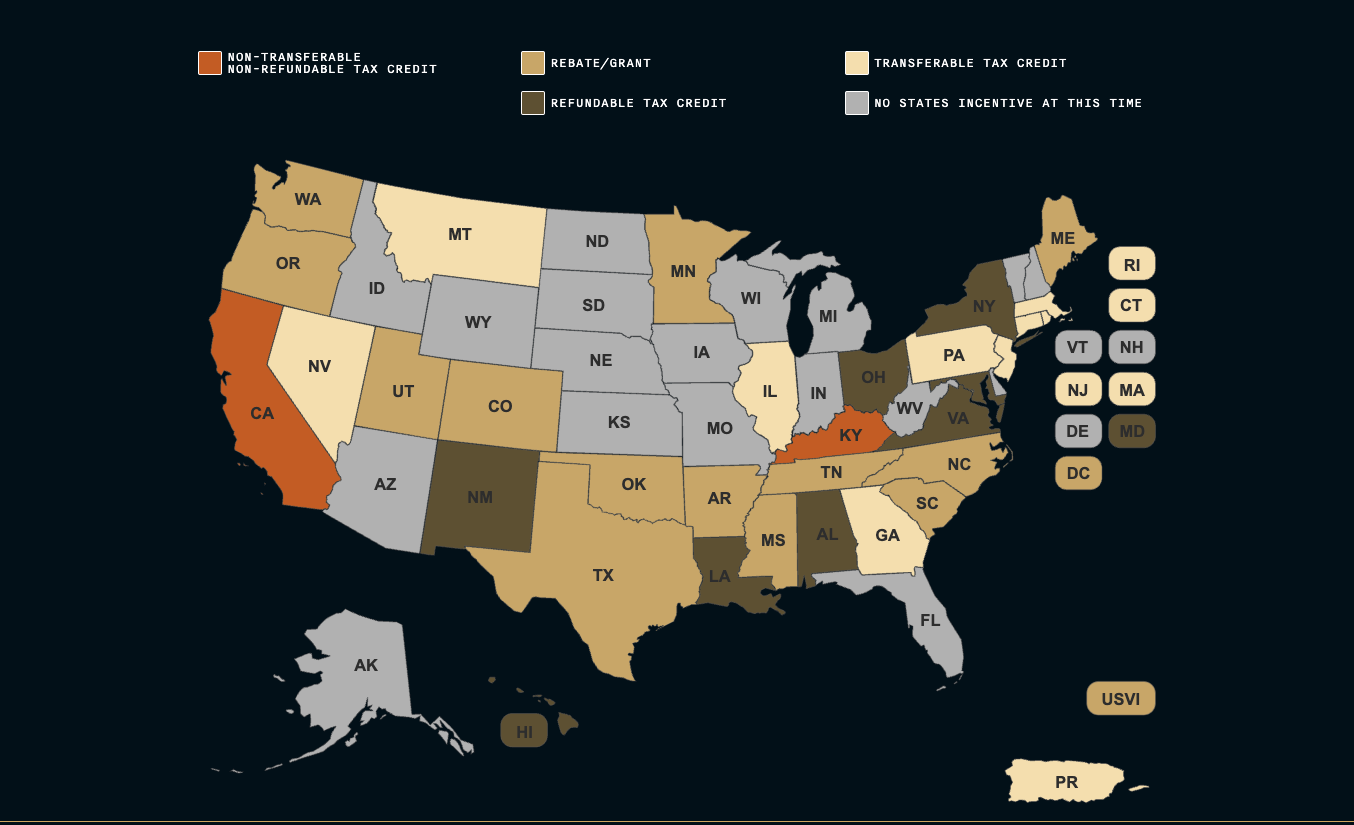
Certain states and provinces offer lucrative tax credits to filmmakers in order to attract productions to shoot in a specific area of the country. These subsidies can help to significantly reduce the investment funds needed to produce your picture and ultimately allow you more time and creative freedom when shooting your film. You may also choose to reallocate any excess funds to promoting and distributing your film once it is complete. However, tax credits can change from one year to the next and it is therefore important to do your homework on the best time in which to launch your production. Media Services, a production payroll company has an interactive map on its website that shows the tax credits offered in each state to give you an overview of how they operate in different sections of the US.
Film grants

Grants are subsidies that can help a filmmaker finance a production and, unlike a private investment, there is no expectation that this money will be paid back. However, the application process for a grant can often be lengthy and complex, and these funds may come with certain strings attached. Specifically, you may be required to shoot a certain portion of your film in a particular geographic location and a certain percentage of your cast and crew may need to be citizens of the host country. Also, the content of your film may need to reflect the values of the organization offering the grant. It is therefore wise to carefully read the guidelines associated with each grant program in order to ensure that your film adheres to the rules associated with the competition. In the US, there are many publicly and privately funded grant programs set up to assist film productions such as:
The Jerome Foundation’s Film and Video Grant Program
Panavision’s New Filmmakers Program
Similarly, in Canada, there are a number of governmental bodies that offer grant programs to help filmmakers launch their projects including:
__
Note From Tongal: This blog is part of a series of Tongal Community-written blog posts that were originally sourced in the Tongal Blog Open Call Project. The views and opinions expressed in this article are those of the author(s) and do not necessarily reflect the official policy or position of Tongal. Read more Tongal Community-written posts here!