Note From Tongal: “How the Entertainment Industry Can #BalanceForBetter” is part of a series of Tongal Community-written blog posts that were originally sourced in the Tongal Blog Open Call Project. Read more Tongal Community-written posts here and then Pitch us a topic you'd like to write about for the Tongal Blog!
--
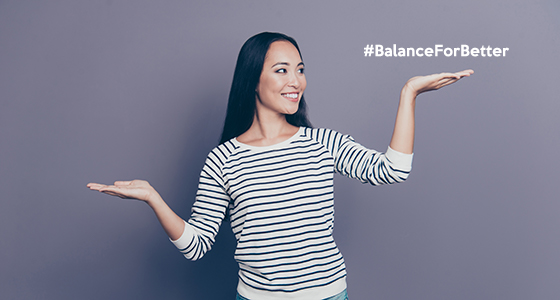
International Women's Day is just around the corner [March 8 - woohoo!] and the theme for this year is: Better the balance, better the world.
So, what the heck does ‘balance’ mean? We hear phrases like ‘work-life balance’ or ‘a healthy balanced diet’ or ‘you have a balance of -$10 dollars in your account, Loren’ all the time - but a phrase such as ‘creating balance’ isn’t something I use in my everyday vocabulary.
Why?
There are a few factors I’ve heard for people not wanting to discuss ‘creating balance’, especially when it comes to the industry:
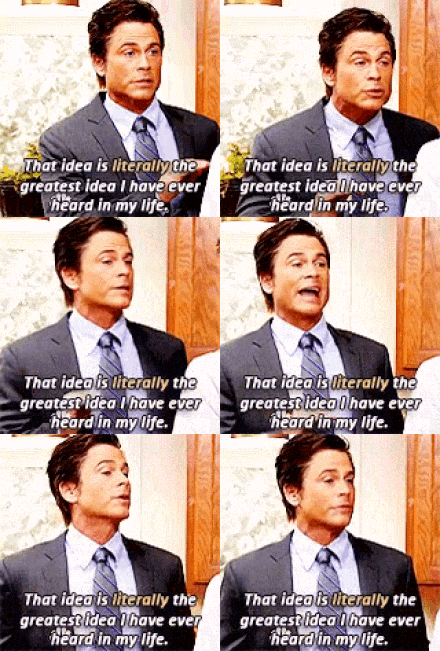
The last one confused me the most... because balance [Chris Traegar voice] literally means:
balance [noun]
: an even distribution of weight enabling someone or something to remain upright and steady
So balance is not about choosing a side, it’s about working as a whole in order to not only grow, but hold up over time as an industry.
Yes, we’re working together, but balance between genders doesn’t mean that everyone should become the same. We’re not ants.

Each and every one of us are different, and that’s awesome, but due to our differences balance doesn’t naturally exist. That’s why we must actively distribute it. We have to take action to make balance. We must create balance.
I was sick of talking to myself so I spoke with two very talented people in the industry, a woman and a man [see... I’m balanced too] to get their opinions on this subject.
Liz Rogers is an art department coordinator [Warner Bros.’ Gotham, NBC’s Shades of Blue, and CW's Black Lightning] and on-set photographer here in Atlanta.
Todd Mount, co-founder of M-O [a creative video production company in Atlanta] and has worked with CBS, MGM, Coca-Cola, Hartsfield Jackson, and Caesars Entertainment.
What’s your favorite thing about what you do?
What’s your opinion on balance within the industry?
• Equity is giving everyone what they need to be successful.
• Equality is treating everyone the same.
So the debate is: Equality aims to promote fairness, but only works if everyone starts from the same place and needs the same help. Equity seems unfair, but it actively moves closer to success by leveling the playing field for everyone. But not everyone starts at the same place, and not everyone has the same needs.
What're your thoughts on this?
How do you think we can achieve balance for better?
Creating balance means actively giving men and women the same opportunities to succeed, despite their differences. Recognizing our differences as unique parts working towards the same goal - because our differences are not the obstacles, they are part of the solution.
We need to talk about how we can do this more, and actively change things up now: because balance in the workplace isn’t just a women’s conversation - it’s a business conversation.