

At USC, my Business in Film professor used to quip, “no deal is a good deal.”
The observation about contracts came from distribution companies who bought all of your rights, claiming you’d make 65% of every dollar, but not mentioning the hyper-inflated costs you’d have to pay them for marketing the film. While we did see these contracts, the reality is that we also saw some really good ones too: with minimum guarantees, ownership over the marketing spend, and 100% revenue on educational content.
While not all grants will limit your film’s success, there are definitely some things to look out for. But first, a little backstory for context.
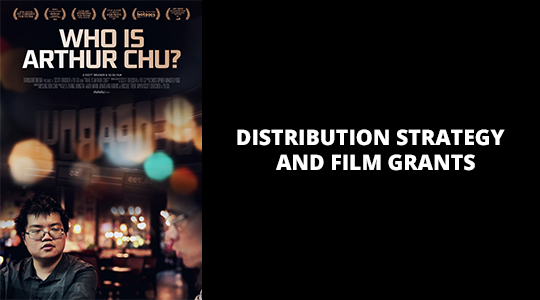
Six years ago, I started making a documentary about Arthur Chu, a Jeopardy! contestant who went viral for his controversial playing style!
We launched a Kickstarter campaign, but I had no idea what running a successful campaign actually entailed and we didn’t come close to reaching our goal. Thus, when we were offered a $40,000 grant a few months later, it seemed like a no-brainer—this was going to save our film. We felt like we had to say yes.
We read the fine print and so did our attorneys. They marked up the contract and everything was a go, except for one key section: “Do you really want to give up your broadcast rights?” I thought to myself, “I mean, they’re helping us secure broadcast; this is a good thing, right?” By giving over our broadcast rights, it made the grantor our distributor by proxy, and everything was off the table.
Looking back on it now, these thoughts only affirm how little I understood about the grant process, and in turn distribution. Here’s a short list of things I wish I had known when going through the process:
1. Understand your story.
Know how to describe your film in one to two sentences—encapsulating the characters needs and desires, the journey you’re about to take people on, and why it matters. We drastically underestimated how important the elevator pitch was going to be. It’s the most common question you’ll receive, from grants to film festivals.
2. Find the right fit.
There are grants that can be won from a simple seed of an idea (pitch grants) and those for people who already have a rough cut (finishing funds). The most comprehensive list of grants for documentaries can be found on the International Documentary Association (IDA) website. The “Support Type & Topic” tab is great, as you can look at grants just for post-production, or for equipment, etc. It’s also good to keep tabs on seasonal lists that come out (like this one).
I also find it effective to reach out to filmmakers who have explored similar themes in their films to see if they received any grants and to get insight on their investing strategy. Further, it helps reading applications of filmmakers who have received the grant you’re applying for. Sometimes the grantor is willing to show you samples, or you can try reaching out directly to previous winners.
Still unsure of where to start? Try this shortlist of a few of the major players. Sundance, Independent Lens, Catapult, MacArthur, Pare Lorentz, National Endowment for the Humanities, Roy Dean Grant, IFP, and the Ford Foundation (which has a database of even more grants).
3. Keep ALL of your rights.
If you think your film has a chance of being distributed by the likes of The Orchard, Submarine, or any of the larger buyers, KEEP YOUR RIGHTS. Everyone asked for ALL rights to the film after we premiered at Slamdance (although they were more willing to concede rights for educational content). In the end, we had to pass on every deal, and ended up streaming on a platform that paid us zero dollars because we had “already received money from the government.” This is a great example as to why you should not wait until after your film festival screening to start thinking about distribution.
4. Get legal counsel.
I strongly recommend paying for legal services before taking a substantial grant, as it can entirely change the trajectory of your film’s distribution plan. Eventually, you’ll start to pick up on red flags on your own, e.g. if there’s no spending cap on marketing costs.

5. Ask questions.
Such as, “What happens if we get an offer from HBO?” And, “can we see examples of distribution models for films that have reached a wider audience?” Also, be sure to ask about your responsibilities to the grantor after you’ve received your funds. I interviewed someone who had received a small grant from their local state fund, and it turned out they had a really tight turnaround for a delivery of a “fine cut.” As a result, they ended up spending extra funds to deliver an edit earlier than anticipated. And finally, ask previous grant recipients about their experience.
6. Clarify release windows.
Know how your grant impacts different release windows and what you can do with the film after it screens at film festivals. You want to be able to maximize educational sales before going to VOD (DVD before Kanopy since you can make more on DVD sales. . . yes this surprised me as well, although it is dwindling). Most grants will leave you with just SVOD, which means you enter a pool with everyone else using an aggregator to get on Amazon, Google Play, and the like. The thing they don’t tell you is that Amazon Prime pays $.06 per hour of streaming (before distribution fees), so unless you’re a big studio film on the front page of the catalogue, it may be hard to break through. If they tell you that you have to wait 2 years after the first screening of the film before you can stream the film, you should know that this will also complicate things.
7. Contemplate the hours you’re spending.
This might be a controversial opinion, but time is money, as they say. Think about how much time you’ve spent fundraising, writing grant applications, emailing, etc. vs. the hours you could be spending working another job and putting some of it toward your film. The reality is that we’re all making films as a second job of sorts when we start and a minimum wage second job could mean just as much money. There’s no easy answer to this, it’s just something to think about and I’ve heard a few success stories here.
As filmmakers, we sometimes feel desperate for grant money, without stopping to realize we have the asset! We have what they want! So, where do we go from there? To me, it was important that people saw our work. If we lost money but ended up on platforms where more people could view the film, then that was a win. Because our film resonates with people. It resonates with young Asian Americans, with anyone who’s been bullied online, and with anyone who has ever felt like an outsider—even inside of their own family. So, while grantors will say, “know your audience!” Make sure they’re doing their part to help you reach them. So that’s the story. Hopefully this serves as a good resource for you as you move forward in the grant process. And just remember, it’s so important to think about the life of your film, even as the initial idea itself starts taking shape.
Who is Arthur Chu? can be seen for free with a library card on Kanopy.
More of my work can be found at scottdrucker.com
--
Note From Tongal: “Distribution Strategy and Grants: What You Need To Know" is part of a series of Tongal Community-written blog posts that were originally sourced in the Tongal Blog Open Call Project. The views and opinions expressed in this article are those of the author(s) and do not necessarily reflect the official policy or position of Tongal. Read more Tongal Community-written posts here and then Pitch us a topic you'd like to write about for the Tongal Blog!