

Note From Tongal: “CGI: The Good, The Bad, and The Ugly" is part of a series of Tongal Community-written blog posts that were originally sourced in the Tongal Blog Open Call Project. Read more Tongal Community-written posts here and then Pitch us a topic you'd like to write about for the Tongal Blog!
---
In the modern age of film, everyone is looking to be awestruck by fancy visuals or visit far away worlds on screen. People go to the cinema as an escape from reality – that’s how it’s always been. However, as time goes on, innovations in technology have progressed.
CGI, computer generated imagery, is a hot topic for discussion in film. Since the old era of film, visual techniques have been used to impress the audience and show new things not possible in yesteryear. But is CGI always good? What is it best used for? And what makes CGI good vs. bad? It’s a tricky topic to explore as everyone is extremely opinionated and visuals mean a lot to the viewer when watching a film. The human eye is an amazing thing, and it can surely detect when something’s not right.
CGI can be used as a simple enhancement, such as adding layers of fog to the skyline or adding skyscrapers to enhance a city layout. If done correctly, it can also be used to create otherworldly things and push the limits of film. CGI can be used to make a fully artificial character, such as an alien or be used to create a fully artificial space backdrop with planets.
So, if CGI is so great, what’s the downside? If CGI is poorly executed, it can make the image look bad. In a scene, there needs to be something organic and real to bridge the gap between reality and enhancement. Let’s take acting, for example. If an actor is reading their lines for a shot, they will almost always perform better when talking to a real person instead of a green screen. But, if an actor is preparing for a CGI scene, it can be difficult to broker an emotional connection, which can affect their performance. For CGI scenes, a marker is used to indicate where the artificial character will be placed in post, which sometimes ends up with actors talking to an inanimate object such as a green golf ball.

Image via Bored Panda
But, the main question here is… can too much CGI ruin a film? As with everything, a perfect balance is key. When people criticize CGI and claim it is ruining modern cinema, they’re usually comparing it to realistic effects or practical effects. For example, let’s use Stephen Spielberg’s 1993 film Jurassic Park and take a look at why it still holds up today. Sure the camera quality is dated, but all of the dinosaurs were created with practical effects, meaning they are made of either organic or artificial materials. Most of the dinosaurs were created with animatronics, which is physically built robotics to simulate realistic movements. The texture of the practical effects in such a scene is more realistic, whereas 3D-modelled CGI can start to look like animation.
CGI can be especially effective, however, for building landscapes. Sometimes you can find a great location when scouting in pre-production of a film, but the place will not be one hundred percent satisfactory in terms of your vision. Take AMC's “The Walking Dead” for example; this show is perhaps one of the best examples of good CGI in terms of landscape building. Season One of the show had a heavy focus around the setting in the city of Atlanta. There is a shot in which the main character Rick is riding on a horse through Atlanta. In the VFX breakdown of this shot, it shows just how many layers are added to the shot. As an audience member, the shot looks extremely realistic and goes unnoticed. In this example, the CGI is used to fill out the original shot by adding cars and wreckage, cutting out buildings, adding a train line, birds and enhancing the skyline followed by the final color grading of the shot.
Good CGI is usually expected from big Hollywood flicks, although this is not always the case. In The Mummy: Returns, a movie with an estimated budget of $98 million, there is extremely poor CGI which proves that budget isn’t everything.
Ironically, TV shows with a lower-end budget tend to use an excessive amount of CGI. Case in point: "The Flash" on the CW channel. The show uses CGI as a 3D solution to recreate the characters when they are using their superhero powers to go in slow or fast motion or do impressive things such as running up walls. The problem with the finished product is that it looks too glossy and cartoonish, due to having shots that are too close up and thus not fooling the human eye. Another problem is having unrealistic physics and movement that appears too light and non-lifelike.
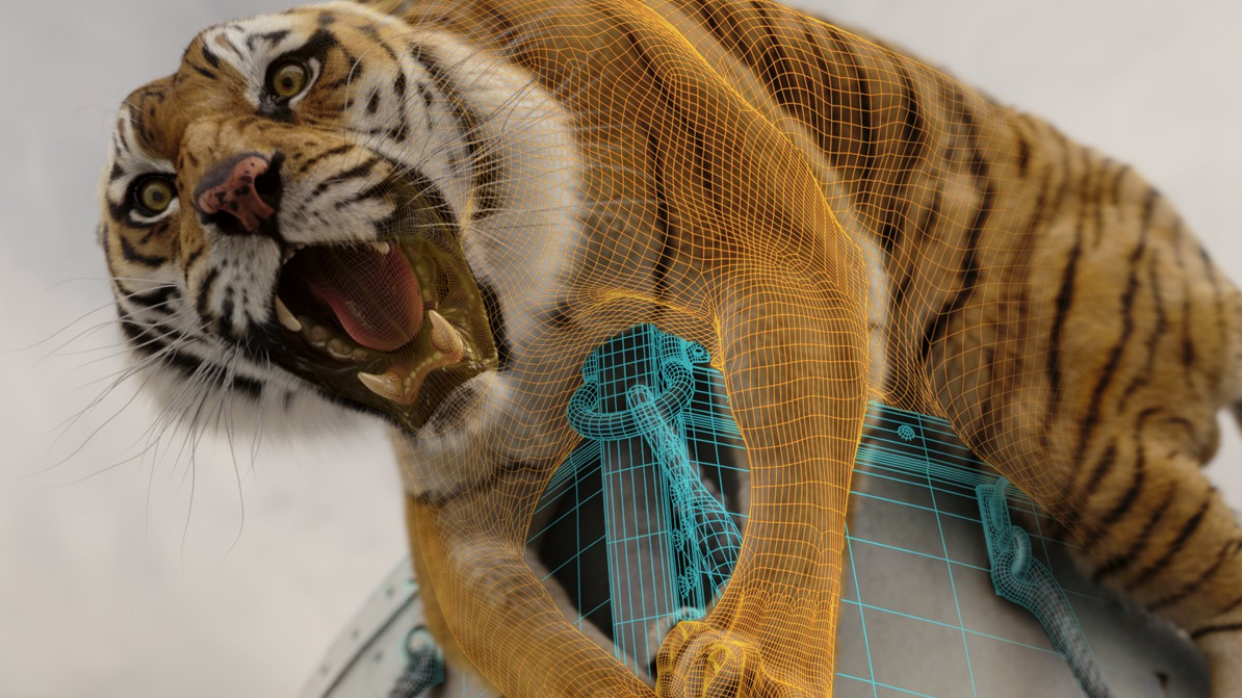
Good quality implementation of CGI is everywhere in film, however, it is hard to see. Most of us will not even notice the many layers of simple effects and layers that go into a shot. A good example of this is the movie Life of Pi. The lion in the movie looks extremely realistic with lifelike textures, although it is actually fully computer animated. Good practices include extreme attention to lifelike animations of animals and characters and the use of motion capture.
Also, on the list of amazingly invisible CGI is Planet of The Apes, which masters the natural movement of humans through animation.
To conclude, CGI can be used for good or for evil. In my opinion, films should not focus heavily on CGI visuals to carry their story. But, when used alongside practical effects and in moderation, it can make for beautiful pieces.