

When I started working as a video editor, I looked forward to most days at work. The days that I dreaded, though, were the ones I knew I was heading into a client-supervised session. It’s no wonder these days could be so painful; the client’s looking over your shoulder while you work, often under a looming deadline and a tight budget. Tensions can run high when you’re stuck in close quarters until you reach the final cut.
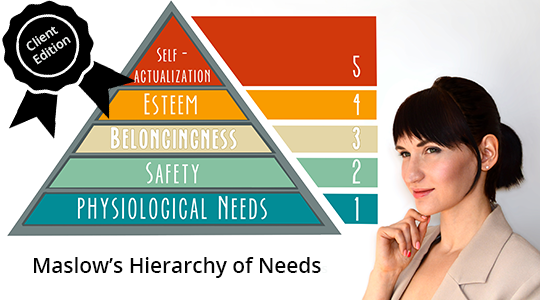
This feeling of dread started to go away for me when I learned to think beyond my job as an NLE operator and take charge of the emotional climate in the room. If you want to do the same, a simple approach is to keep in mind Maslow’s Hierarchy of Needs.
1. Physiological Needs
Your session doesn’t stand a fighting chance of going smoothly if your client is hungry, thirsty, or uncomfortable in any way. Make sure to have coffee and a few snacks ready ahead of time. Having a bottle of Tylenol on hand can be a lifesaver, too. One physiological need that's a little harder to have influence over is your client’s energy level. If for any reason they are tired or exhausted, it can really slow down the project and create tension. If your client is fading, wait until you have a few things that you’ve gotten direction on and then offer them a nap so you can work on your own for a bit. A lot of clients will either take you up on the offer or they’ll take the opportunity to go for a quick walk to wake up. This gives you time to move forward with the edit (which is always quicker when you can work on your own). When the client comes back refreshed and able to see your progress on the cut, everything will feel much better.
2. The Need For Safety
I’ve worked with a variety of clients in the edit room and I’d say about a quarter of them (mostly younger people who work at large corporations) come into the session with a fear that if this project doesn’t go well they will get fired. Another quarter (these types range from more seasoned corporate producers to indie filmmakers) come in very confident in their abilities and their footage, but are fearful that your skills won’t be enough to bring the job home.
For the client who is afraid they’re not executing the project in a way that will save them from their company’s next round of lay-offs, take the lead to make them feel safe. Genuine compliments about the footage they’ve brought you can go a long way to bolster their confidence. Show them you’re excited about what you can do with what they have by spitballing a few ideas. If you can meet this client’s need for safety from the chopping block I guarantee you will have a great collaborative editing session.
With the other type of client, I’ve found that the opposite approach often works well. Let them take the lead and all you have to do is show that you can execute their ideas quickly and accurately. Let them see you write down every direction they give you and then narrate back to them every time you save or back up the project. These are simple things that can demonstrate your professionalism, and if this client feels safe, your interactions with them in the supervised edit will be a lot more pleasant.
The other half of people I’ve edited alongside tend to be people with less apprehension, but with some concern about whether the final cut will be delivered on time the way they want it. For these clients, the key really is listening and reading the room. Match their vibe, follow their direction and offer informed suggestions when it’s appropriate. This will make them feel confident about where the edit is going and make the session a more positive experience.
3. The Need For Love and Belonging
Once the first two needs are met, this one follows naturally because the client knows you’re on their side and you’re taking care of them. Even though it’s a transactional relationship, this is the basis of friendship. The edit room, which is often dark, has a magical quality that makes people move past small talk faster than usual and you can end up having deeper conversations with clients. If you’re a good listener and a supportive presence in your client’s life, even for a couple of hours, they’ll feel a sense of love and belonging in your edit room and that’s the real pivot point where your sessions become something to look forward to.
4. The Need for Esteem
I’ve worked on a lot of projects that weren’t my cup of tea, but there’s always something that you can give a genuine compliment on when a job comes into your edit room. When you start giving genuine compliments to your clients and meeting their needs for esteem, not only does it ingratiate them towards you but it’ll also be one of the easiest ways to keep the conversation going and keep them calm and happy while you work.
5. Self-actualization
In the context of the edit room, self-actualization can be thought of as the delivery of an engaging, polished, technologically-sound final render. Just like Maslow’s Hierarchy of Needs, you can’t skip over previous steps and still achieve self-actualization. Every step along the way is important to ensure that you’re simpatico with your client in order to get the best final product possible. When I walk away from a stretch of supervised sessions where all of my client’s needs have truly been taken care of, I always feel uplifted and energized, looking forward to the next supervised edit session.
---
Note From Tongal: “A Video Editor's Guide to Making Clients Happy Using Maslow's Hierarchy of Needs" is part of a series of Tongal Community-written blog posts that were originally sourced in the Tongal Blog Open Call Project. Read more Tongal Community-written posts here and then Pitch us a topic you'd like to write about for the Tongal Blog!