

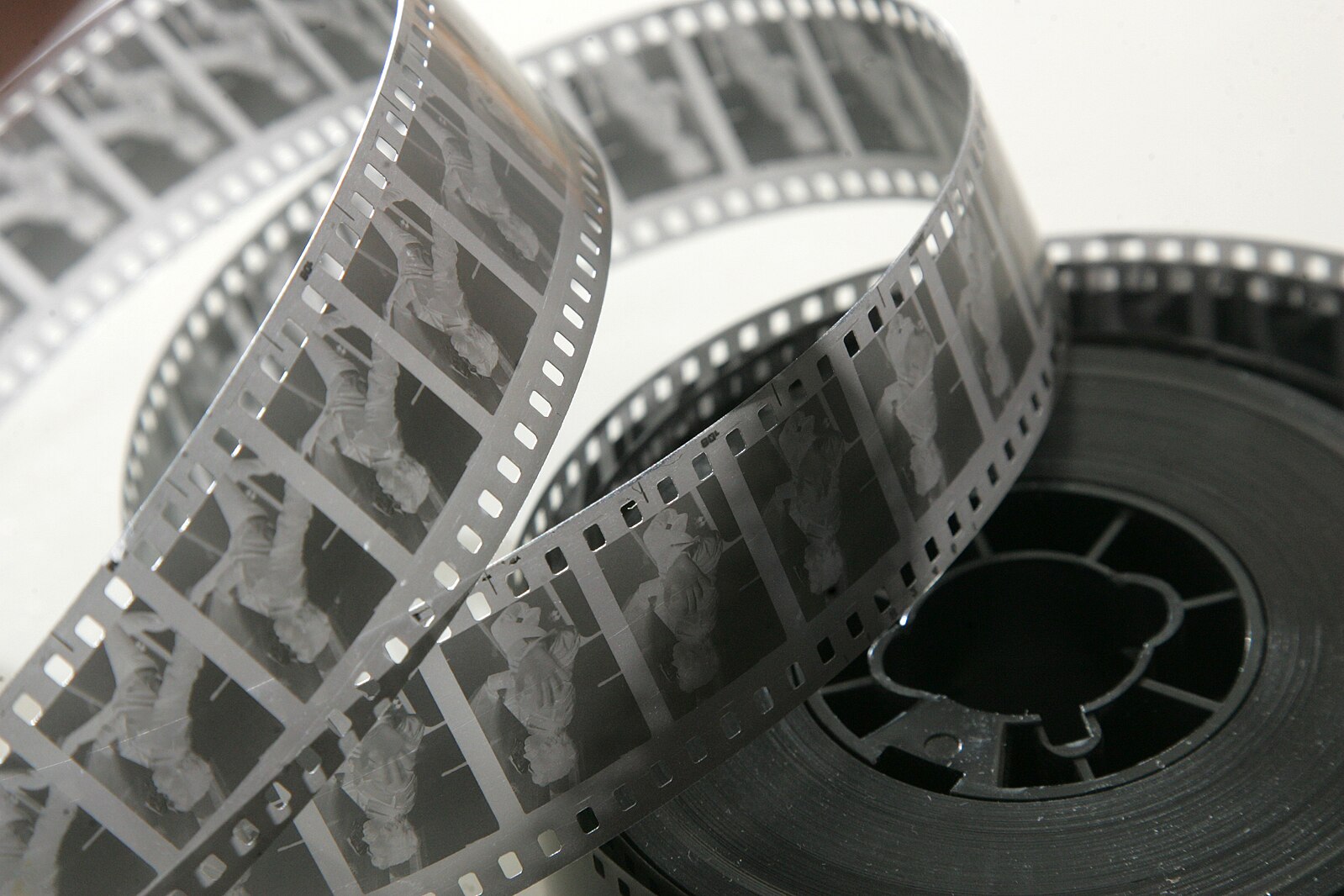
In this first of our two-part guide to film and media formats, we will rundown the tools and tricks that shaped cinema as we know it, kicking off with film formats and soundtrack systems.
For creators, knowing these formats isn’t just a history lesson; it’s a way to understand how filmmakers before you bent light, sound, and celluloid to their will, often pushing against the limits of technology to unlock new ways of telling a story.
By learning how different gauges, soundtrack systems, and early experiments came to be, you can open the door to fresh ideas and bold experimentation in your own work, proving that sometimes the old ways can spark the next big thing.
So settle in, and discover why the reels that once flickered through dusty projectors still have something to teach the modern storyteller.
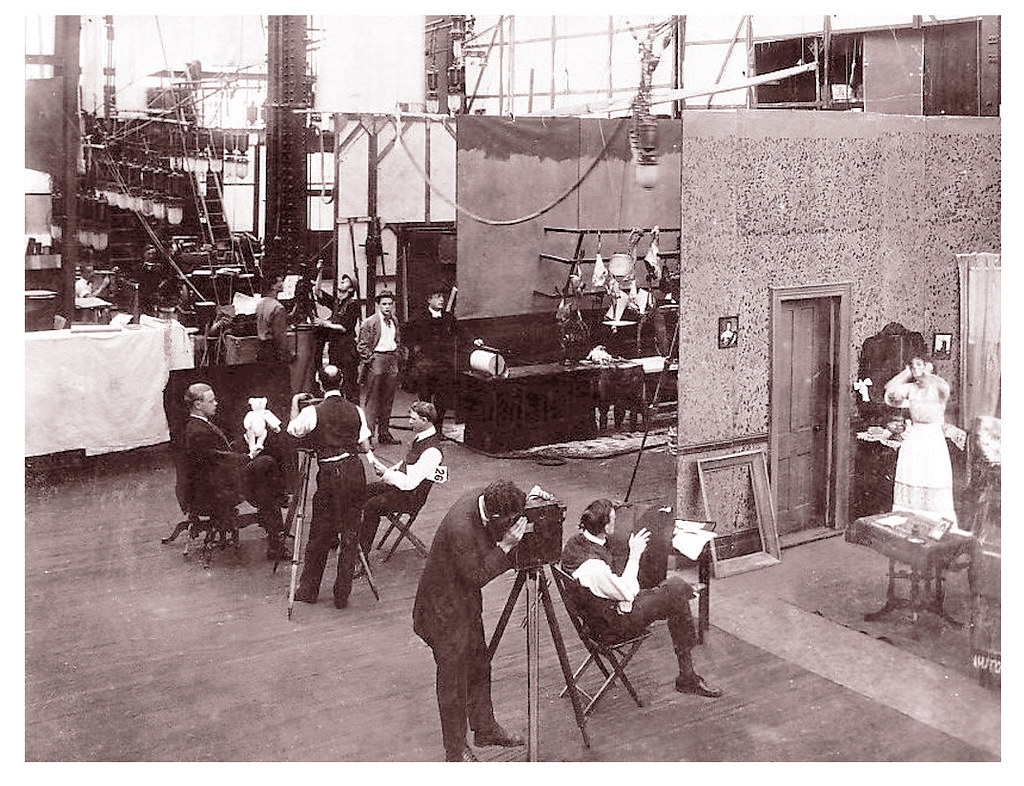
Edison’s Bronx film studio — about 1914 by JFGryphon
Early Film Formats
35mm Standard (1892 - present) — Invented by Thomas Edison and William Dickson (it’s never really Edison alone), 35mm became the international film standard; beloved for its balance of quality and cost. It’s still used today for prestige projects and archival screenings.
68mm Biograph (1895 - 1902) — An early large-format alternative, used by the American Mutoscope and Biograph Company for sharper images. Its huge frame size prefigured IMAX by 70 years.
70mm Experiments (Early 1900s - 1920s) — Various wide-gauge film formats popped up to compete with 35mm’s limited resolution; mostly impractical then due to cost. Todd-AO would later perfect this idea.
28mm Pathé Kok (1912 - 1930s) — Pathé’s safer nitrate alternative for home and educational markets. Predecessor to 16mm for non-theatrical use.
17.5mm (1910s - 1930s) — Literally 35mm split in half; marketed for home projection. Didn’t catch on long-term, but paved the way for smaller gauges.
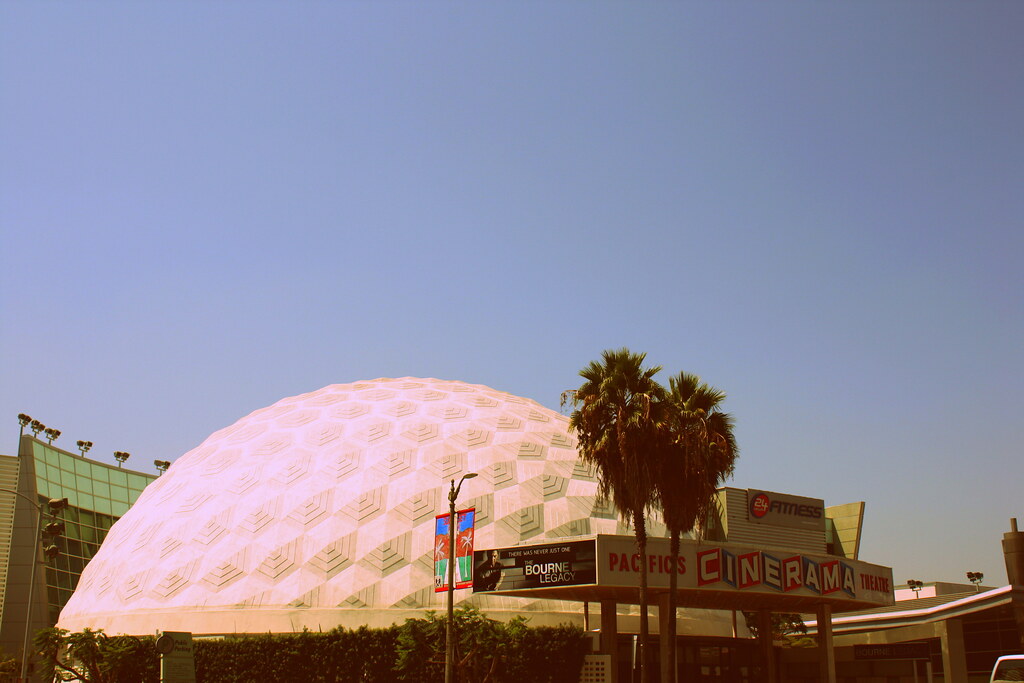
Pacific's Cinerama Theater by ღ ℂℏ℟ḯʂ ღ
Widescreen & Specialty
When the small, boxy frames of early film could no longer contain Hollywood’s dreams, innovators stretched, curved, and expanded the screen to dazzle audiences and fight off television’s encroachment.
For modern creators, understanding these pioneering widescreen and specialty formats is a reminder that aspect ratios are more than numbers; they’re storytelling tools that can shape how an audience feels, sees, and remembers your work.
From Cinerama’s panoramic marvel to IMAX’s colossal canvas, these formats prove that when filmmakers dared to think bigger, they found new ways to pull us deeper into the frame.
Academy Ratio (1.37:1) (1932 - 1952) — The “Academy frame” standardized image shape for sound cinema’s golden age. Reigned until widescreen formats arrived.
Cinerama (1952 - 1960s) — Used 3 synchronized 35mm projectors on a huge curved screen for immersive panoramic effect. Spectacular but costly; novelty faded as single-strip widescreen tech improved.
CinemaScope (1953 - 1967) — Fox’s answer to TV: an anamorphic lens squeezed wide images onto 35mm, then unsqueezed on screen. Ushered in the modern widescreen era.
VistaVision (1954 - 1960) — Paramount’s horizontal 35mm format for sharper projection. Later became a basis for VFX work due to its high resolution.
Todd-AO (1955 - 1970s) — Mike Todd’s 70mm large-format process delivered stunning image clarity and six-track stereo. Classic musicals like Oklahoma! showcased its lush scope.
Super Panavision 70 (1959 - present) — A non-anamorphic 70mm format used for big epics like Lawrence of Arabia. Still revived for modern spectacle, including Dunkirk.
Ultra Panavision 70 (1957 - 1966; revived in 2015) — Used an anamorphic lens on 65mm negative for extra-wide aspect ratios. Ben-Hur and The Hateful Eight used it to breathtaking effect.
IMAX (15/70) (1970 - present) — Uses massive 70mm film running horizontally with giant frames. King of immersive cinema experiences.
Techniscope (2-perf 35mm) (1960 - 1970s) — A 2-perforation 35mm format that doubled shooting time and mimicked widescreen cheaply. Beloved by spaghetti westerns and cult filmmakers.
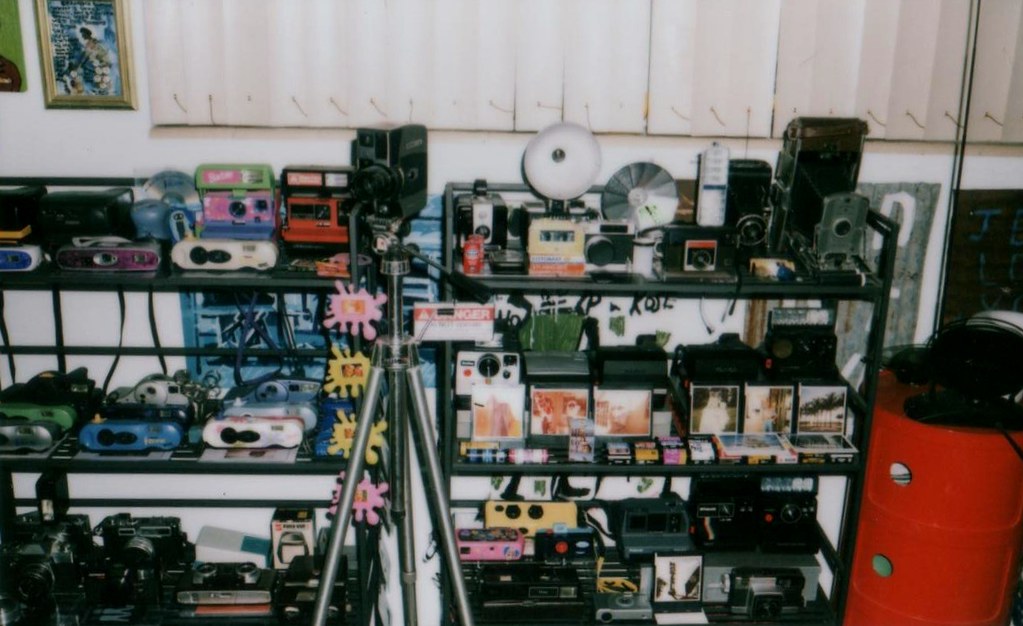
My Thrift Store Cameras by Phillip Pessar
Home Movies & Indie Film
Home movies and indie film mediums celebrate the scrappy formats that put cameras in everyday hands and made filmmaking feel possible for anyone with a story to tell.
From family picnics on grainy 8mm reels to gritty indie hits shot on 16mm, these gauges turned bedrooms, backyards, and backroads into personal studios.
For today’s creators, knowing this lineage reminds us that limitations can spark freedom; these humble formats birthed entire movements and aesthetics still emulated today.
Experiment with them, study their quirks, and you just might discover that your next masterpiece starts with a roll of film that once captured Grandma’s retirement party.
16mm (1923 - present) — Kodak’s educational and indie staple; cheap, portable, perfect for docs and students. The Blair Witch Project owes it one.
Super 16mm (1969 - present) — Expanded the image area of standard 16mm for widescreen TV and indie cinema. Many prestige shows, includingThe Walking Dead, used it before digital took over.
8mm / Double 8mm (1932 - 1960s) — Brought home movies to the masses; tiny cameras, family picnics. Double 8 was just a regular 16mm split after processing.
Super 8mm (1965 - present) — A sharper, easier cartridge version of 8mm with better color stocks. Still adored by nostalgia fans and music videos.
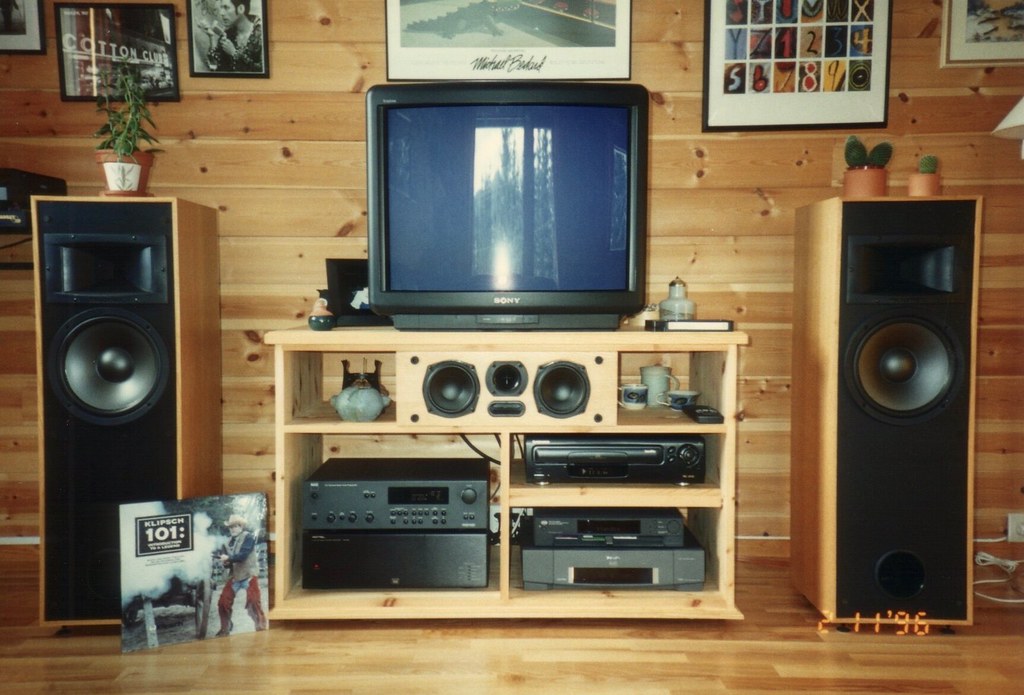
My home cinema 1996 by hammershaug
Soundtrack Systems
Soundtrack systems remind us that film isn’t just a dance of light and shadow; it’s also a symphony of crackles, pops, and heart-thumping scores that make movie magic stick in our bones.
From silent film’s painted cards and tinkling pianos to today’s 3D ATMOS soundscapes, each new innovation gave filmmakers more ways to pull audiences deeper into their worlds.
These leaps didn’t just change what we hear; they changed how we feel stories, how we build tension, and how we remember a line whispered in the dark. Knowing where sound came from: Vitaphone’s spinning discs, Movietone’s optical strip, Dolby’s multi-channel roar; shows us just how much art lives in every hum and hiss. And this is only half the story.
Silent Intertitles (1890s - 1920s) — Dialogues and sound cues appeared as printed title cards between shots. The “live piano” era.
Vitaphone (1926 - 1931) — Warner Bros.’ short-lived sound-on-disc system synced film with phonograph records. Made The Jazz Singer possible.
Optical Soundtrack (Movietone) (1927 - present) — A light-sensitive strip printed on the film carried synchronized sound. Became the dominant system for decades.
Magnetic Sound (1950s - 1980s) — Used magnetic strips on film edges for multi-channel stereo (4-track, 6-track). Gave epics like 2001: A Space Odyssey glorious surround.
Dolby Stereo (1975 - 1990s) — Four channels encoded onto optical track, decoded into L/R/C/Surround. Made blockbusters sound epic without mag tracks.
Dolby Digital / DTS / SDDS (1992 - present) — Digital sound systems for multiplexes; crisp audio on disc or film. The digital standard before full digital projection.
Modern Formats: 5.1, 7.1, ATMOS (1999 - present) — Multi-channel surround with subwoofers, height channels. ATMOS added 3D “sound objects” for an immersive experience.
Part 2 of our guide will dive into the kaleidoscope of color processes, the spectacle of 3-D, and the ingenious projection tricks that shaped cinema’s look; and still inspire creators to bend light in new ways today.
Main Image: 35mm movie negative by Runner1616
Filmmakers are working with the world's biggest brands on Tongal