

Author of Brave New World, Aldous Huxley once stated, “Perhaps it’s good for one to suffer. Can an artist do anything if he’s happy?”
Not to argue with a staple of AP English, but I doubt Aldous had much experience working fourteen-hour days ending at 3 AM on film locations in the middle of nowhere.
I’m a firm believer, actually, that artists create their best work when they are healthy and happy. Unions in every sector of the film industry seem to agree, having established assurances that no matter a person’s job on set, their safety and comfort is the highest priority. Still, there are many things you can do both in preparation for and while on set to give your mind and body the love it needs to do your best and leave every night (or very early morning) proud of a job well done.
Disclaimer: I’m not a dietician, doctor, or healer of any kind. These are just some things that I’ve found work for myself and others.
#1: Sleep
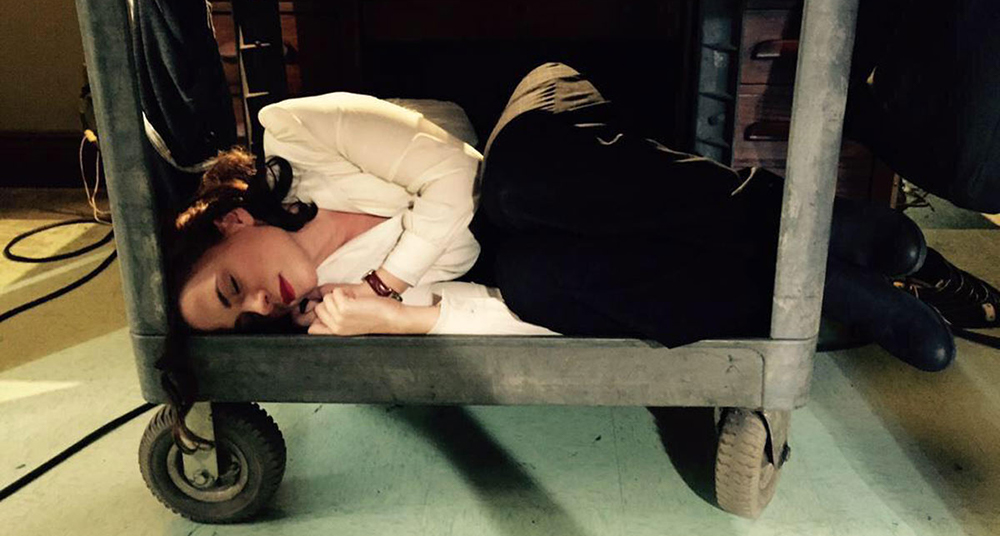
Despite the rings under many set people’s eyes, sleep is priority number one while in production. Union rules set a minimum of 12 hours between shoot days. This means you have time to get the scientifically recommended eight hours of sleep before the next day. When you get back from a shoot, check the next day’s call time. Now subtract that from the travel and wake-up time you’ll need to be on time (yes that ten minutes you need to scroll on your phone in bed for no reason counts). Now subtract eight more hours from that and see what time you end up at. That’s the time you should get in bed, no excuses. Getting enough deep REM sleep is non-negotiable when you’re asking your body and brain to operate on all pistons all day every day.
#2: Caffeine
If you’re like me, regardless of how well you slept, a cup of morning coffee (or two) is key to a good day. I basically associate the smell of coffee grounds with the image of a happy rising sun. While on set, remember to monitor how much you’re drinking and make sure you’re not solely relying on caffeine to stay awake. If you feel like you’re constantly crashing or buzzing, caffeine might be messing with your circadian rhythm. Balance your caffeine intake with enough water and keep an eye on how many hours there are left in the shoot day. My personal rule is to avoid drinking more caffeine if you’re less than four hours from calling the day. This helps me fall asleep more easily when I get home.
#3: Stretching (Before, During, and After)
You know your body better than anyone. Make sure to listen to what it needs rather than ignore pain and stiffness because you’re trying to get all your work done or keep up with others. Give yourself a few minutes every morning to stretch all major muscles just after getting out of the shower when your body is awake and warm. If you’re into yoga, Down Dog is a great customizable app to give you a quick well-rounded stretch. YouTube channels like SaraBethYoga and Yoga With Adriene also have videos for any amount of time and level of flexibility. Consciously find time to stretch areas like your back, hamstrings, quads, and calves throughout the day. A forward fold for just 30 seconds feels amazing and is a nice stress reliever. At night, find a cool-down sequence before bed like a child’s pose or supine spinal twist. None of this has to take very long to make a big difference, both physically and mentally, and can keep you from overextending or injuring yourself on set. Remember to breathe.
#4: Clothing/Apparel
Look for comfort, durability, and breathability when choosing clothing for a day on set. For shoes, it really depends on your specific job, but you can’t go wrong investing in a solid pair of hiking boots or cross-trainers with ankle support. I’d also recommend supportive insoles.
Layering clothes for changing climates is also key. Call sheets will include the next day’s weather and sometimes recommend certain apparel. If shooting in a desert, as many LA shoots do, bring a little of everything as the temperature can go from 100 to 40 in a matter of hours. Climate also doesn’t just mean outdoors. A soundstage can be sweltering or freezing depending on the light setups and space. Bring a reliable backpack to store outerwear so you don’t have to tie anything around your waist. Fashion is secondary, but muted or dark colors are encouraged. White or bright colored clothes get visibly dirty quicker. They may also reflect light in a way that could unintentionally impact the work of the gaffer and cinematographer. You don’t want to be that person. Whatever you buy or have, make sure you have enough of it so that you only have to do laundry on weekends to avoid choosing between clean clothes and sleep.
#5: Food/Crafty
One of the best perks of being on set is the free food. It’s important, though, to navigate what and how you eat throughout the day. “Lunch” on set does not necessarily fall at lunchtime. Lunch just means the second meal of the day that happens six hours into the workday. This could be late at night. This means you might get peckish around traditional meal times, even if you’ve had a great breakfast (get to set before call time for the omelet station!). The cornucopia of free Cheetos and Oreos at your fingertips is tempting, but prioritize clean, protein-filled snacks like almonds, vegetables with hummus, and fruit. If you can’t find healthy snacks, you can put a polite request in with the craft services staff who are usually willing to help with reasonable suggestions. Overdoing salt and sugar along with complex carbs, red meat, and hot dairy often make people sleepy, especially in the afternoon. At catered lunch and “hot snack” (a full meal sometimes provided on days when lunch falls at weird times), start with half a plate of green vegetables. Add a protein and a simple starch or grains like brown rice or quinoa.
#6: Water
It’s easy to forget to drink enough water, especially when it’s cold on set. Just because you aren’t sweating or thirsty, doesn’t necessarily mean you’re properly hydrated. Buy a big durable water bottle like a Hydroflask and commit to finishing and refilling it a certain number of times over the day. You’ll stay hydrated, alert, and contribute to the set’s sustainability efforts. Many productions now also provide reusable water bottles to set workers as a part of those efforts. There are varying calculators online to determine how much water a person needs, but 80-100 ounces per day will get you to a good hydrated place. The more you weigh the more you need.
#7: Meditation/Mental Health
Just as important as physical self-care is your mental health; the two are intrinsically tied. It’s important, though, to set aside time to just concentrate on where your head is at. Maybe you have some form of therapy you already commit to, which is great. But the easiest and quickest way to do a check-in with yourself is a healthy meditation habit. This is another 10 minutes you’ll need to factor into your routine, but it’s worth it. If you’re new to meditating, there are some great apps to guide you like Headspace, Calm, or my favorite, Waking Up. They all focus on similar ideas of reframing daily experiences and stressors through the lens of larger consciousness and purposefully resting your mind in the present. They encourage sensory and emotional awareness coupled with breathing through and releasing the things that aren’t serving you. This all may sound a little vague (I’m by no means an expert), but give it a chance. Worse comes to worst, it’s a chance to close your eyes and breathe.
Working on set means contributing to the creative process in its rawest form. For many, it’s the playing out of a childhood dream. But the reality of production asks a lot from every member of the team. Despite the unending commitment and work ethic that personifies most people who work on set, taking care of your physical and mental self is how you will do your best and how said creative process will result in something that you and everyone else can be proud of putting out into the world.
—
Note From Tongal: "7 Tips for Practicing Self-Care on Set" is part of a series of Tongal Community-written blog posts that were originally sourced in the Tongal Blog Open Call Project. The views and opinions expressed in this article are those of the author(s) and do not necessarily reflect the official policy or position of Tongal. Read more Tongal Community-written posts here and then Pitch us a topic you'd like to write about for the Tongal Blog!