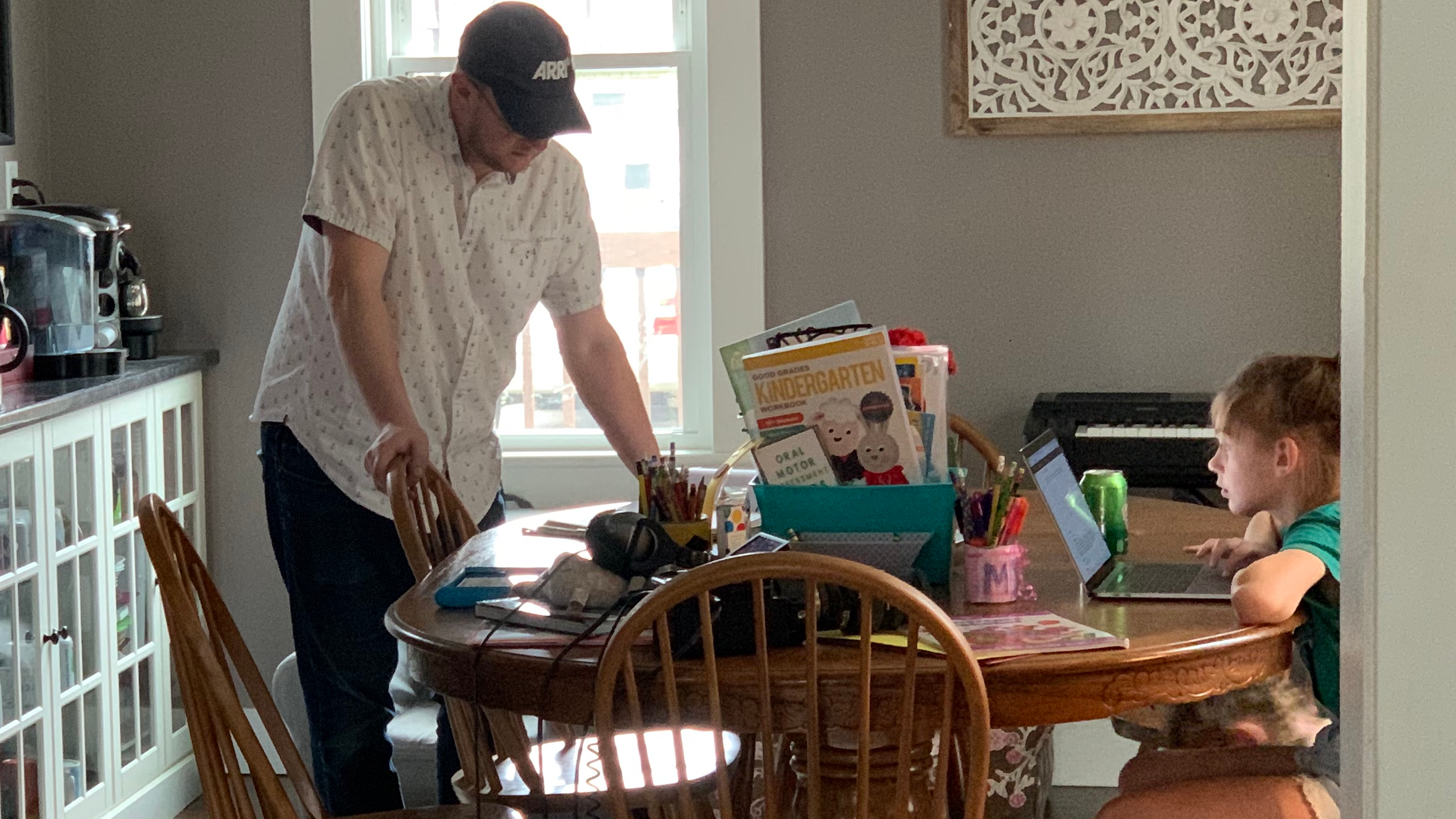
I never expected to spend the spring of 2020 stuck in my house, by order of the Pennsylvania Governor. I also never expected that, during that time, I would make the most meaningful film of my career... in my attic, with my daughters, with no gear and an outdated camera. But that’s exactly what happened.
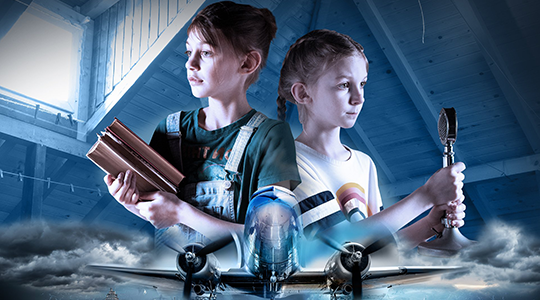
Saving Amelia is a short film in the spirit of the classic family adventure films of the 80s and 90s. When two contentious sisters stumble upon an old two-way radio as they explore their attic, they realize it can mysteriously communicate with the past. As they start playing with the radio, they realize they are speaking with Amelia Earhart moments before the final transmission of her ill-fated flight. It becomes a race against time to help save her. But can they overcome their own quarrels in order to change history forever?
I started my film career borrowing my college video department camera, skipping class and making movies with my friends. Since then, most of my work has been documentary and commercial; however, my heart always yearns for narrative fiction filmmaking. So, when the pandemic hit and the world was confined indoors, I challenged myself to fight off the atrophy of my narrative muscles and make something.
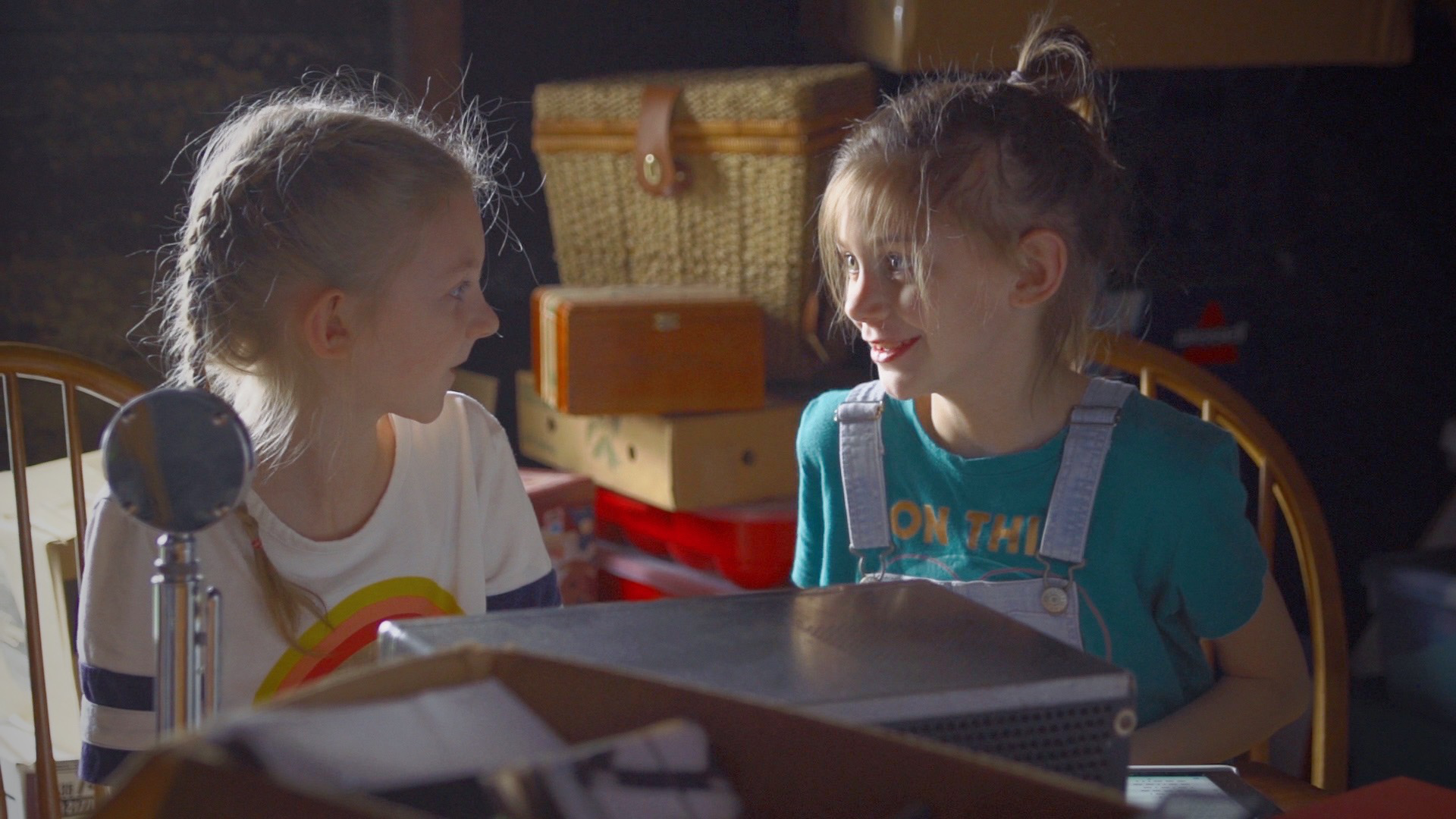
I had written a short a couple of years ago when I was super interested in the alternate theories of Amelia Earhart’s disappearance. So, I reworked it to incorporate the quarantine and set out to film a family adventure film during my own family’s lockdown adventure. I also wanted to teach my 9 and 11-year old daughters a little about the filmmaking process. So, we did a read through, we broke down the script, gathered the props, dressed the attic location and scheduled our shoot. Then we spent 5 days filming all over my house.
After filming, I spent the next few weeks running my marketing agency by day and editing the film well into the night. A friend of mine created a poster in the style of the old 80’s and 90’s family films. Another friend volunteered to use his downtime to do the sound mix. It all came together and we released the film as a YouTube premiere. On the night of the online premiere over two hundred people sat down together all over the world and watched our little film. Many hadn’t watched a movie together in years. Friends took photographs of themselves settling in with their entire family and a bowl of popcorn. Friends of friends were even commenting during the premiere how their children were glued to the television the entire way through.
I feel like every time I make something I learn (and relearn) so many things. Here are just five of the many things I learned while making Saving Amelia.
1. Write it whether you are going to make it or not
When I started writing Saving Amelia a few years back, I was working as a director and editor at a small production company and between shoots I occasionally had some downtime. During these times I tried to learn everything I could about writing. I watched Masterclasses, read books like The Screenwriter’s Bible and Story. I even wrote out notecards for every beat of The Bourne Identity just to see what it would all look like spread out on the floor. I wrote down every idea that came into my head and sometimes, when one was especially clear, I wrote a script. That’s how Saving Amelia came to be. I didn’t know if I would ever make it, but I wrote anyway. And, I am sure glad I did. When the quarantine came and I wanted to make a short, most of the hard work of writing was done. I think that gave me the motivation to keep going. I think if I would have had to start with a blank page, it may have never happened. So, I learned it’s important to write when inspiration strikes even if it just goes in the drawer. You never know when it will come in handy.
2. Don’t worry if something you are writing isn’t working
When I dusted off the Saving Amelia script a few months ago, it wasn’t 100% ready. It was missing a solid beginning and end. However, when COVID-19 topped the headlines, the context for the story became clear. Setting the story during the quarantine gave my characters a reason to stay inside that actually made sense. In the original draft, I had thought sunspots or a solar storm would suffice. But, after channeling my internal Robert McKee, I knew that the writing had to be specific. So, I used the specific current events as the container for the script. This experience taught me to chill out. Don’t force an idea. Don’t make a film with a premature script. Sometimes the story needs time to brew and mature, like a fine wine or whiskey. Give it time and the answer will make itself apparent and turn something mundane into something unique.
3. Embrace the things you cannot change
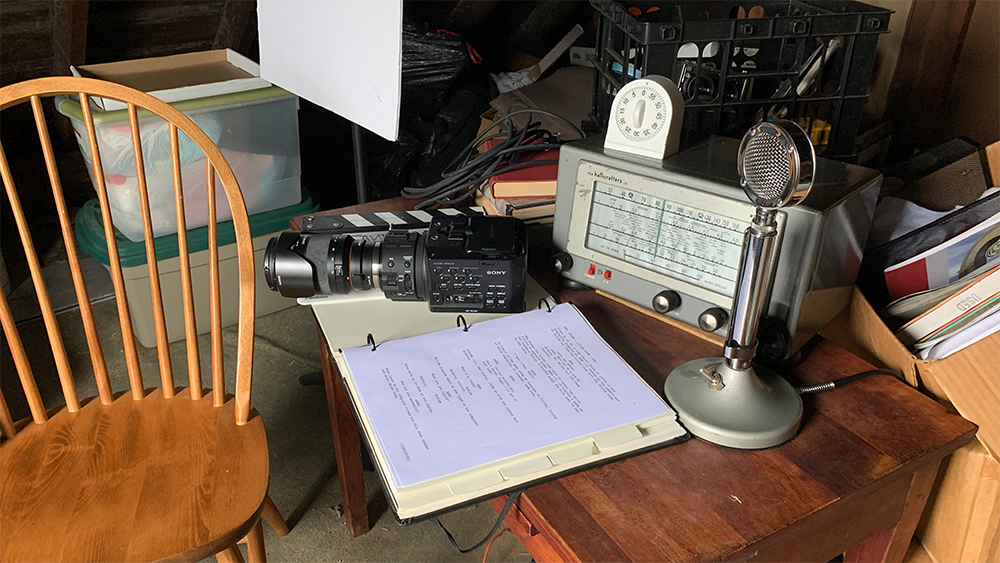
When I was planning to make the film, I struggled knowing the only camera available was old, outdated, wasn’t good for color correction, had terrible dynamic range and I was frustrated I didn’t have something better. I also didn’t have lights, or grip gear. I had no crew and only two old wired lavalier microphones (which you might catch a glimpse of in some of the wide shots). Even though I desperately wanted better gear, we were on total lockdown and couldn’t leave the house. The shipping companies were delaying deliveries by weeks. So, I had to use what I had in the house at that moment. After a minute (or longer) of pouting, I embraced the constraints and actually enjoyed them. I realized that they forced me to get creative. I had to position the attic set so the only window provided all the light as a single source. I used an old music stand as a c-stand. I found a piece of white poster board and used it as a bounce board. I wouldn’t have chosen these constraints, but I couldn’t change them. And I realized that’s ok.
4. Don’t stress about what people think if they aren’t your audience
While I think you can make a film for many different audiences, there will always be a primary audience. I can definitely struggle with wanting to impress colleagues and other filmmakers with a cool technique, a beautiful shot or a clever idea. But this can sometimes leave the movie-goer feeling left out. With Saving Amelia, I wanted the film to be beautiful and clever with a witty script and award-winning performances. But many of my normal tools weren’t available to me. So, I had to set aside my desire for a better camera, more interesting props, professional actors and focus on the movie-goer. I thought of the person sitting in front of the TV watching the film... the other pre-teen girls watching how two young girls on-screen help change history, imagining themselves doing the same. That girl doesn’t care what camera I used or brand of gear was on set. She just cares about a great story, well told. And you know what? That took a huge weight off of my shoulders and I made the movie she would want to watch. And, I received so many emails from families saying their kids watched the movie over and over and then went online to research Amelia Earhart. That feels good. Even if I only had 3 stops of dynamic range.
5. Be yourself
As filmmakers, we have so many role models, so many voices in our heads, so many inspirations that it can be hard to sift through all of that noise and find the person inside ourselves. The pressure to be like everyone else is so great that we may actually forget who we are. For me, I admit that I love 80s and 90s adventure films. Even though they are sometimes cheesy, I think this style of live-action film is missing in the modern movie landscape. I love the good feelings and the suspense and the nostalgia of a “simpler” time. At first I tried to butt up against it as I was planning this film. But I felt like I was swimming against the current. So, I re-oriented myself and decided to just go with it. That's why the opening sequence, the titles, the music, the plot, the conclusion are all reminiscent of what I watched as a kid. Do I want to make every movie that way? No. Is every aspect of 90s movies worth emulating? No. But despite what film purists may think, I have to admit that I want to make more films like Flight of the Navigator or The Goonies or The Rocketeer... and I think that's ok. Someone out there needs your unique voice more than you may ever know.
I hope you enjoy my little quarantine film. But even more so, I hope you go make something that is truly you, no matter the constraints. If you’d like to learn more about the making of this movie, you can visit the official page here.
---
Note From Tongal: "5 Things I Learned Making a Short Film During Quarantine" is part of a series of Tongal Community-written blog posts that were originally sourced in the Tongal Blog Open Call Project. The views and opinions expressed in this article are those of the author(s) and do not necessarily reflect the official policy or position of Tongal. Read more Tongal Community-written posts here and then Pitch us a topic you'd like to write about for the Tongal Blog!