


Note From Tongal: “48-Hour Film Festival Survival Tips” is part of a series of Tongal Community-written blog posts that were originally sourced in the Tongal Blog Open Call Project. Read more Tongal Community-written posts here and then Pitch us a topic you'd like to write about for the Tongal Blog!
--
It seemed like a good idea at first. Maybe you’re a creative professional who wanted to flex your storytelling muscles outside of commercial projects, or perhaps you’re a hobbyist who thought it’d be a novel way to spend the weekend with your friends. Maybe you’re just a fan of self-punishment . . . Whatever the case, you decided to enter a timed film competition. There have been plenty of horrible short films made with WAY more time. How are you going to write, shoot, and edit something halfway decent in just 48 hours?
I’ve participated in about a dozen of these competitions over the years. I’ve won awards at the global level, and also made some nearly unwatchable things along the way. Now I’m here to share my top 5 tips and cautions to help you make something less crappy.
Tip #1: Tell a story you care about.
People don’t often get famous from making a short film in 48 hours. Most of these competitions happen over a weekend with the screenings presented the following week. After that, most of the shorts will never be seen again . . . except by you. You’ll watch it obsessively for weeks and maybe even months after everyone else has long forgotten about your short. So, since you are most likely going to be the primary audience for this film, it makes sense to make something that you are invested in.
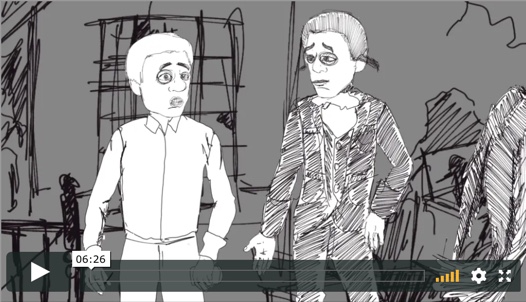
Now you might be saying, “Uh duh, of course I’m not going to make something I think is lame and stupid.” To which I respond, “Starting a thought off with ‘uh duh’ is inherently lame and stupid, so you’ve already proven you can’t trust yourself.” It’s really easy to get caught up in a project you don’t actually care about during the brainstorming session just because someone said it excitedly or thinks it’s a crowd pleaser. That’s why with every idea you consider in the writing phase, it’s important to ask the question, “Would I want to make a film about this if I had more than 48 hours and if this weren’t a competition?” If the answer is no, move on to the next thing. One of my most successful shorts was about a realty inspector for the House of Usher, and as you can see it wasn’t exactly trying to cast a wide net.
Tip # 2: Write a damn script.
There is going to be an uncomfortable Q&A after the films screen. During the Q&A, the audience will not have any meaningful questions so eventually some filmmakers will start talking about their process. At least one of them will proudly proclaim that they didn’t even bother to write a script, and everything was improvised. Absolutely no one will be surprised by this fact.
There is a difference between being funny and being a trained improviser, and it’s much easier to adlib when you have something to start off with. Personally, I find it easiest to have one person write the script after an initial story has been agreed upon. Other people like to write the whole thing collaboratively. Whatever your process, try your darndest to have a completed draft before you get whatever meager sleep you can. You’ll be glad you did some of the heavy decision making early in the process before you go creatively brain dead over the rest of the weekend.
Tip # 3: It’s easier to forgive shitty video than it is to forgive shitty sound.
If you have halfway decent sound, then you’re already in the top 15% of films in this type of competition. If you don’t have a dedicated sound guy on your team, get one. If you can’t, then forgo buying that new cinema lens or stabilizer and invest in a decent mic. Then, make sure whoever operates said mic practices with it beforehand. Bad sound will ruin even the best-looking picture, and great sound can make crappy video way more watchable. If you really don’t have a way of getting good sound, consider making a silent movie. Maybe even come up with an excuse for covering the actor’s mouths so you can record dialogue separately and not have to worry about lip sync. One of the best 48-hour films I’ve ever seen was a post-apocalyptic musical where the main character wore a gas mask the whole time.
Tip # 4: Don’t do one more for safety.
You just got a great take. The actors know it, you know it, the guy you tricked into half-learning how to use a boom mic knows it, but for some reason you decide to do one more take, “For safety.” However, something feels slightly off about this take. So, you do another, and then another, and another, and even though you got a useable shot 20 minutes ago . . . you’re still going.
This is a pet peeve of mine even when you’re not in a time crunch, but when you are, it’s just stupid. Stopping after a good take also helps the editor. Record keeping can get a little sloppy when you’re run and gun shooting, and it’s helpful to know the last take is always useable.
Tip # 5: Don’t be an asshole.
Even though you’re the team leader, it’s important to remind yourself that the rest of your team is also crazy excited to work on this short film. I’ve attempted to do these types of competitions solo before and it’s always way more fun to work with others. Your friends are excited to help, so let them.
On the flip side, just because people want to help doesn’t mean you can take advantage of them. Even in a tight schedule you need to make sure you’re taking breaks and not talking down to people just because you’re tired. These projects tend to require that everyone involved be a volunteer. Food, coffee, and “thank you,” go a long way in showing people that you appreciate them lending their time and talents. These competitions are also a good opportunity to work with new actors and other filmmakers in your area. It’s extra important to be nice to strangers, especially creative strangers, because they can come up with the best revenge plots.
Of course, there’s a number of other small tips that are useful when competing in these sorts of events. Some of the most common that I’ve seen are:
All these tips will help make the process a little easier, but experience definitely is the best teacher. So, get some rest and try and enjoy your 48-hour filmmaking experience. Who knows, it just might make the quick deadlines on Tongal seem like luxurious turn around times.