

The phrase “creator economy” sounds like somebody discovered a new continent and immediately opened a spreadsheet rather than draw a map. People make things, share them through digital platforms, find audiences, and sometimes find ways to make a living from the work. An entire industry has grown around this process, along with a vocabulary that tells us quite a bit about what it values: growth, engagement, output, and optimization.
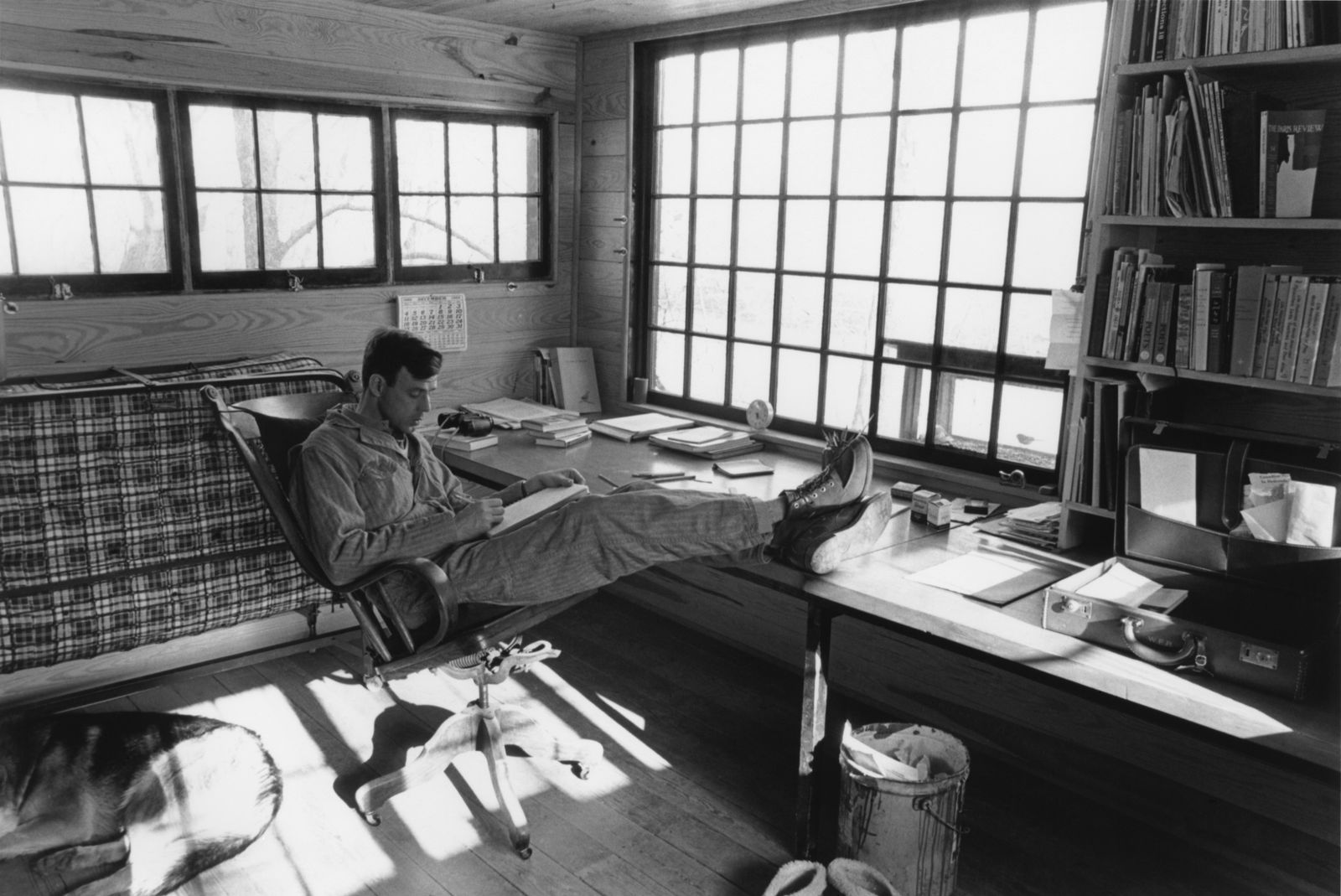
Wendell Berry, who sadly left us today, would recognize the newly emerged vocabulary. I obsessed over his book of essays, What Are People For?, for a bit while reading it, partly because I kept finding ideas that seemed remarkably easy to pull out of agriculture and place inside creative culture. Berry examines the habit industrial systems have of taking tools designed to serve human beings and rearranging society until human beings serve the tools. Reading it again now, I kept thinking: this sounds… a little familiar?
Working with creators at Tongal has also given me a front-row seat to how much more complicated this is than the phrase “creator economy” suggests. I’ve watched creative relationships, mentorship, education, and community carry value that an engagement number has no particularly intelligent way of recording. These are the solutions we're working on contributing to here.
Berry's title essay begins with the postwar conviction that America had “too many people on the farm.” At the time, agricultural policy rewarded consolidation and mechanization while millions of farmers left the land. Economists called the process “efficient.” Again, this seems very, very familiar. So, Berry looked at the displaced people and wondered what the hell the efficiency was supposed to accomplish in the first place and who it was really serving. We should be asking essentially the same thing of the creator economy: What are creators for?
Well, creators supply content, of course! The great machine must be fed! “Content”… I‘ve grown increasingly suspicious of that word. It flattens an enormous range of human expression into something that fills a container. A documentary and a six-second joke both enter the same distribution system as units ready to move, and the word “Content” tells me far more about the needs of the container than it does about the work placed inside it.
Once I started thinking of it that way, a lot of the creator economy looked different. If creators are suppliers, then platforms need frequent material, brands need deliverables, and algorithms need consistency. Someone who started drawing because it gave a weirdly beautiful shape to an odd corner of their imagination suddenly has a posting calendar, analytics dashboard, sponsor obligations, and a thumbnail problem. We tend to call this… professionalization. Reading Berry made me wonder how much of it is really industrialization.
Berry’s criticism of industrial agriculture was never a plea to throw away tractors and churn butter by moonlight. He was concerned with what happens when increased power separates itself from knowledge, responsibility, and care. In “Damage,” after a bulldozer project harms a hillside on his farm, he diagnoses his mistake with “too much power, too little knowledge.” He immediately follows it with “The fault was mine,” accepting responsibility for what his machinery allowed him to do. If only a certain group of people today had such simple humility.
I find that phrase especially useful when thinking through creative technology. We have extraordinary power now, all of us. Someone can publish globally from a kitchen table, edit work with tools that once required rooms of equipment, or use generative systems to produce material at astonishing speed. My concern is less with whether those tools should exist than with the question we tend to ask once we have them. Industrial logic immediately wants to know how much more we can produce, but Berry pushed me toward a different question: What kind of culture will all that production create?
The question also changed how I think about productivity. Let me explain; a creator who once made one thoughtful piece each month might now turn it into a podcast, vertical clips, social posts, a newsletter, and whatever new format arrives next Tuesday. Somewhere inside this magnificent machine sits the original creative impulse, the seed, the spark, the point; waving politely for attention and wondering if anyone remembers it’s there.
One of the ideas I love most in Berry’s writing is his use of health as an alternative to raw productivity. In “Nature as Measure,” he points out that a farm can increase its yield while exhausting the soil and harming the people who work it. If output rises while everything supporting that output breaks down and deteriorates, I have real trouble calling that success. Berry instead proposes the “the world’s health and our health” as a shared measure, and I think creative work desperately needs its own version of that idea.
I want to know whether creators are improving at their craft, whether they can support themselves, and whether they still want to make things after finding success. Views and engagement tell us that activity happened, sure, but they tell us considerably less about the condition of the person producing it. Once we start measuring the health of the creator alongside the performance of the work, the entire idea of success starts looking pretty damn different.
The same thing happens when I apply Berry’s thinking to “community,” another word the creator economy uses with reckless abandon. Almost any sufficiently large follower count seems to qualify. Berry asks much more of community. In “The Work of Local Culture,” he asks, “when a community loses its memory,” how its members can know one another if they no longer know each other’s stories. That line has always stuck with me because I think memory is precisely what many digital creative communities struggle to maintain.
This is also where Berry starts bumping into some of the work on social and public memory that I keep returning to for my role at Tongal. In “Social Memory and History”, writers Jacob Climo and Maria Cattell describe memory as something that reconstructs the past while helping construct the present. A community doesn’t keep its history around for nostalgia; remembering it is part of how it understands who belongs, what it values, what it’s learned, and what gets carried forward.
Another book I keep close by my desk, “Places of Public Memory”, edited by Greg Dickinson, Carole Blair, and Brian Ott, pushes concept this further by looking at the structures we build for remembering and the power those structures have over which stories endure. Their focus is museums, memorials, and physical places, but I keep wondering what the digital equivalent is supposed to be because right now, for most creator communities, it’s the feed. And the feed is a pretty lousy museum. It remembers what performed well recently, buries what came before, and gives very little weight to accumulated knowledge simply because it is accumulated knowledge. It is… “content”. You can spend twenty years learning a craft while the architecture surrounding your community remains much better at showing you what happened a few days ago. If memory helps create community, then the creator economy has built enormous systems for gathering people together without building equally strong systems for helping them remember what they gathered around.
It’s also part of why I think so much about what Tongal can do beyond connecting creators to opportunities: how we can help preserve the knowledge, relationships, and experience that creators accumulate along the way.
If we dig deeper down into feeds and accounts, follower count measures distribution, but I think community requires people to remember. Yet we’ve built most digital platforms around feeds with remarkably short memories. Earlier projects sink out of sight, experienced participants drift away, and newcomers repeat questions someone answered beautifully two years earlier. We have astonishing systems for circulating creative work and comparatively flimsy systems for allowing creative knowledge to accumulate.
And Berry gave me an image for what that accumulation might look like. At the opening of “The Work of Local Culture,” (a great damn read) he describes an old bucket hanging from a fence post. Leaves, rain, scraps, insects, and decay gather inside until the bucket contains several inches of black humus. Berry calls this transformation “the chief work of the world.” Nothing inside disappears entirely. It mixes together naturally and feeds whatever comes next.

I keep thinking creative communities need their own humus. I want old projects to nourish new work and experience to pass from one creator to another. I want archives, mentors, old interviews, forgotten experiments, and the creator who spent twenty years learning a craft to have value beyond whatever performed well this week. Platforms reward novelty and I think culture needs accumulation.
So that also changes how I think of experienced creators. Digital systems understand discovery extremely well, and they certainly understand celebrity. They seem much less certain what to do with someone who has spent decades getting very good at something. I would rather see creative success eventually open into mentorship and stewardship than require people to spend their entire careers chasing visibility. Someone who has already climbed the hill should eventually have the opportunity to help somebody else find a path up it. I think we need to push that, so it becomes as second nature to us as closing a car door before you drive.
Across creative industries over the last few decades, much of the administrative infrastructure that once surrounded creative work has thinned out, while none of the actual administration had the courtesy to disappear with it. The creator economy inherited that problem and amplified it, especially for independent creators who now operate as tiny companies unto themselves. Berry talks about health so much in agriculture because he knows the alternative is burnout.

Hiring everyone an assistant is unrealistic, but rebuilding some of that infrastructure collectively is less so. Independent creator communities could share administrative support, standard contracts, financial tools, and automated workflows, using technology to absorb repetitive work while leaving human judgment where it belongs. They could put just a little money together an expert to set up a system or template. This is also where I see a far healthier role for AI in creative culture (yes, really): I’m far more interested in a machine helping a filmmaker chase an invoice, organize files, or prepare deliverables than helping them make the film. We’ve spent enormous energy asking technology to increase creative output when maybe its better job is clearing away everything that keeps people from creating in the first place. Don’t automate the dragon- that’s the fun part; automate the invoice.
And this is where Berry’s writing on pleasure gave me another way of thinking through that contradiction. He writes that “pleasure…perfects work” and calls pleasure an “indispensable measure” of worthwhile labor. I love the idea of sneaking that onto a creator analytics dashboard somehow. Alongside views and revenue, I want to ask whether making the thing sharpened someone's craft, produced discovery, or left them eager to make another.
Those questions are, of course, difficult to quantify, which is part of why I value them. An industry built around human imagination should have some way of registering the experience of the human doing the imagining.
This is why I keep circling back to the possibility that “creator economy” names the wrong thing first. I would rather think in terms of “creative culture”, with an economy inside it that helps sustain the people doing the work. Once the economic system sets every term, creators become nothing more than suppliers. It turns audiences into blank metrics, and relationships turn into careless funnels. Berry helped me see how easily the tool can end up reorganizing the people it was supposed to serve.
I want the arrangement reversed. I want a creative culture where work accumulates, experience carries all of us forward, audiences participate, and technology serves the creative impulse that gave it a purpose in the first place. I want success measured partly by whether the people inside the system can keep making worthwhile work without the machinery built to distribute it slowly consuming the reason they started.
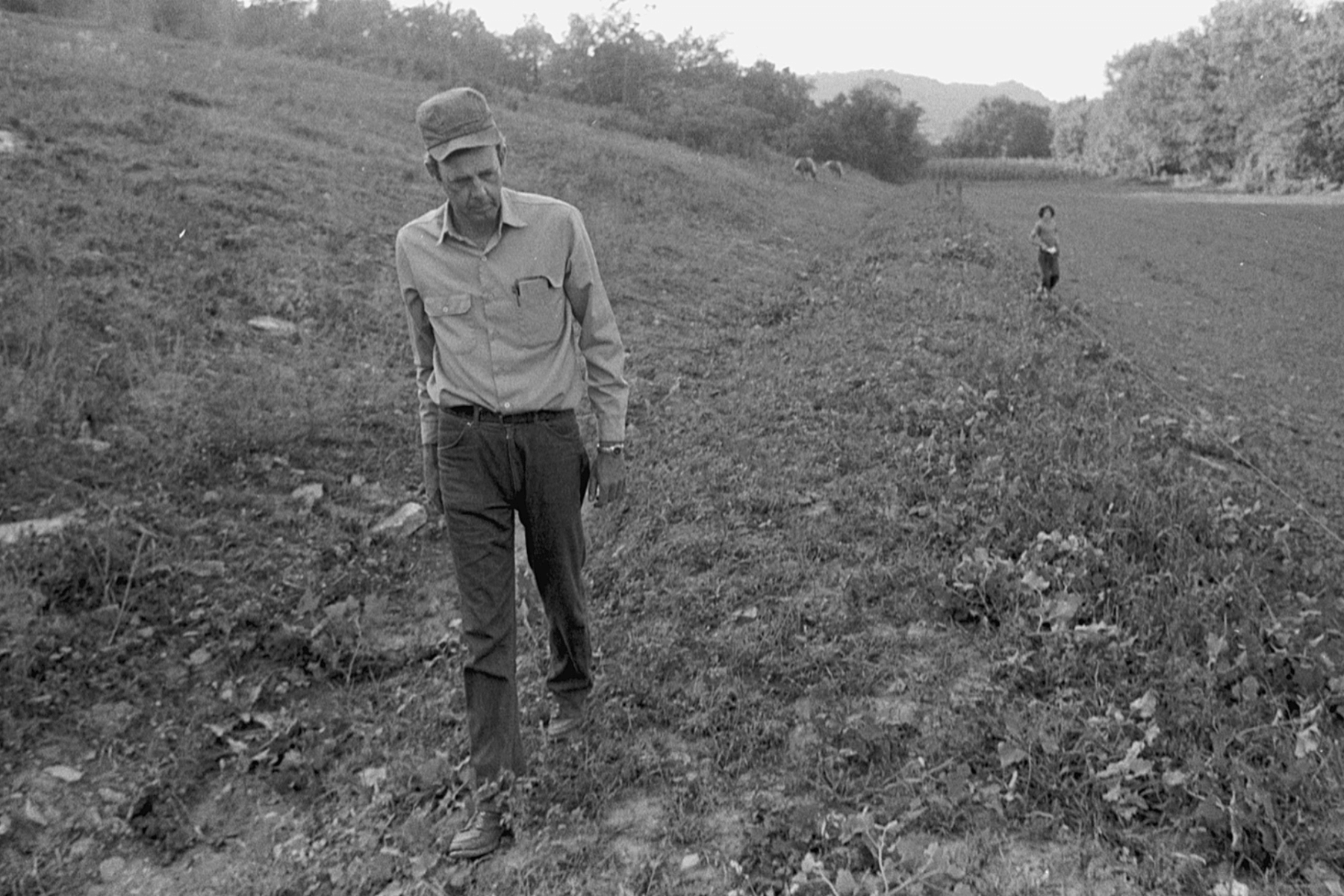
That is why Berry’s question will be with me forever. What are creators for? I think creators are here to make things, contribute to a culture, share what they’ve learned, and leave something behind for whoever comes next. The economy has a much humbler assignment: help them keep doing it.
Thank you, Wendell Berry, for everything; especially the poetry.