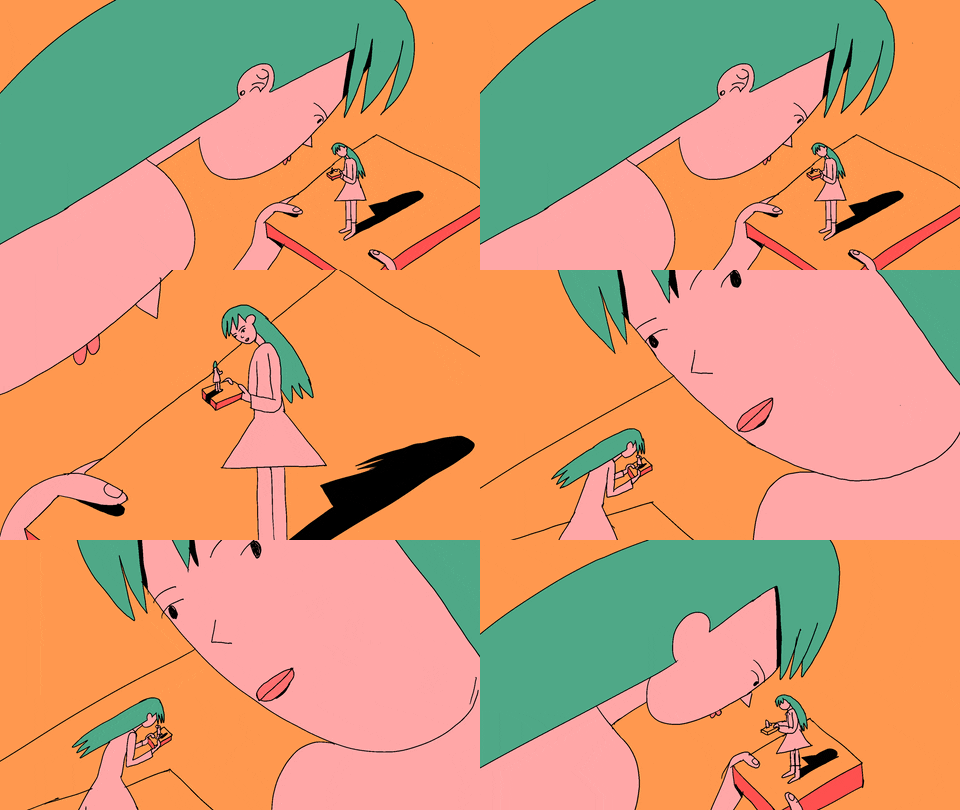
One of the most cliche sayings you hear when working in a creative environment is to “write what you know.” For a long time, I thought that was a tip given to avoid having to think up a truly thoughtful answer, until I realized how much I didn’t know. During my time in art school, I had the life-changing, career-altering lesson of learning the value of my everyday experiences by jumping into the pool of possibilities, while believing I didn’t know how to swim. The experiences that I thought made me ordinary, and the belief that what I had to say was less important than someone who lives a wild (for better or worse) sort of life, turned out to be the kind of stories that make my work so important, if I have the courage to share them.

Here might be where you ask, “If your experiences are ordinary, doesn’t that mean anyone could do the work you do?” And the answer to that is probably yes, but would they be able to present it in a relatable way? Would they be able to convey what something feels like to a viewer who hasn’t undergone the same version of that experience? And do they consider how the same experience has layers and layers of meaning and narrative you can mix together to create a unique blend of storytelling? A thousand people might go to the same coffee shop in a morning, through all of the similarities of the same exact morning, location, staff, and drink menu options, but walk away and recount the experience in a thousand different ways. A thousand familiar, but unique, ways because the storyteller is the variable that adds the worth.
In November 2021, a sweet, funny pitbull mix named Bella snoozed on the floor by my feet at Grasshorse Character Animation Studio as I saw the notification for a new project pop up on the Tongal Open Projects page. The synopsis was to create “a playful :30 TrueView video for Healthy Paws Pet Insurance to inspire pet parents to visit their site and get a pet insurance quote.” I read and re-read the objectives of that project for hours while brainstorming how to put my best foot forward and represent Grasshorse. Never having directed nor having a project greenlit for anything through this animation company previously, I was itching to stretch my legs creatively and see how well I could run with this.
After analyzing the project brief, what I took away was that the client wanted something genuine. Something that highlights their company’s work as a solution to ease some fears pet parents might have. They were asking for trust from pet parents, which meant they needed to be able to trust their creative team to help foster that emotion in the final result.

When piecing together my thoughts, I had to ask, “Why am I the best candidate to tell this story?”
Bella came into my life only three months prior when I began my search for a dog. I grew up on a farm, so I had plenty of experience with having animals around and knowing how much it hurts to see them in pain but not be able to afford helping them to the extent they need. That was something I was also nervous about when I made the decision to adopt. Bella, the very first pet I have chosen myself when living on my own, is not perfect. She is goofy, obnoxious, and excitable when she sees other dogs, which can be overwhelming sometimes. But she is mine, and I would do anything to make sure she gets the best help in a time of need.
That feeling became the reason why I was a great choice for the commercial. My approach to connect with audiences, by showing how pets don’t make life easier but better, helped me to communicate that investing in one's pet’s long-term care with pet insurance could make the difference between saving your pet’s life and having to choose to ease their pain completely.
Through a series of relatable scenarios, like Bella taking up most of the bed or licking my ear from the backseat of the car, strung together a collection of moments we might find annoying as pet parents in the moment, but would do anything to experience again if our pet was gone. My method to create the pitch utilized my empathy for pet parents and my love of my own dog to create a concept that was funny, true, and relatable. In the treatment I submitted, I provided a rough draft of a script, concept art, an animatic, and curated a moodboard which reflected the look and methods I wanted to incorporate into the project. The rough script sample for the commercial stemmed from the overall message I wanted to get across and the messaging used in the client’s brand guidelines to make it easier for viewers to envision the commercial as part of Healthy Paws Pet Insurance’s brand identity. An animatic performing the moments I had highlighted in my brainstorming session helped make the concept more tangible for the client as they reviewed the pitch.
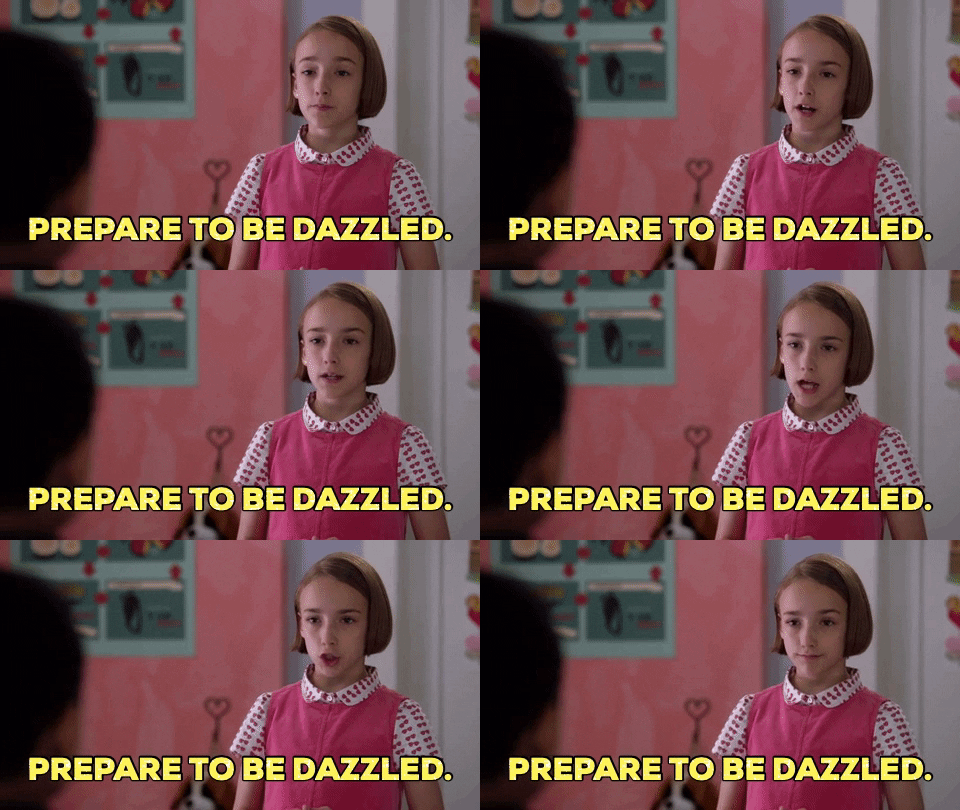
By putting in the time to be as prepared as I could to communicate my concept, I made it difficult to say no. No to me as a creator and to say no as a potential client of Healthy Paws. When you see yourself in a commercial targeted towards your needs, that offers a solution to your problem, it makes it counterintuitive to not pursue it. So by making the brand feel trustworthy and relatable, it only makes sense to get information about pet insurance after connecting with the characters within it.
The afternoon that the results came through followed a rather draining and frustrating morning where I had taken a bit of a punch to my confidence. I dreaded the countdown to finding out which creator presented the chosen concept. My bravery to try out new hats in the studio made me wonder if the hats I picked would even look good on me or if I looked like a kid playing dress up. And most of all, I feared that taking a chance to write what I knew would show that I am not capable enough to tell stories people want to hear. A bit dramatic of a reaction, I know, but that’s where I was in my head.
Results came in, and my entire day turned around. Over the next few months, I kept submitting my ideas through our company account and received great feedback, even being greenlit for three more projects and being a finalist in six others. Writing what I know and being willing to be truthful for the sake of connecting with people has been the most important lesson I’ve taken from my experiences as an artist. It motivates me to create more and more work, and to submit pitches regardless of the potential for rejection, because it is fulfilling to know when someone sees the work that you do that they are truly seeing you in it.
__
Note From Tongal: This blog is part of a series of Tongal Community-written blog posts that were originally sourced in the Tongal Blog Open Call Project. The views and opinions expressed in this article are those of the author(s) and do not necessarily reflect the official policy or position of Tongal. Read more Tongal Community-written posts here!