
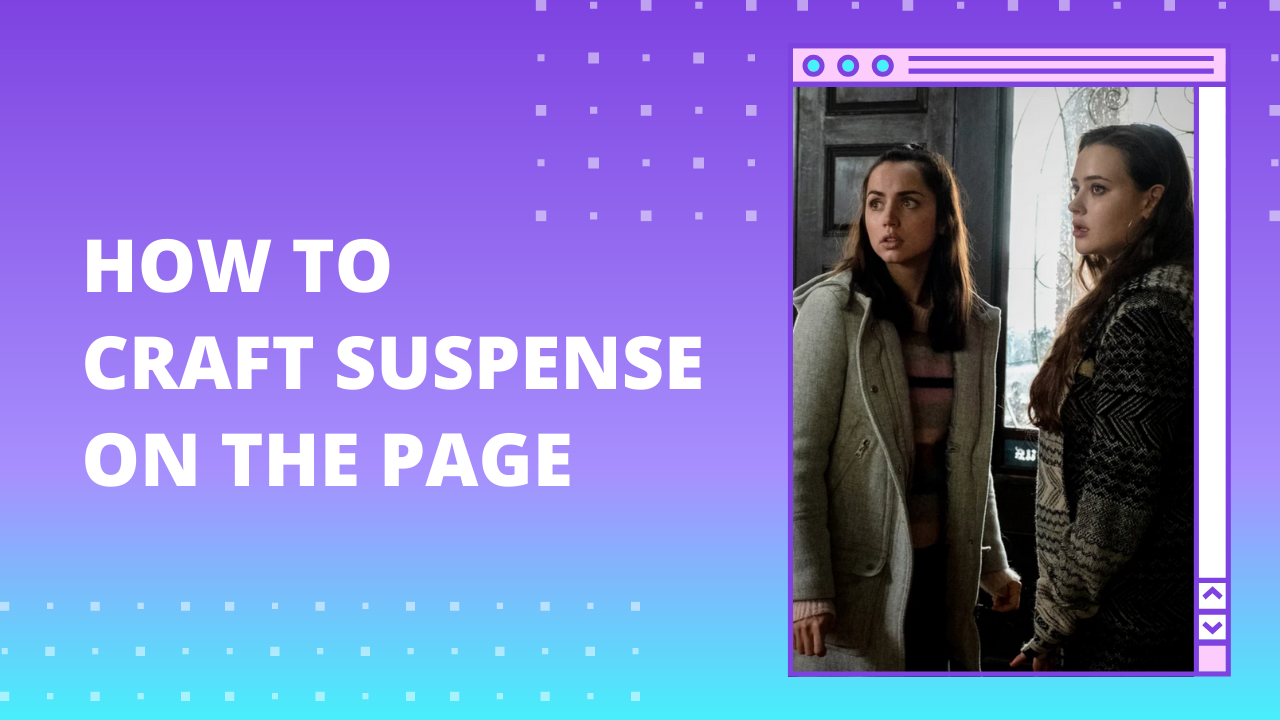
Suspense is the feeling of anxious uncertainty about what might happen — which often has to do with tension, or what makes readers invest in a story’s outcome. And to keep it really simple: it’s how you keep them turning pages. Here are some tips for suspenseful scene work that can be found in all sorts of genres: thrillers, horror, mysteries, sci-fi, action, and drama.
1. Descriptions should match the tone/genre of the piece
You should set and match the mood to the subject and genre of your script. You should also do the same with the narrative style. So in your suspenseful piece, your word choice and sentence structure should illicit tension. What you’re showing and how you’re showing it should raise the arm hair of the reader and maybe even cause them to stand up, pace around and take a break. That’s maybe extra credit, but aspire to it!
Check out how Phil Hay & Matt Manfredi do this in his script for THE INVITATION:
EXT. BACKYARD
A RUSTLING NOISE below. Will looks up at the sky. It is nothing but darkness.
A shape rises behind him.
It’s Tommy. Will, surprised, recoils.
2. White space over ink
Remember the advice when you start dating someone new. They say “don’t be so available” or “don’t be needy”. The amount of white space on your suspenseful screenplay page should be treated in a similar manner. Make the reader and audience wait. Build to the moment. Put them right there with you. If they are peering around a corner, don’t give them what’s on the other side of the bend immediately, skip down to the next line, and then reveal it.
Check out how Dan Gilroy does this in his script for NIGHTCRAWLER:
A NURSERY
fit for a prince and it’s dim and a night light projects A
ROTATING STAR PATTERN
on the ceiling as LOU films
A SHOTGUN SHREDDED CRIB
and story-book wallpaper and there’s no sign of a baby amid the spent rage and the alarm doesn’t stop and
LOU
works fast and efficiently and he’s shooting every detail before leaving the nursery and striding back down
3. Incomplete sentences and/or thoughts
When you’re anxious, nervous, or frightened, you’re not necessarily using complete, grammatically-correct sentences. Bring this into your suspenseful story. Don’t be afraid of one- or two-word sentences, or trailing off, or interrupting yourself with a sound. Suspense is a mood and it’s up to you to successfully convey that mood. Set a vibe!
Check out how Tony Gilroy does this in the script for MICHAEL CLAYTON:
MICHAEL -- turning again -- aimless -- windows open -- cold air whipping through -- braking suddenly -- impulsive -- turning -- suddenly -- faster now and —
4. Make the reader feel like they are right there / decreasing the distance
To excel at suspense, it’s not enough to tell your reader or audience what’s going on, you have to put them there. Place them in the situations you are depicting, eliminating any and all distance. Make it feel real, make it feel immediate, make them feel the uncertainty, live in the apprehension, stay in the confusion, and try to crawl out of the doubt. Create expectations then pay them off or subvert them. The more readers feel like they are participants in the suspense, the more satisfied they will feel at the end of the story.
Check out how Rian Johnson does this in his script for KNIVES OUT:
But he's upon her, hand over her mouth, stifling her scream as he pushes the syringe into her neck and PUSHES THE PLUNGER.
These are just a few techniques to create suspense. Remember that in suspense, the audience and characters know the same information. You control how and when it is released. And whatever tradecraft you apply to your scene work, make sure your intention is clear and concise. You can’t build any emotion or effect if the reader is getting lost in your sentences trying to decode and distill what you mean. That is not the kind of suspense you want to put your reader in!
What tricks do you use to create suspense on the page?
--
Note From Tongal: "How To Craft Suspense On The Page" is part of a series of Tongal Community-written blog posts that were originally sourced in the Tongal Blog Open Call Project. The views and opinions expressed in this article are those of the author(s) and do not necessarily reflect the official policy or position of Tongal. Read more Tongal Community-written posts here and then Pitch us a topic you'd like to write about for the Tongal Blog!