

Let’s set the scene: for a while now, you’ve had that beginner’s photography kit that you purchased online or from a trusted friend. You’re ready to upgrade your equipment and really fall into the rabbit hole of purchasing lenses. You open up your browser and see an advertisement that reads “FULL FRAME EF-M MOUNT FRIENDLY PRIME 50MM 1.5/f FOR SALE TODAY!!”
What the heck do any of those words mean?!, you wonder. Well, after reading this guide, you’ll be able to read that gibberish AND understand it! Don’t worry, this guide is beginner-friendly (and won’t shame any intermediates who need a refresher either).
Camera Sensors
Using our example lens description (the full frame EF-M mount friendly 75MM 1.5/f), let’s talk about the main idea: camera sensors.
In ye olden film times, you would capture a scene by exposing a piece of film to light, burning the image into it. It needed a particular type of lens to do this film magic, so normally the lens would be built into the body of the camera.
Nowadays, we do this process digitally with the camera’s built-in sensor, and that’s why we can change the lenses of a camera. Thus, the name Digital Single-Lens Reflex (DSLR).
When it comes to DSLRs, there are two main types of sensors: Full Frame Sensors and Advanced Photo System type-C (or APS-C or more commonly referred to as “Crop Sensors”).
Full Frame Sensors vs. Crop Sensors
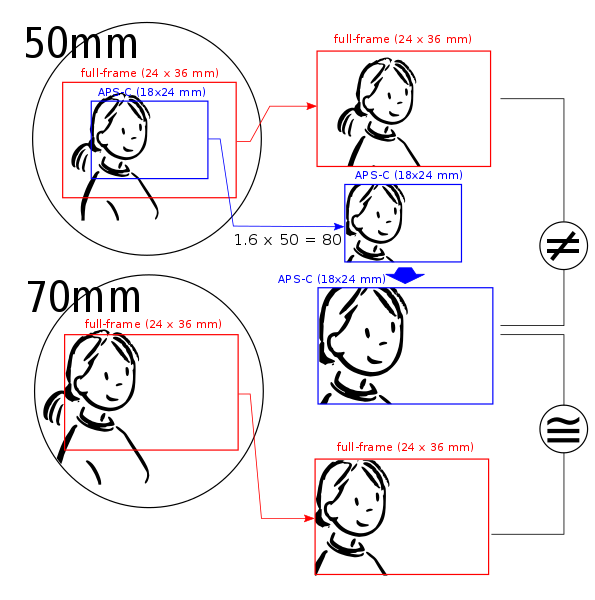
Full Frame Sensors are designed to capture images up to 36mm x 24mm. These sensors are the equivalent to the frames you would get from old school, physical film. These sensors capture more images and are usually more expensive.
APS-C (we’ll call these Crop Sensors from now on) are designed to capture images up to 22.3mm x 14.9 mm. This gives your camera’s sensor a smaller frame of view. That means it won’t capture as much of the image as a Full Frame Sensor could. Since you’re not working with as much space, Crop Sensors “zoom in” on whatever you’re capturing by a rate of 1.6x. This “zoom in” is referred to as a “crop factor.”
Take for example, the full frame EF-M mount friendly 75MM 1.5/f. Our lens says it is designed for a full frame sensor and is 50mm. So, a Full Frame Sensor camera will read the image at the full 50mm. That exact same lens will read as an 80mm lens when using a Crop Sensor camera.
Beginner’s Way to Think About This:
The length (50mm for our example) of your lens isn’t what determines the sensor; that information is within your camera itself. The length of your lens will change how much of an image your camera will capture.
Intermediate’s Refresher:
Camera Mounts
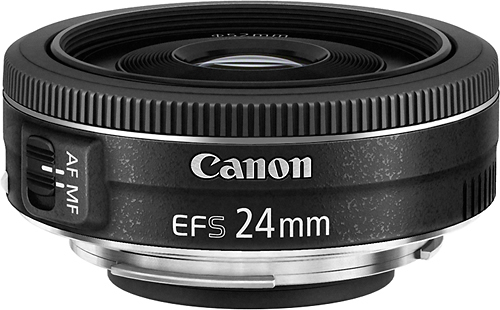
Now that we’ve got a basic understanding of how the sensor in your camera determines the amount of picture you can get, it’s time we talk about the different camera mounts. “Wait, there’s more to this conversation?!” Yes, yes there is.
Quick Terms to Know
Adaptors
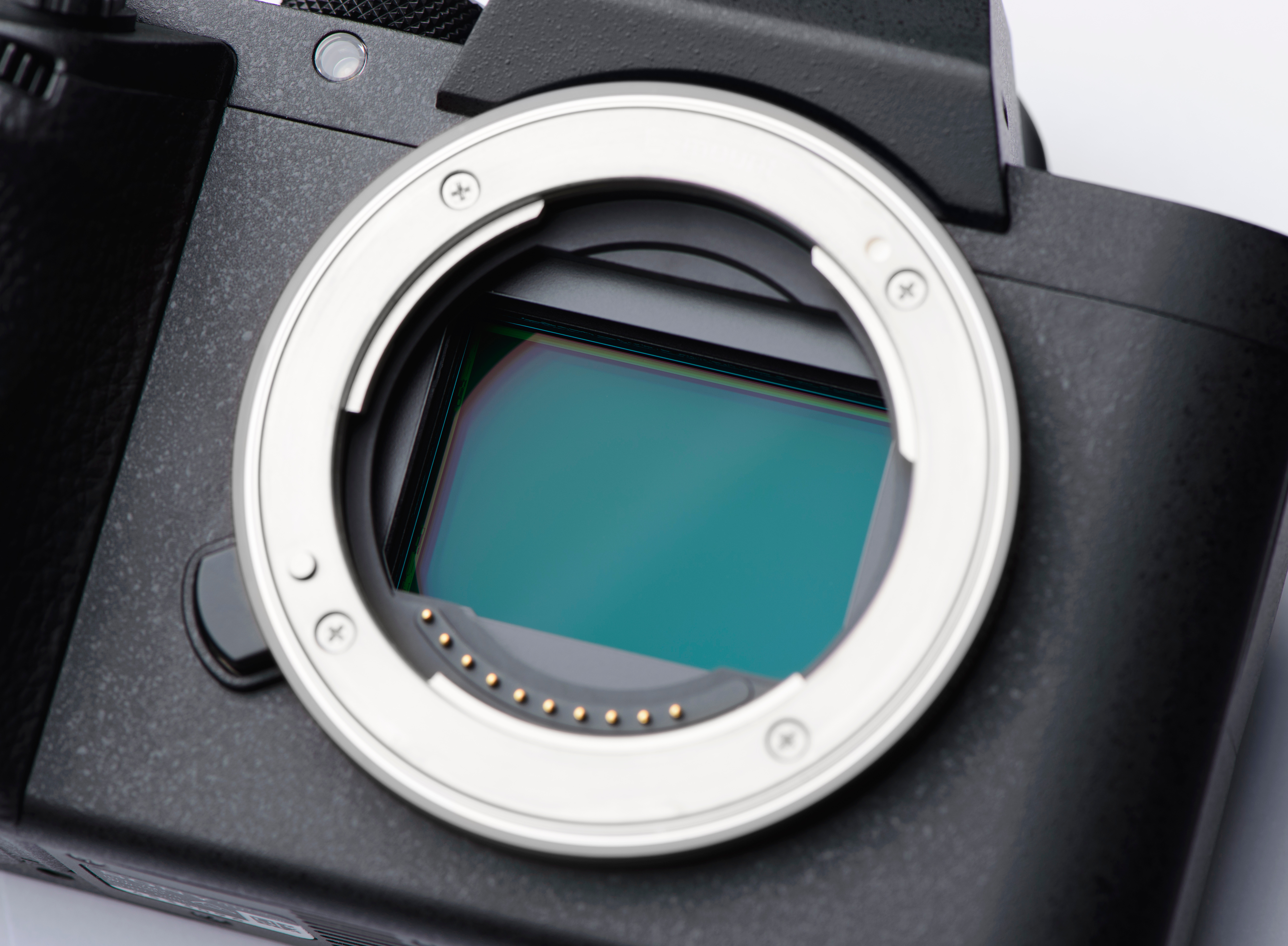
Regardless of what type of mount your DSLR has, there are always adaptors that can help make any lens fit any camera. Just be aware that you may end up with vignetting or the corners of the image being distorted.
So, taking our original example, we know the following information:
TL;DR - The sensor is determined by your camera itself. If it’s a full frame camera, use full frame lenses or prepare to have a 1.6x zoom. If your camera has a crop sensor, you’ll always have less image.
__
Note From Tongal: This blog is part of a series of Tongal Community-written blog posts that were originally sourced in the Tongal Blog Open Call Project. The views and opinions expressed in this article are those of the author(s) and do not necessarily reflect the official policy or position of Tongal. Read more Tongal Community-written posts here!