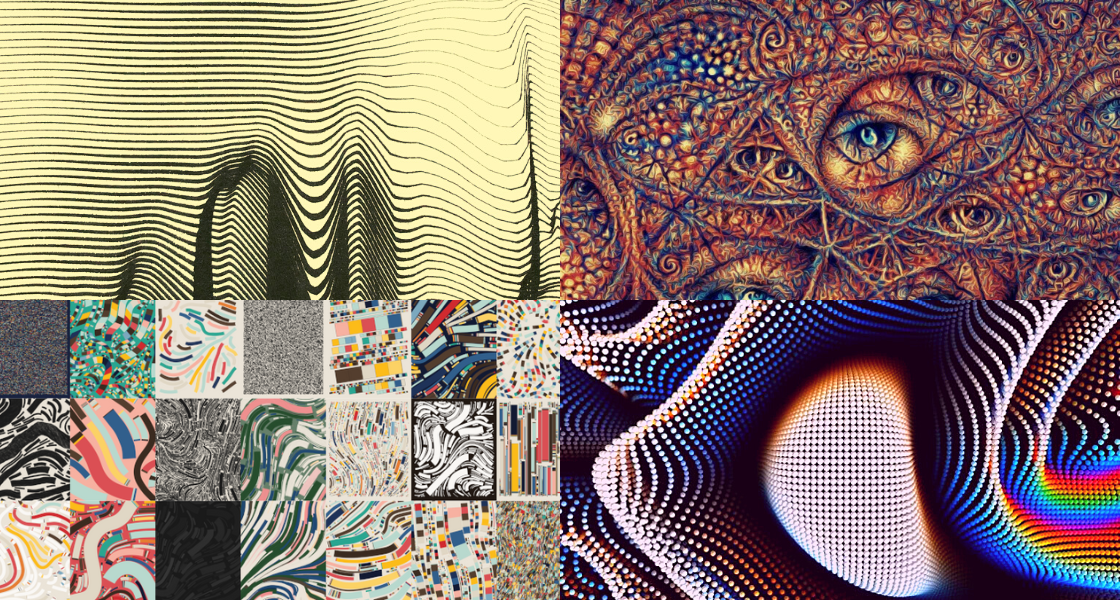
Within the last year, generative art has crept across social media. It has dominated the most recent crop of NFTs and become a staple in print, film, and video work. I’m always excited about trying the next new tool and have been spending more time (and money) on a multitude of the newest generative art models. So I wanted to break down a few of the more recent and exciting options. For each model, we’re going to run a simple prompt. We’ll use the input phrase “An apple on a plate” to generate our images. Many of the models allow users to input styles and other phrases to aid in the image creation, but to keep it fair, this walk-through will utilize our simple directive.
Wombo/ Dream
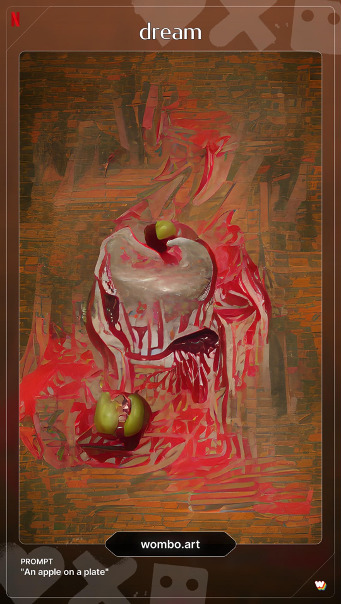
Wombo is a unique “low end” AI model. It’s app-based (meaning it's available on your phone) and is a quick way to generate images. It leans on styles, which means your final output is going to fall into a few categories of looks. Wombo creates vaguely identifiable objects, but what it lacks in coherency it makes up for in speed. Its final images are generated extremely quickly with only a few taps. I like to think of it as a “Baby’s First AI Experience”. On Wombo, users' images are free to download, but the software providers keep all rights to publishing and ownership.
Nightcafe
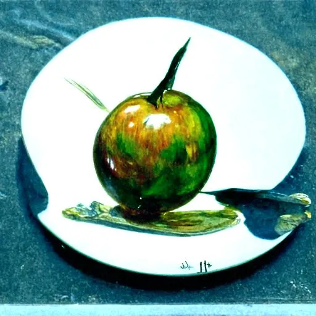
Nightcafe is an online app with a dedicated website. It’s relatively fast and also has a style of input reliance. It tends to be more interpretive than coherent, but provides a clearer image than Wombo. Nightcafe works on a credit-to-image currency system. The user purchases credits and one credit creates one image.
Clipp-App
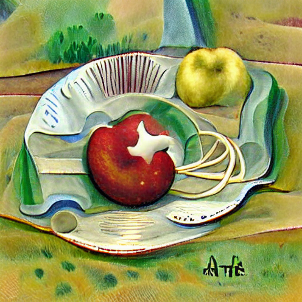
I’m a personal fan of Clipp-App. I do much more design work than programming work, and a clean UI makes all the difference. Clipp-App bridges the gap between the interpretive (but easy-to-use AIs) and the incredibly coherent models that produce stunning art. Clipp-App is also the first in our list that users can download and run, which means the only cost is running your own PC and the power costs associated with heavy GPU usage.
Disco Diffusion
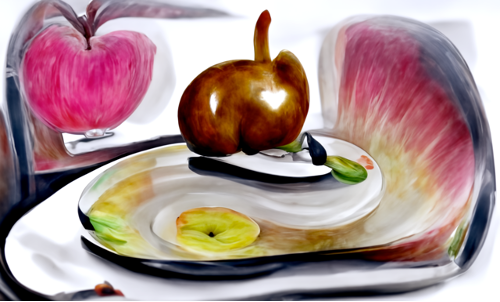
Disco Diffusion is a unique offering that runs through Google Colab. Disco creates wonderfully artistic interpretations of your text. Results have something of a dreamlike quality to them. It is the most “open” of the current front runner AI models, in that you can download and tinker with the code. It also offers users the option to input video as a starting point and to create videos, which have led to some astounding results. See Remi Molettee’s insane dance animations for examples of those. However, straight-out-of-the-box, it may require a little work to get the image you want as it did not handle our apple input very well. Last, the interface is a Colab sheet, so it’s a little clunky and takes a bit of time to learn.
Midjourney
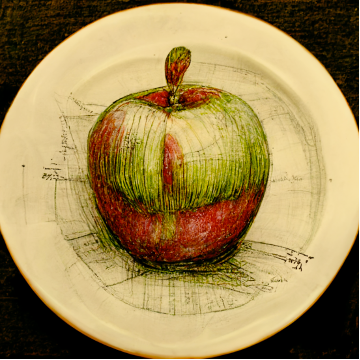
Midjourney is the current king of social media. It’s likely that most, if not all, recent images you’ve seen have come out of Midjourney. They’ve expanded their beta to a large audience. Midjourney operates on a Discord server, and it has an “open by default” philosophy. This means everyone sees everyone else’s work and has access to it. There is an option to hide your creations if you want. They do hold 20% licenses over any images that make over $20,000 in a year, so that's worth keeping in mind.
Dall-E - II
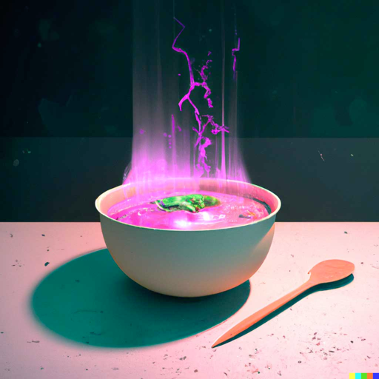
Dall-E - II is the current gold standard for text to image generation. It’s in a very private beta, with limited invites. I wasn’t able to run our apple on a plate. However, the example images coming out of it are stunning. It can generate multiple styles per image with absolute coherency. Developed by OpenAI, it is a stunning leap forward in the field.
There are a lot of new options in text to image AI models out there, and the list is only growing. One of the amazing things about this form of AI is how well it learns. More users create more data, create better models and improved art. This exponential curve of users, to input, to improvement means that they’re only getting better and getting better faster. It’s a groundbreaking technology for creatives, designers, filmmakers and artists, with near infinite use cases. Whether you're developing concept art, creating video experiments or art installations, or just looking for outlets to recharge your creativity, everyone should crack open an AI and see what they can make. It's inexpensive and easy to use. Not to mention: the results are stunning.
__
Note From Tongal: This blog is part of a series of Tongal Community-written blog posts that were originally sourced in the Tongal Blog Open Call Project. The views and opinions expressed in this article are those of the author(s) and do not necessarily reflect the official policy or position of Tongal. Read more Tongal Community-written posts here!