We didn’t really know what would happen when we created the YouTube Pilot Portal, an always-open project where anyone can submit a web series pilot on spec for the opportunity to get the series greenlight on the Tongal YouTube channel, earlier this year. We hoped we’d stumble upon something exciting, something entertaining, and something that would interest the current Tongal community as well as creators across the world. With the launch of MythMakers, the first series to be produced out of the Pilot Portal Project, we think we managed to tick all those boxes and then some.
Filmmaker Patrick Meaney caught our attention with his MythMakers pitch, both for his past documentary work and access to interesting and inspiring subjects. The premise of the series is to dig into the minds of professional creatives who’ve built their own worlds and mythologies. Across our culture’s most beloved comics, films, video games, TV and more, these are the stories behind the stories.
To celebrate the launch of the new series, we sat down with Patrick to get the story behind HIS story. Before we dig in, let’s watch the first episode below. And don’t forget, Season One of the YouTube Pilot Portal is still accepting Pitches through December 31st, so if you’ve got a great series idea, show us what you got!
Marissa: Congratulations on MythMakers! Can you briefly describe what MythMakers
Patrick: Mythmakers is a series of short-form documentaries, about 5-7 minutes each, profiling people who are living their dream, and working as creators in media, be it comics, film, TV, or any other medium. The goal is to show the journey that each person took to get where they are
I’ve produced several feature-length documentaries about creators and creativity, including films about major writers like Neil Gaiman and Grant Morrison. I’m always fascinated to hear accomplished creative people talk about how they got there and what they learned, so having the chance to explore the same concept in a more short-form format, with a range of people beyond just writers, was very exciting.
M: What came first, your interest in comics or your interest in filmmaking?
P: It
Over the years, I’ve been lucky enough to blend those two interests, by doing films about comics, and basically get to interview all the heroes I had read and

M: For the first set of episodes you interviewed Matt Hawkins, Tiffany Smith, and Fon Davis. Who’s at the top of your list for future episodes?
P: Those three all had great stories
M: When shooting documentary pieces, do you have a preferred camera setup or production equipment you find is best suited to this style of filmmaking?
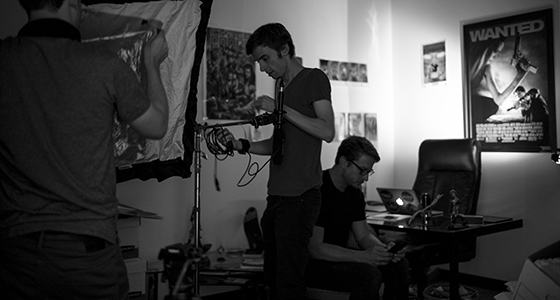
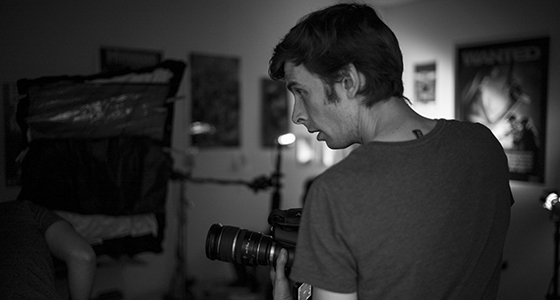
P: For me, the goal with a doc is always to keep the focus on the person, and not have them thinking about the camera or technical aspects. You want the mechanisms of production to be as invisible as possible. In the case of these shoots, that means just putting the camera on a tripod and talking with the subject about their life and what they’ve experienced.
The doc I did on Neil Gaiman involved following him around on his book tour
M: Do you have any go-to tactics for making your documentary subjects feel comfortable on camera?
P: I think it really gets back to the goal of making people focus more on the moment than on the camera. I know it’s hard for me if I ever do an on-camera interview
And in general, the smaller the crew, the better.
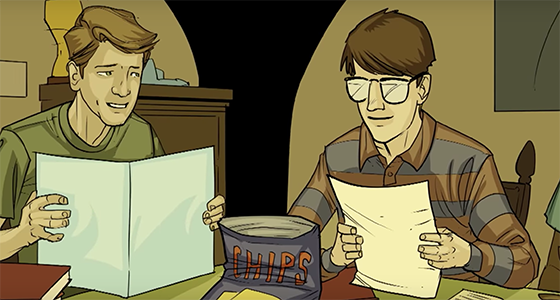
M: I love how you married comic book illustrations with comic book creator Matt Hawkins’ interview in episode one. Will that style be carried across the series or do you intend to switch it up based on the creative niche of each subject?
P: For these first three at least, I’m using the same technique, as Tiffany and Fon are both also immersed in the world of comics and big fans themselves. But, going forward, it could be fun to try some other techniques. For my other films, I’ve used puppets, stop motion, reenactments with actors and studio costume shoots to bring the stories to life.
I like to use all these techniques since one of the challenges of a doc is how to show on screen moments that had no photos or video taken at the time. It can be a challenge, but it’s also an opportunity to be more creative than just showing a photo of something happening.
M: What do you hope viewers will take away from MythMakers? What is your biggest personal takeaway from creating the series?
P: I hope that people feel inspired to go out there and chase their own dream. If you look at things from afar, it can seem like it’s impossible to get into the film industry or the comics industry, but when you hear people talk, they all started with a dream and worked hard to get there. It takes lucky breaks, but each of these people could be you if you work hard and keep at it.
So, if watching these
And, for me, it was really exciting to hear insight from really smart and insightful people talking about what it takes to make it in their field. For example, hearing Fon Davis talk about how there were more miniatures in the Star Wars prequels than the original trilogy was very surprising since people always talk about CG in the prequels. But he was there and did it and can give insight into what actually happened. Similarly, it was fascinating to hear Tiffany Smith talk about what it’s really like to interview celebs at a junket or red carpet, and how challenging it is to get something fresh and unique in that environment.
M: What's next for you? Where else can we keep tabs on your work?
P: I have a horror film that I wrote/directed called Trip House that’s done and is currently scheduled to be released early next year. Tiffany Smith is one of our lead actors, along with other major geek icons like Amber Benson, Taliesin Jaffe, Whitney Moore, Chloe Dykstra and a lot of other great actors. I also recently had She Makes Comics, a documentary I produced with director Marisa Stotter come out on Netflix, and my Neil Gaiman doc is available on Starz.
You can follow me at @patrickmeaney on Twitter for all the latest updates!