

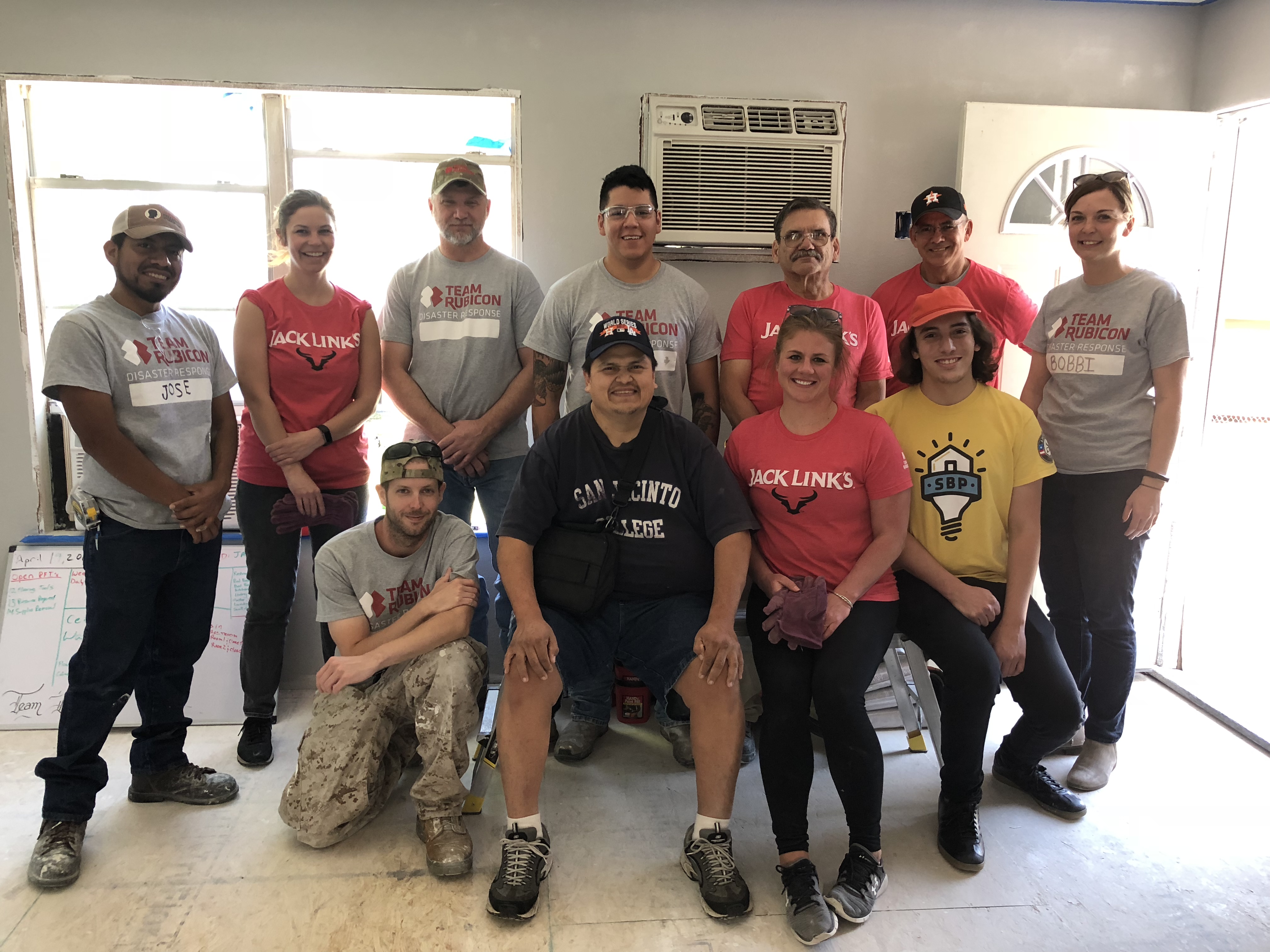
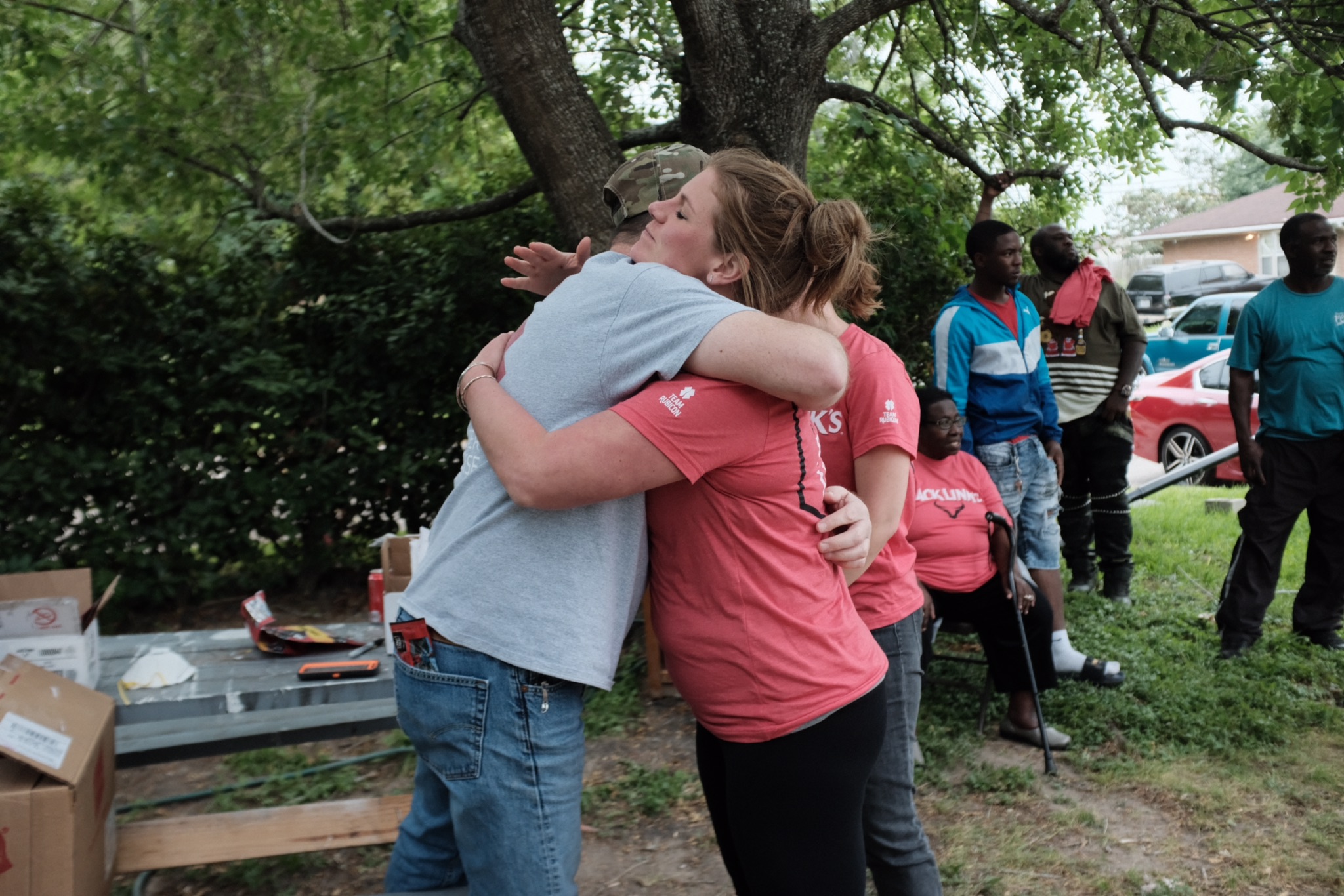
In April, Texas natives Patrick William Smith and Wendy Womack of Kiyo Films traveled to Houston to document the work Jack Link’s has been doing alongside Team Rubicon, a veteran-operated disaster relief organization, to restore the homes and lives of Hurricane Harvey victims.
Their video, “Fueling the Front Lines,” shows the incredible amount of work and volunteer hours that go into rebuilding homes. Though the process is physical and labor intensive (volunteers sledgehammering walls, carrying out buckets of debris), Kiyo Films manages to make the whole experience seem ethereal and emotional by employing subtle camera techniques. Their approach underscores the sense that this is not just about rebuilding homes - it’s about bringing people together, restoring their sense of self and allowing them to go back to normal - both for veterans and for the Hurricane Harvey victims. Experience it for yourself here:
In general, it’s difficult to carry out a social good campaign without seeming a little self-serving, but this spot finds the right balance between genuine emotion and presence of the brand. Not to mention, it’s also difficult to run a set near heavy construction. Kiyo Films handles both of these challenges with poise. We had a chance to ask Patrick of Kiyo Films a few questions about his team’s process for telling this story.
Maddie: Tell us a little about yourself and what motivated you to become a filmmaker.
Patrick: Two words: Jurassic. Park.
For real, though. I think that theatrical experience (which was indescribably magical to me) hardwired my impressionable young brain into resisting all walks of life that didn’t include filmmaking. From pre-med, to poli-sci, to business management – my undergrad years were a veritable round-robin of confusing life choices – and on the countless nights when I’d question those pursuits, I’d inevitably find myself watching a movie in search of inspiration. And amidst the confusion – I decided to study film abroad in New Zealand for a semester (the decision, admittedly, was solely influenced by my ardent love of The Lord of the Rings) where I ended up inadvertently stumbling upon the set of The Chronicles of Narnia while on a hike with friends. And that’s when everything cemented for me – watching actual employed adults making a movie was eye-opening. It was real to me for the first time. People actually do this for a living. From there – film grad school at UT, onto shooting features as a DP, then directing commercials, and now exploring my first directorial feature.
More earnestly though - filmmaking is powerful. Its impact on our lives, whether as a reflection of who we are or the inspiration for where we’re going, is dramatic. Storytelling (in any form) is perhaps the most powerful social tool we have – and filmmaking combines every form of it. When 1,000+ artisans contribute their own unique storytelling crafts to a single feature film – it really is an astonishing feat. And it’s a collaborative medium through and through – so if you’re a naturally social human (and have outgrown the go-it-alone, micromanaging “auteur” phase of pretentious indie filmmaking – which most of us admittedly go through...) being on set is like going to summer camp. You’re a part of a team, singularly-focused yet diversely equipped. And I love that.
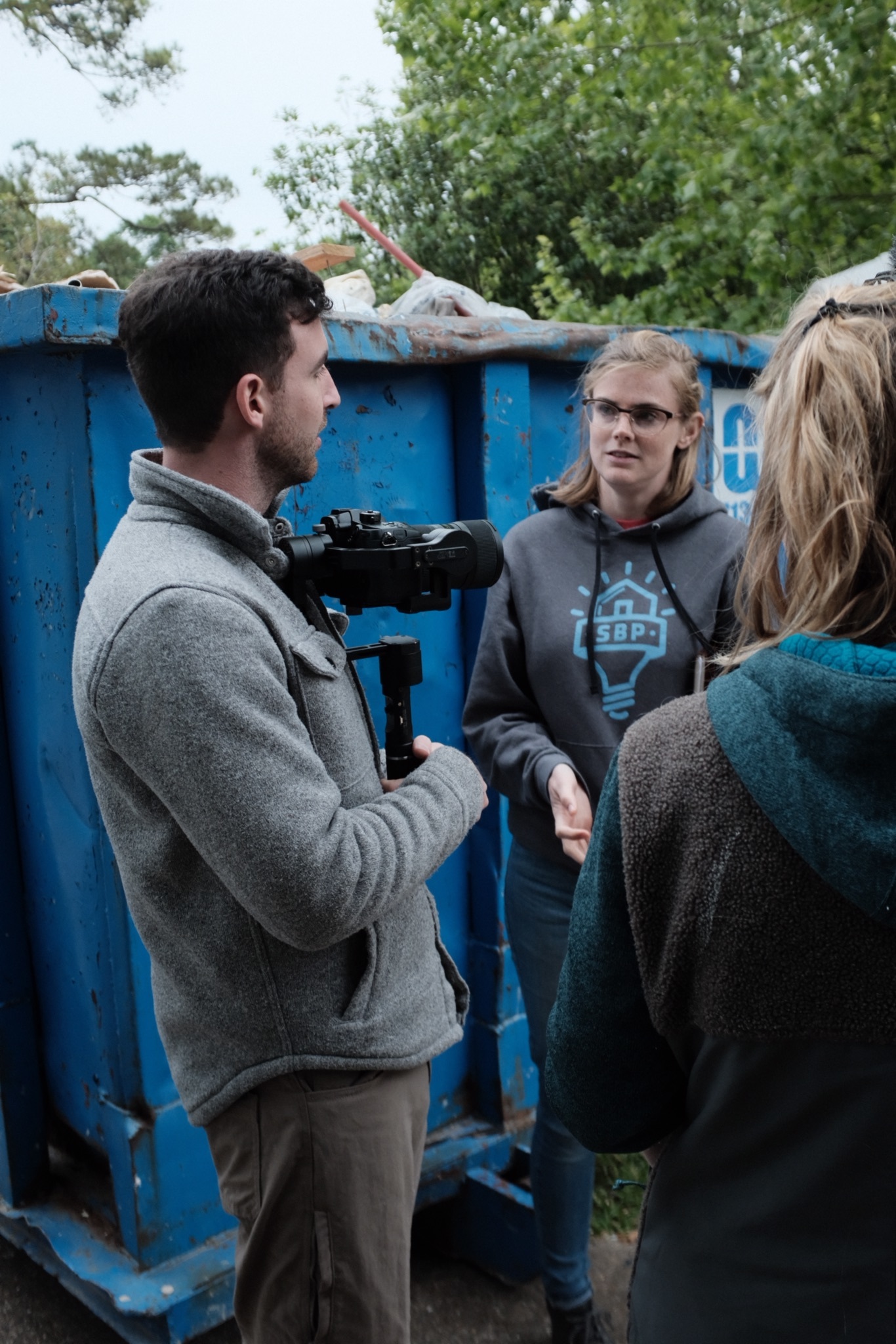
M: As a Texas native, what was it like going to Houston to work on this project? What was the most memorable moment for you on set?
P: Depending on who you ask and in what city (or part of that city) you ask it in, being a Texan means something completely different to everyone. And regardless of its reputation as a cultural/political monolith - it’s actually a surprisingly diverse state. Yet, when tragedy strikes, what seems to unite Texans is their willingness to put aside differences and help one another. So, while I’m not always brimming with Texas pride, instances like these give me a lot of hope. So, Hook em’ horns?
Demolition day was (obviously) the most amusing event of the shoot. The construction volunteers seemed particularly eager to indulge in the catharsis of indiscriminately swinging sledgehammers and kicking down rotten walls – and of course the camera loved the chaos. Swirling particulate in the air, dramatic roof collapses, frenetic activity in every corner of the house – gold.
Though to be sure, witnessing the recipients reunite with their homes for the first time since Hurricane Harvey obliterated their community was undeniably special – if not gut-wrenching. Watching them reconnect with familiar spaces, reminisce about memories in each room, and express their immense gratitude for the volunteers who made it all possible, was unforgettable.
M: Talk us through your pre-planning process. Were there certain beats you wanted to hit or were you and your team more run-and-gun?
P: This was definitely one of those “expedited timeline” projects – like, the kind that keep you up at night... We had exactly four days to get on the same page as the brand (creatively), coordinate crew, travel, accommodation, equipment acquisition/rental/pre-build, scout the location, prep a “loose” shot-list, and most importantly – build some semblance of a relationship with the construction crews prior to the shoot (without which, capturing honest and heartfelt candid moments would have been much more difficult – being on camera can be really intimidating to people who aren’t used to it). It was a dizzying jigsaw puzzle – but I secretly love that kind of pressure. And of course, I couldn’t have done any of it without my co-producer, Wendy – a true spreadsheet prodigy.
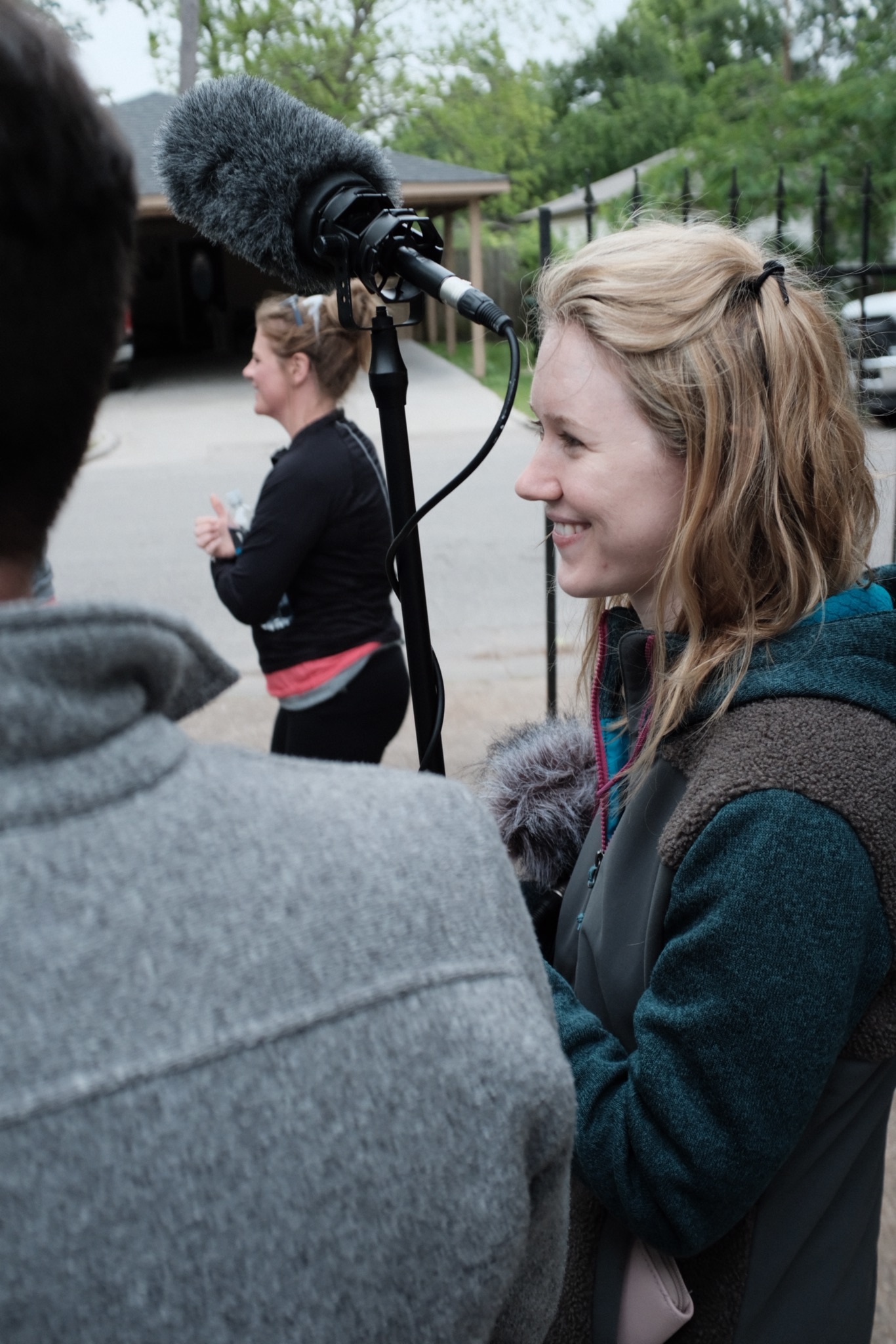
And yes – we had a very clear vision of the “categories” of shots we needed in order to complete the piece. We divided the narrative into several sections – the setup (imagery of devastation), the demolition, the re-build, the reveal (recipients seeing the finished homes), the product shots (people naturally eating jerky on set), the celebratory or “feel good” moments (laughing, dancing, etc), and the climactic moments (presenting gifts to the owners). Our producer doubled as a docu-style script supervisor – noting the shots that fit into each category through our DIT to ensure we were hitting our marks. In the end, we ended up with much more footage than we needed – which gave us a lot of options in post.
M: What were some logistical challenges you faced? What did you do to work around them?
P: Filming on an active construction site is a shooter's nightmare. Sync sound is utterly unusable, safety is questionable, available light is uneven or nonexistent, and you have to be sensitive not to disrupt the actual construction work going on (which, frankly, is more important than filming a commercial) - so there’s quite a calculus involved. Extensive tech scouts prior to the shoot allowed us to identify areas of each site that were conducive to good shooting, keying in on the most “cinematic” locations and understanding when/where available light would be best in each. Otherwise, it was all about being flexible. Finding the next shot. Waiting for the right moment. And always being intentional about putting people at ease.
M: It can be tricky to strike the right tone when aligning a brand with a social cause, but you nailed it! What steps did you take to ensure the final piece felt authentic?
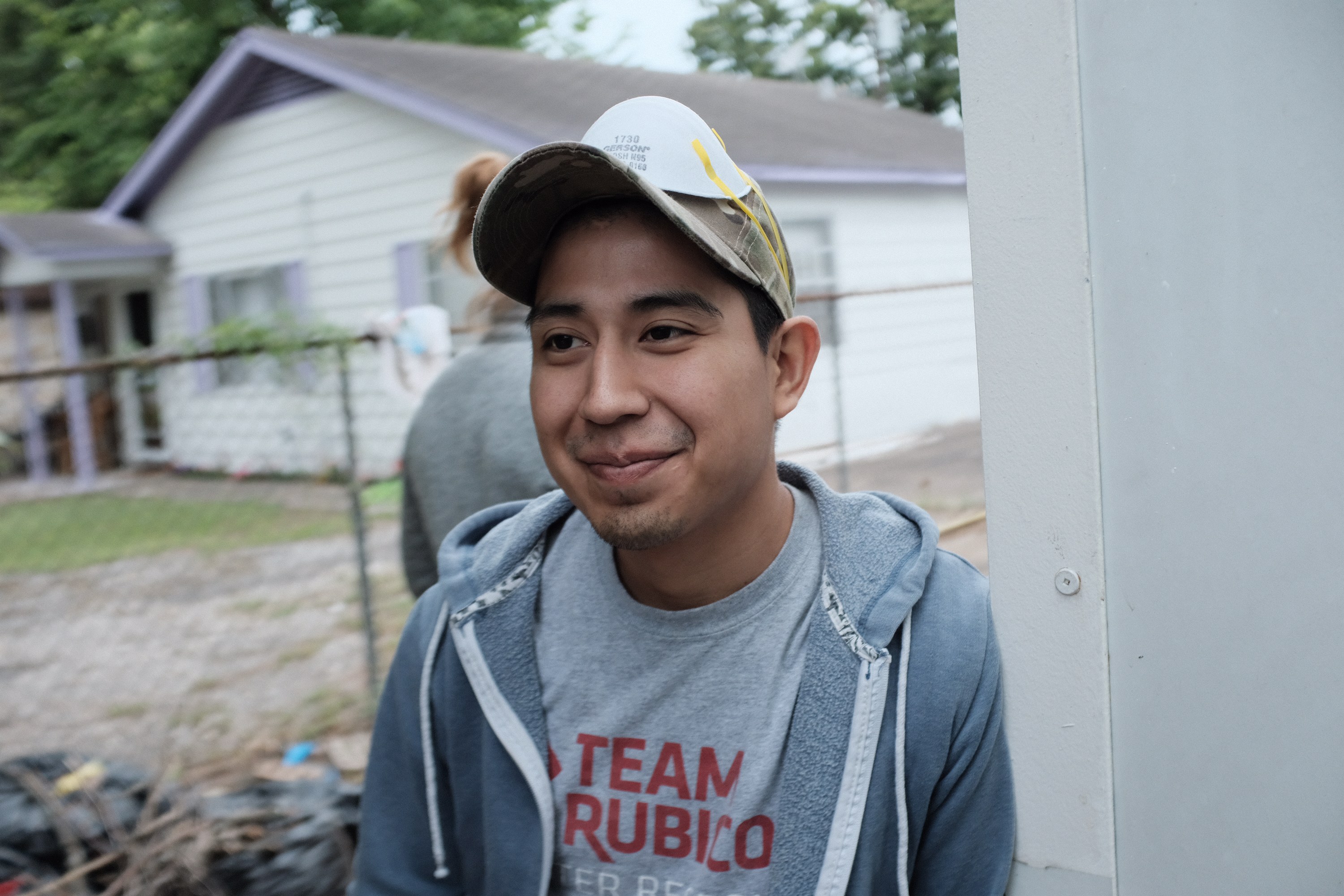
P: For sure – consumers are smarter than ever. They immediately see through gimmicks and smell inauthenticity a parsec away. And when you’re addressing a legit social issue, there’s no room for striking a false tone. We came into this project VERY wary of this – and were particularly reticent when it came to awkward product placement. After communicating these concerns with the brand, it was obvious they were on the same page - entirely. They cared deeply about the cause and were fully supportive of our approach to work organically. This meant that the footage couldn’t merely feel real – it had to actually be real.
We avoided staging “moments” entirely and instead worked with the project leaders to feel out which natural beats might occur during the shoot – positioning ourselves in the right places at the right times in order to capture the necessary beats piecemeal.
M: You also teach film production to college students and occasionally bring them on set for real-life production experience. What is it like working with film students and what do you hope they learn by working on set with you?
P: Yes! I also teach film at a university (my alter-ego), and bringing my students onto film sets is one of my absolute favorite things. Everything about filmmaking was so mysterious to me as a student – I would have LOVED getting legit set experience before being thrust into the real world. My students are crazy motivated, respectful, hardworking, and talented to boot – so bringing them on set is a joy. More diabolically though – I get to teach them how I, personally, like to make film, and how I like to run a set (which varies from director to director). So when they get on set, they know EXACTLY how I prefer things to run, which makes them wonderful to work with.
Set culture is really important to me, and they know that. Creativity needs a safe atmosphere to flourish – which is why I’m super intentional about the types of people I bring onto a set. Filmmaking can be (is) notoriously stressful – so surrounding yourself with creatives who are kind, flexible, diligent, and lighthearted is a must. There’s no room for negativity on my sets. Mistakes – sure. Obstacles – definitely. But as long as you’re professional, own your missteps, and work your tail off, my crews are encouraged to enjoy the hell out of the process. And the camaraderie always shines through in the deliverable.
---
Have you worked on a social good campaign before? Share your experience and tips down below!


