

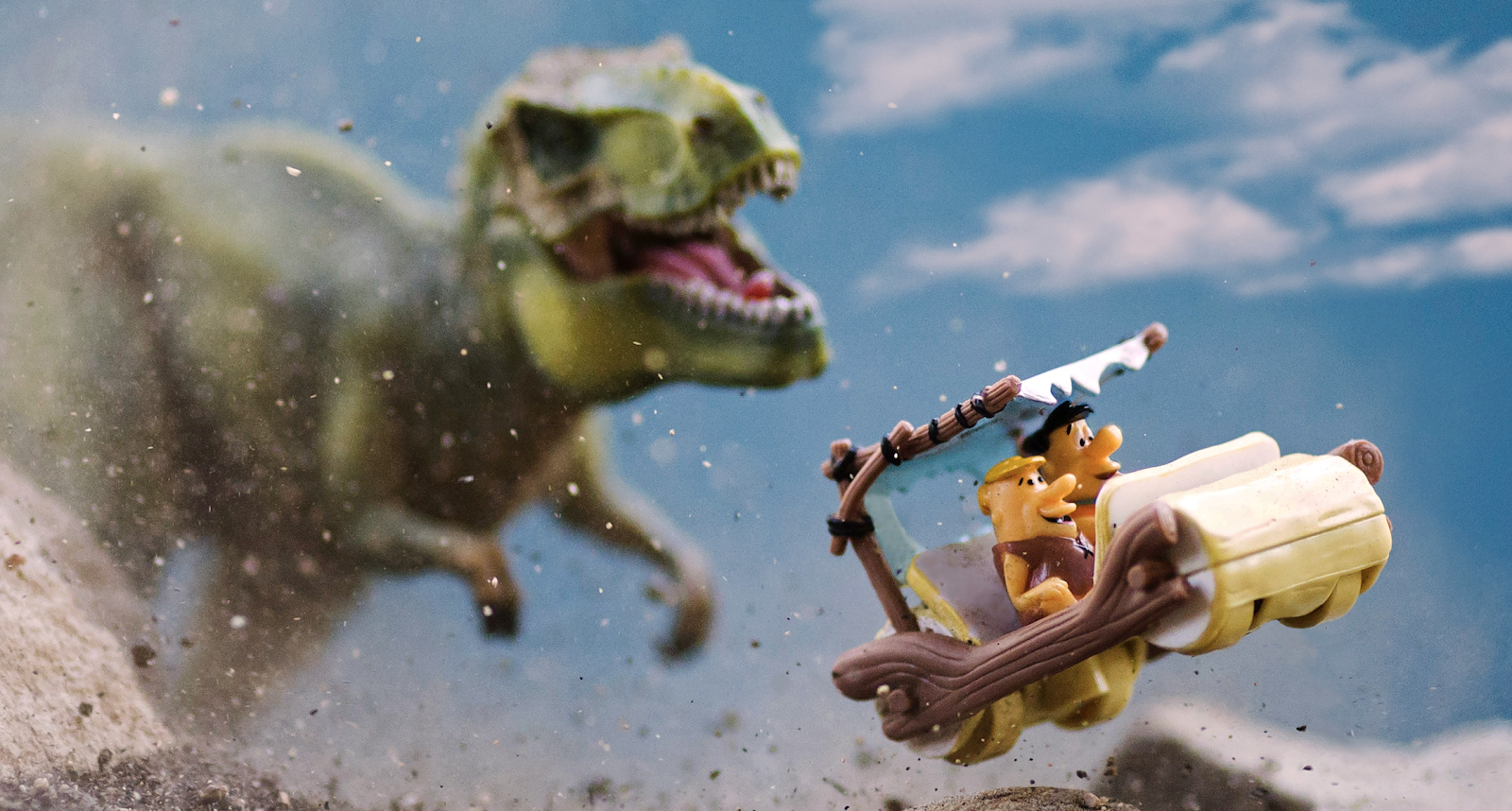
What's the coolest job you can think of? Water slide tester? Fortune cookie writer? Chocolate taster? Sorry, but Mitchel Wu's got you beat. He's a professional toy photographer. And, we're SO jealous. Lucky for us, he's been so generous with his time and advice. Read on for a great interview with Mitchel where he covers how he got started, what techniques he uses and who would win in a fight: Batman or Rocky.
Ingrid Vining: How did you discover the interesting niche of toy photography, and more importantly, when did you realize you loved doing it?
Mitchel Wu: With a background in art and a degree in illustration, I spent the first half of my professional career working as a product designer and developer in the 3D collectibles industry -- including 6 years at the Walt Disney Company. Following Disney, I enjoyed incredible collaborations with Sony Pictures, Warner Bros, LucasFilm and Cirque Du Soleil. I've always been a restless creative and in 2007 I reevaluated my priorities and direction. I'd always been interested in photography and decided to switch gears to pursue that as a profession.
I did a lot of corporate and lifestyle photography initially, but eventually found myself gravitating towards weddings, where an abundance of visual creativity and storytelling was forming. I've photographed hundreds of weddings, something I enjoyed and excelled at. However, in 2015 my daughter started high school and I was really beginning to feel the sting of missing weekends with my wife and daughter because of weddings. I knew that my daughter would be off to college in the blink of an eye (which she will be this fall -- Go Bears!), which was a big factor in my decision.
I photographed my last wedding in November 2015 but coincidentally saw some toy photography on social media around the exact same time. The concept of toy photography struck me as really odd, but also incredibly cool. We all played with toys as kids, but most of us grew out of them and moved on to other interests. But once I took my first toy photo it was as if I'd been transported back in time to when toys were my life. I was hooked and never looked back.
A big part of it was being able to tell stories and create incredibly cool images. There's also a strong nostalgia factor as well. I love working with properties that bring me back to my youth (The Flintstones, Scooby-Doo, Alien, Star Wars), or were a part of my kid's childhood (The Iron Giant, Monsters, Inc., The Incredibles and Where the Wild Things Are). With toy photography you’re limited only by your own creativity and imagination, and I immediately saw the potential to make it into a career. Toy photography involves many of the same things that originally drew me to illustration -- specifically being able to create and craft stories through amazing imagery. Ironically, I feel like this is exactly the career in illustration I always imagined I'd have.
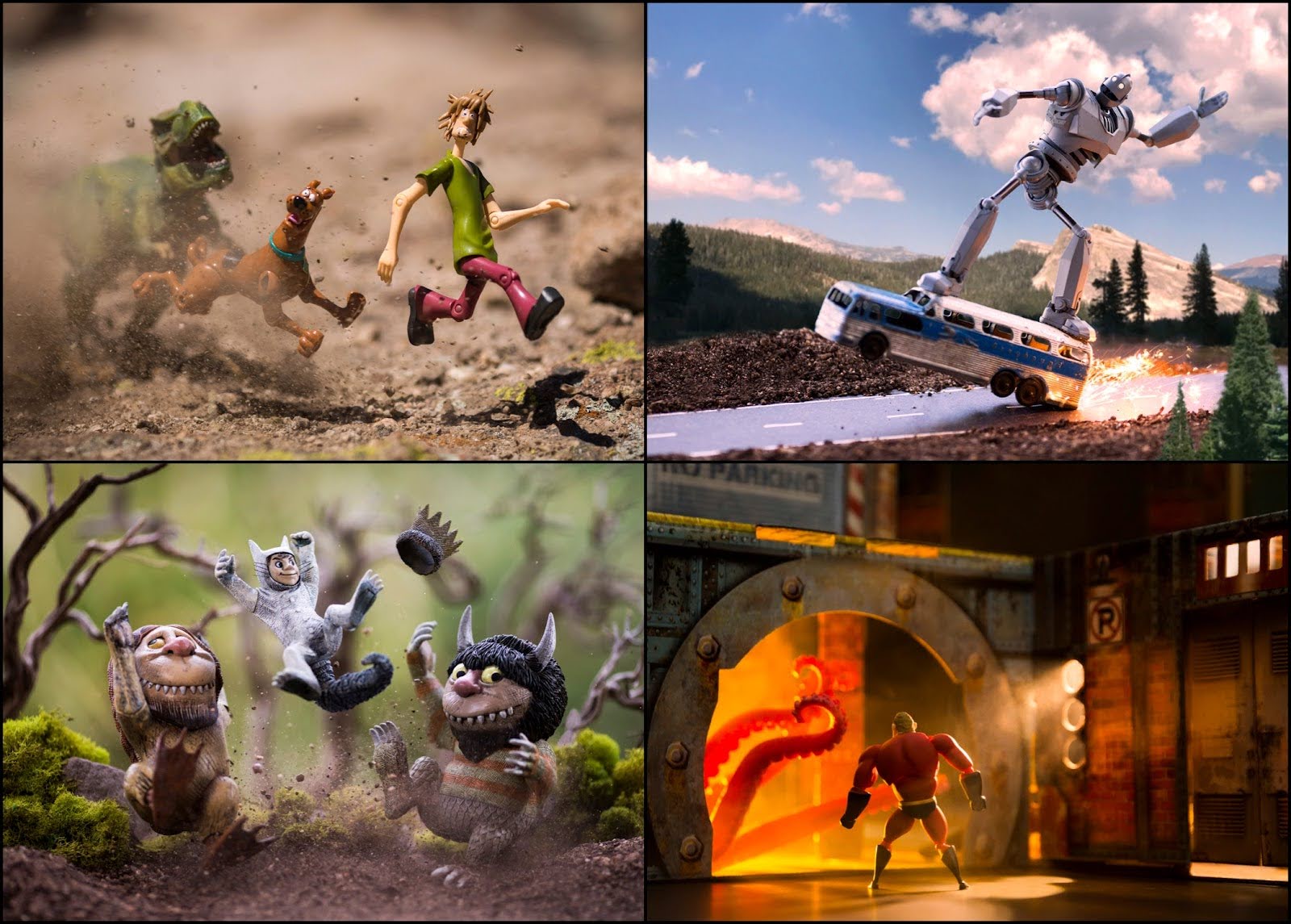
IV: Each of your images contains an impressive amount of energy and emotion. When starting on a new composition, where does your ideation process usually start and how much pre-planning/visualization do you do before setting up the actual photo shoot?
MW: Thanks so much for noticing these things about my work. For me it's always about the concept and the story, first and foremost. But I also strive to capture motion and emotion whenever possible. Think of the story as the meat of the image, and the motion and emotion as the gravy, which just adds so much flavor to the story.
When I'm creating personal work, ideas can come from a number of places. I have a somewhat 'unconventional' imagination and sense of humor, so I love when ideas come from there, because I know it's going to be interesting. Or at the very least disturbing, but in a fun way. I'm also a keen observer of life, often my own, but also life in general. And I love word play, double meanings, and things of those nature as they will often lend themselves to new ideas.
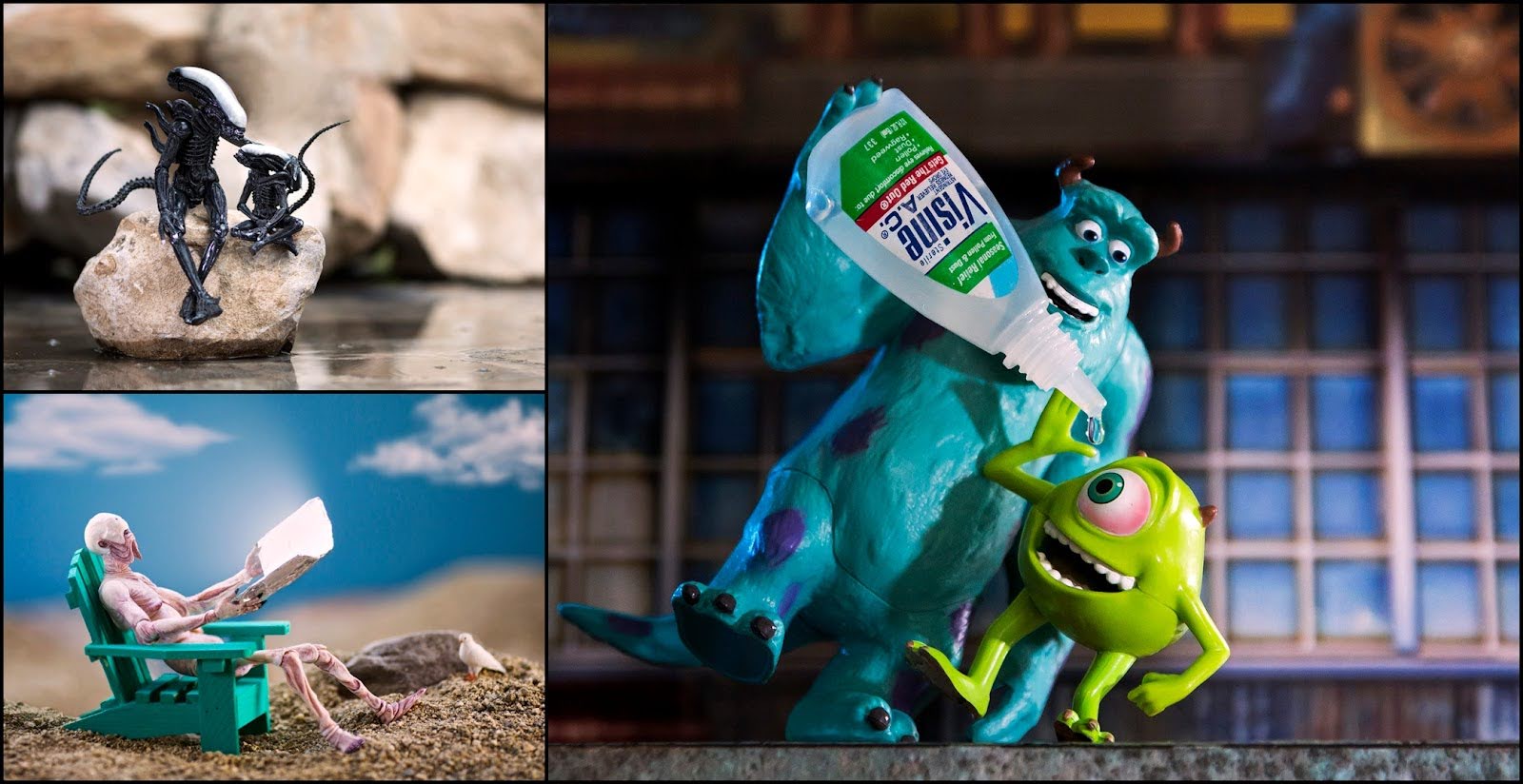
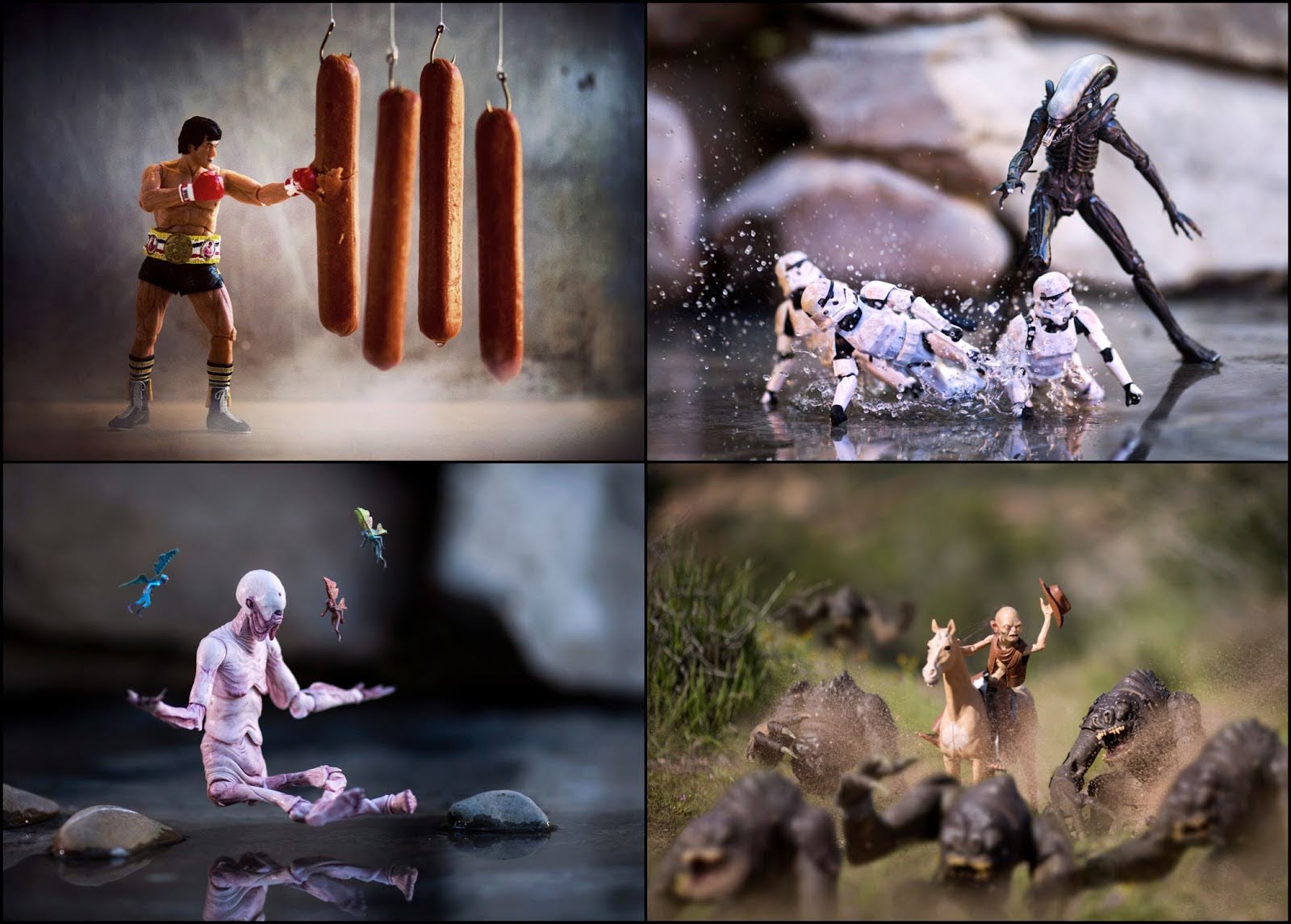
And lastly, I love showing well-known characters in unexpected ways. I recently created an image from the Pixar movie, Monsters, Inc. Although I had the figures of Mike Wazowski and Sully for months before shooting them, I wanted to do something fun and unexpected, but nothing was coming to mind so I decided to keep them on my desk for inspiration. Over time I started fixating on Mike's one big eye more and more, and I sensed there was a fun idea there. You can see the result of that fixation in the finished image.
And The Pale Man (from the movie Pan's Labyrinth) getting a suntan came about in a similar way. I started thinking that "The Pale Man" couldn't possibly be his given name, and that it was probably more of an embarrassing nickname given to him as he was growing up, based on his light complexion. How he must have hated that name! And that's how that idea was born.
And a prime example of showing a character in an unexpected way is an image I created for Mother's Day, of a Mother and child Alien Xenomorph. Xenomorphs have only ever been portrayed as bloodthirsty killers, so to present them in a tender moment was at first shocking, and then heartwarming to viewers. This was an image where Photoshop was key since the company that makes this xenomorph, NECA, never made a child xenomorph, only the larger one.
Once I have the idea in my head, I go straight to setting up the image. Conceptualizing is 90% of my process, while problem solving and photography makes up the other 10%. For my personal work, I rarely create concept sketches -- I just go straight to the setup, recreating what's in my head.
Of course for client work the process is very different, as I'm working with a specific property and am given a precise goal to achieve through my imagery. There are often approvals needed, which can necessitate concept sketches and approvals prior to photography. But whether it's personal or professional work, creating story-driven images always remains the goal. I've been commissioned to create images for a variety of action figures, toys, and games. From Fortnite action figures, to Harry Potter LEGO Minifigs, to Hot Wheels 50th Anniversary, to UNO cards and Scrabble -- the consistent thread that runs through all of them is storytelling.
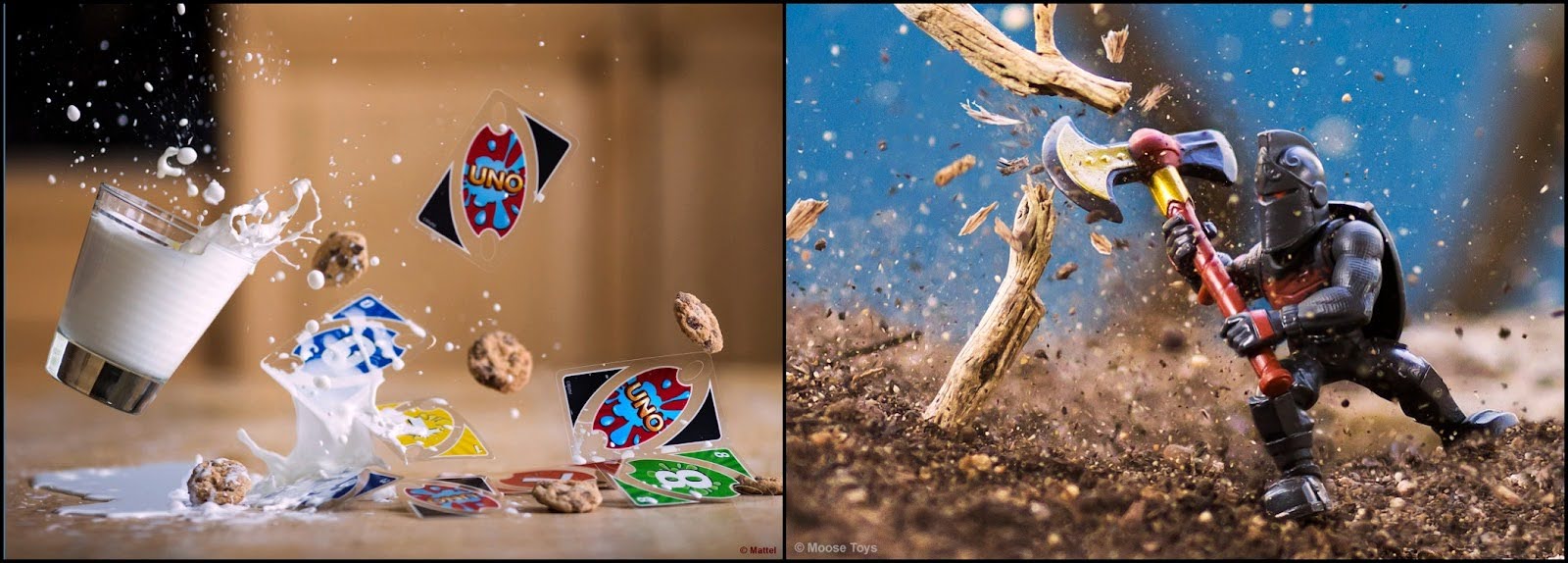
IV: With explosions of dirt and characters soaring through mid-air, we were surprised to learn you stick mostly to practical effects for creating such action-packed images. What are some favorite techniques that you've learned and/or developed over the years to create such realistic-looking portraits?
MW: Yes, I really enjoy creating practical effects. They can add so much movement, action and atmosphere to an image. Effects can include agitated and airborne dirt and debris, splashing liquids, fire, smoke, fog, pyrotechnics (fire and explosions) and soaring/falling characters or objects. It's good to avoid overthinking things whenever possible, so the way I create these effects can be ridiculously simple. For agitated dirt and debris, I stand just off camera and simply throw the dirt and debris into my scenes. I like to say that I am a professional dirt thrower!
Splashing liquids are created by blasting the liquid with compressed air.
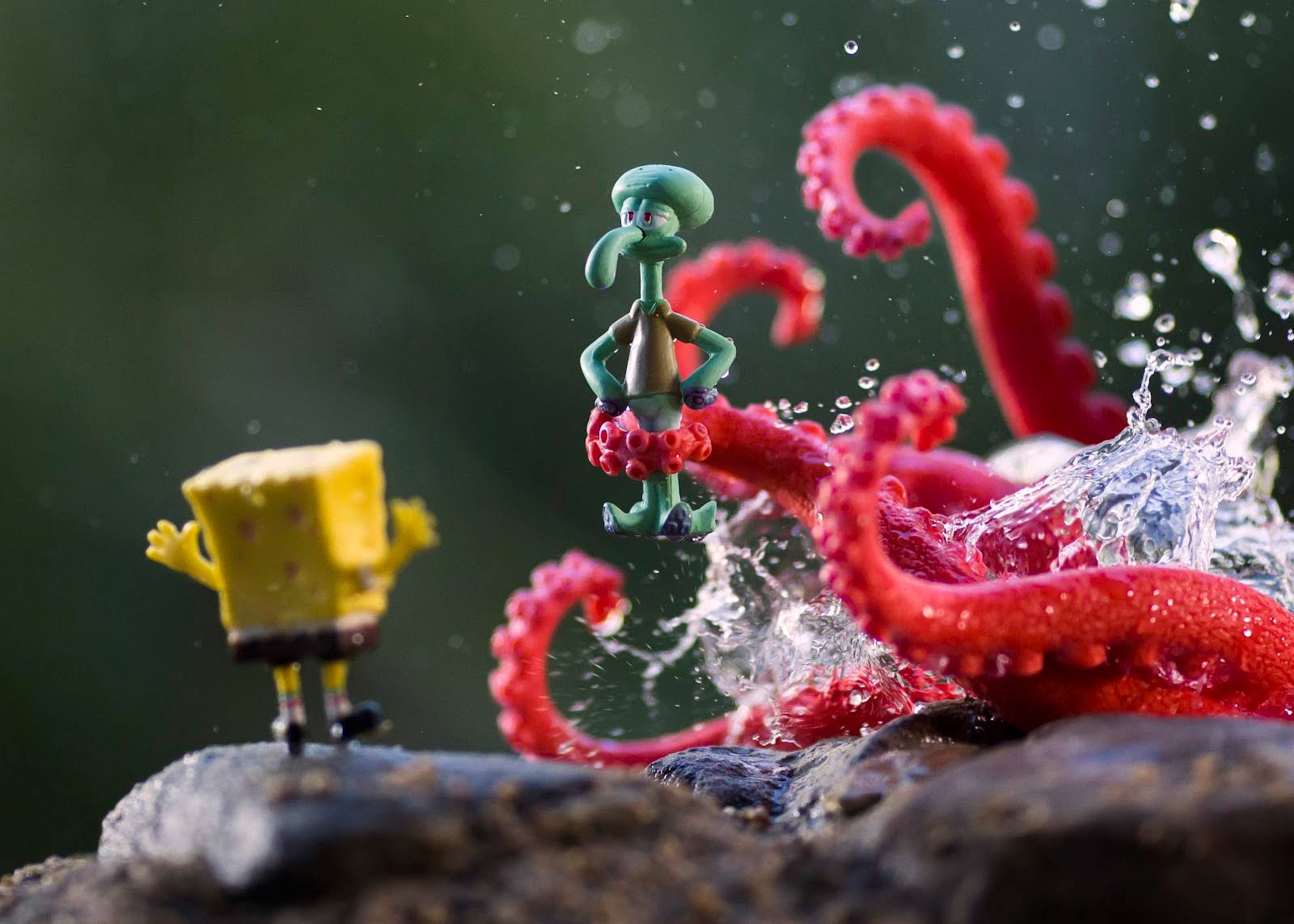
Fire and smoke is created by burning some type of combustible material in the scene. For explosions I usually use sparklers which have been broken or cut into pieces and strategically placed in the scene. I also use an amazing nontoxic product called Atmosphere Aerosol to create incredible cloud, fog and mist effects. And I can capture dramatic beams of light with it too (called God Rays by my friends in the film industry) using either sunlight or controlled, directional light. Atmosphere Aerosol was originally created for use in filmmaking as well as commercial and lifestyle photography.
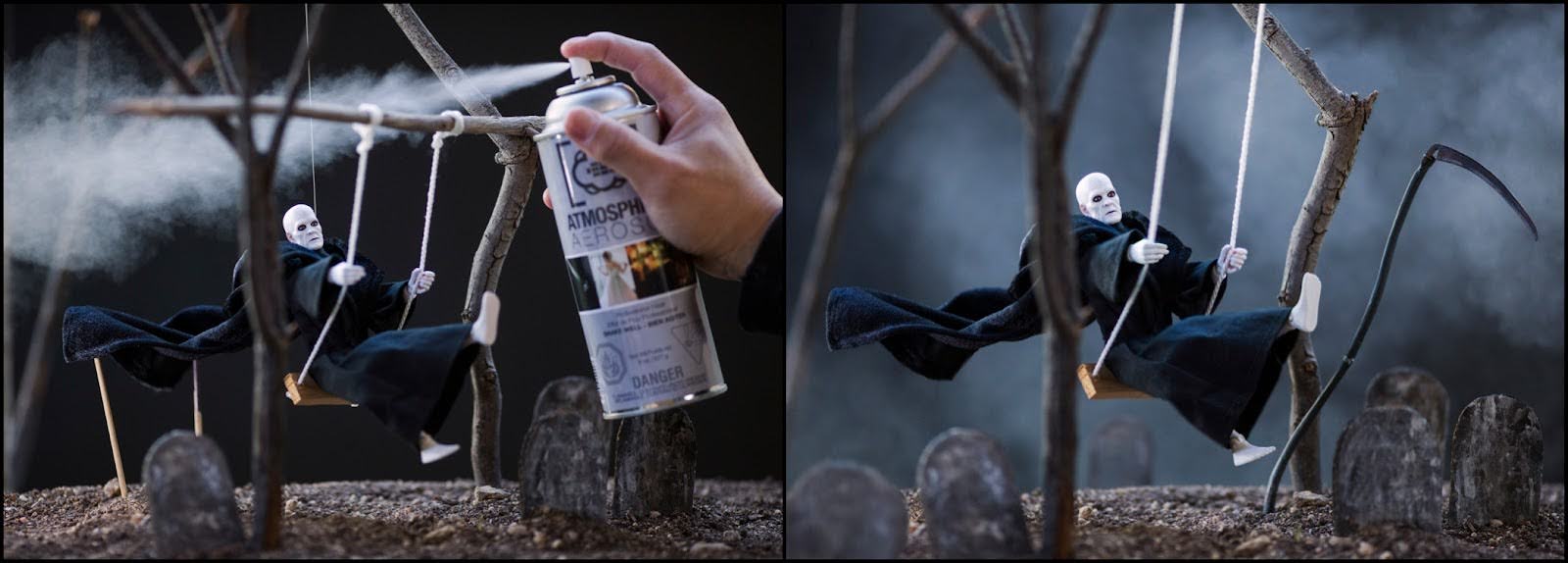
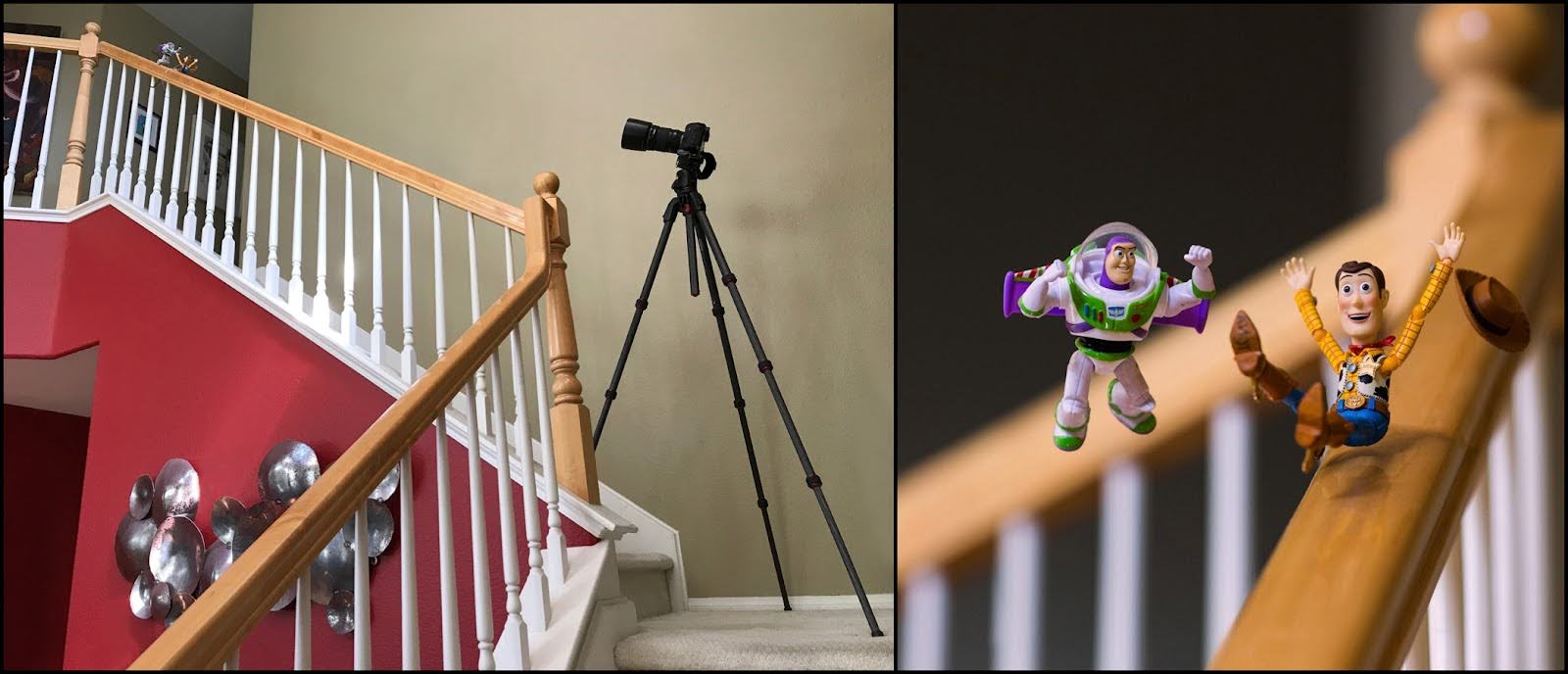
And characters or objects defying gravity are typically supported by wire, which is then removed in post -- much like it is done in movies. The only time I might use digital effects is for things like glowing lightsabers, or maybe the glowing eyes of the Iron Giant. I'm a firm believer in using whatever tool and technique will result in the best image though, so if a digital effect for something would be better, I would have zero qualms in using it. I love the digital technology available to us today -- especially tools like Lightroom and Photoshop.
IV: Occasionally, you dabble in some world-mixing, combining characters from different franchises, like when King Kong chases the Flintmobile. What do you find most interesting about these juxtapositions and what, in your mind, makes for a successful mashup?
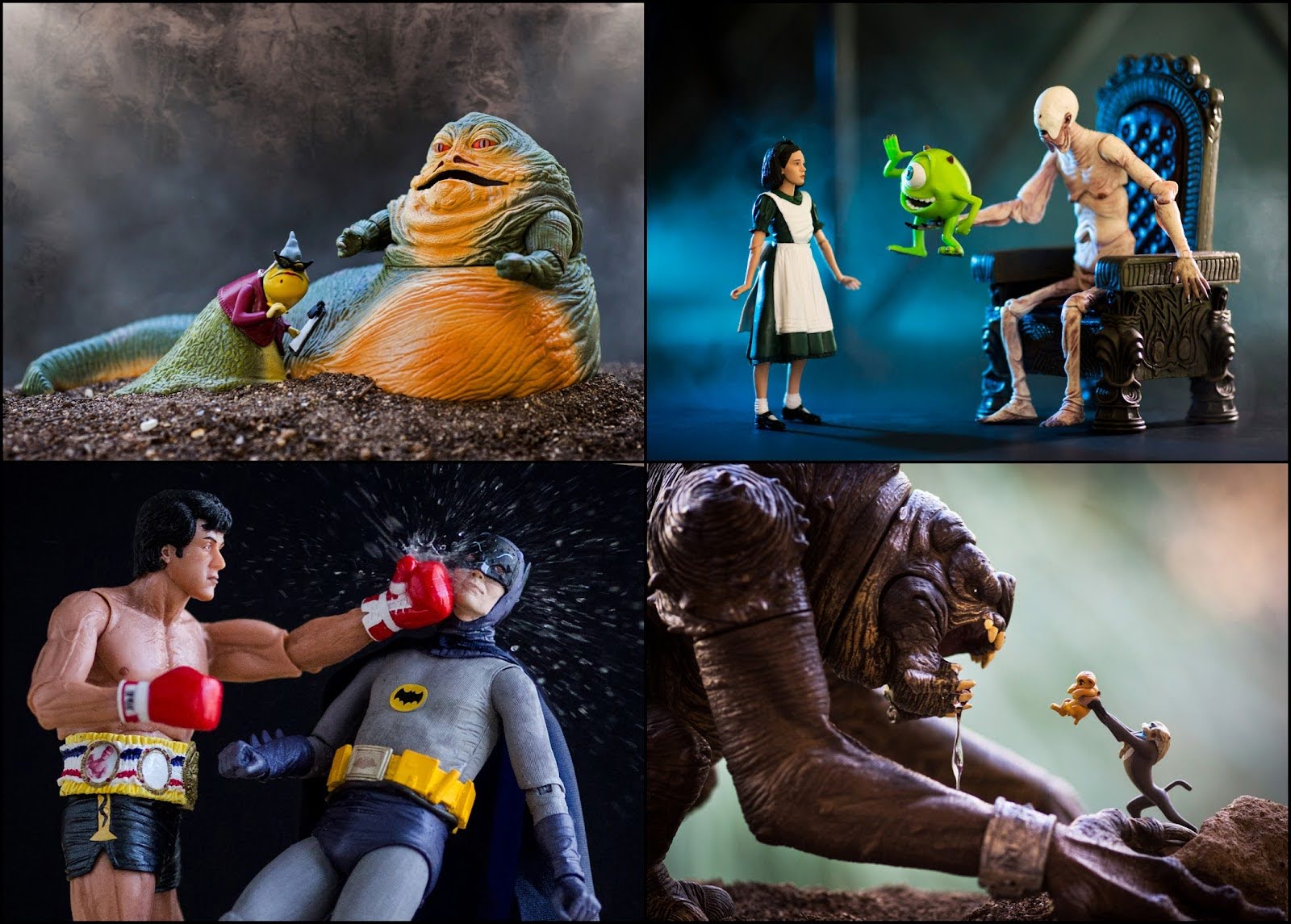
MW: Yes, some other memorable mashups: Batman and Rocky (where I answer the eternal question of who would win that fight!), The Pale Man getting some vision assistance from Monster's Inc.'s Mike Wazowski, Baby Simba with a Rancor, and Roz from Monsters, Inc. with Jabba the Hutt (who I'm convinced are related!). It again comes down to storytelling and showing the viewer something completely unexpected. A mashup removes the character(s) from their usual world and brings them into a completely different realm. You immediately see them in a way you haven't seen them before, so it's fresh. For me, a successful mashup is one that feels natural and meshes seamlessly. It doesn't feel disjointed or forced. I may have come close to that line once or twice, but if the mashup results in an engaging story, or makes someone laugh, then I consider it a success.
IV: Who are some of your favorite characters to work with?
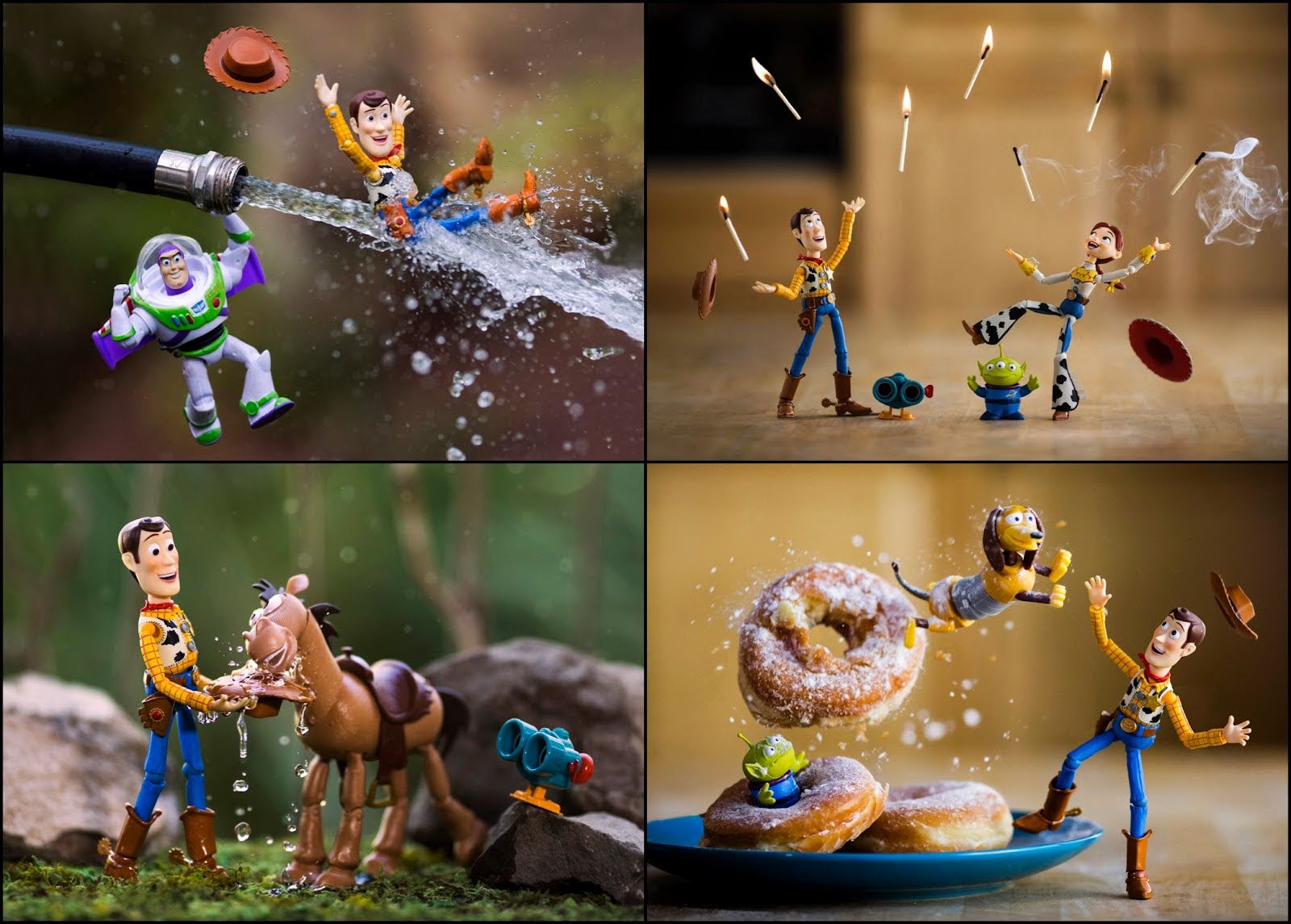
MW: I enjoy shooting a variety of characters as it keeps things interesting, but the characters from Toy Story are probably the most represented in my images. I really love the "toy" aspect of toy photography, and shooting Toy Story characters stays completely true to that as the characters are actual toys -- I'm not trying to portray them as something they're not. They're not toys sculpted and painted to resemble comic book heroes, or live action characters from movies . . . they're just toys (that happen to be alive!).
Aside from that, I tend to lean towards toys and characters that I have nostalgia for -- either characters I remember from my childhood, or more likely from my daughter's. I'll also buy certain toys simply because they're cool and I see a lot of storytelling potential in them. We are living in the golden age of toys. Never have there been so many different characters from so many different properties available -- there's really something for everyone. And the quality of today's toys is jaw-dropping. I think a big part of it has to do with the insatiable appetite of adult toy collectors and enthusiasts. They no longer have to beg Mom and Dad to buy them toys -- they're adults with careers and have no problem dropping loads of cash every month on new toys. And they are willing to pay a lot for them, which lets toy companies increase the quality to meet that demand.
I get toys from several companies, but it seems like the majority come from NECA , a toy company with a dizzying array of licenses and toys. They've carved out a niche in the market, and in toy collectors' hearts, by creating toys you're unlikely to see anywhere else. Some of the NECA toys that have made their way into my collection are from Pan's Labyrinth, Bill & Ted's Bogus Journey, Lord of the Rings, Home Alone, Gremlins, Rocky, Ace Ventura: Pet Detective, Alien and Godzilla. Next on my "to get" list from NECA . . . a rad Bob Ross figure complete with painting easel and paint palette (I'm going to create so many "happy little pictures!")!
IV: Are there any tools you can't live without?
MW: Where do I start haha!? Besides my Canon 5D Mark III and various Canon L lenses (but mostly my Canon 135mm f2L), every one of my shots uses a Manfrotto tripod. In the studio, I use the sturdy 057 Carbon Fiber Tripod. In the field I use the lighter, more compact 190 GO! Carbon Fiber Tripod.
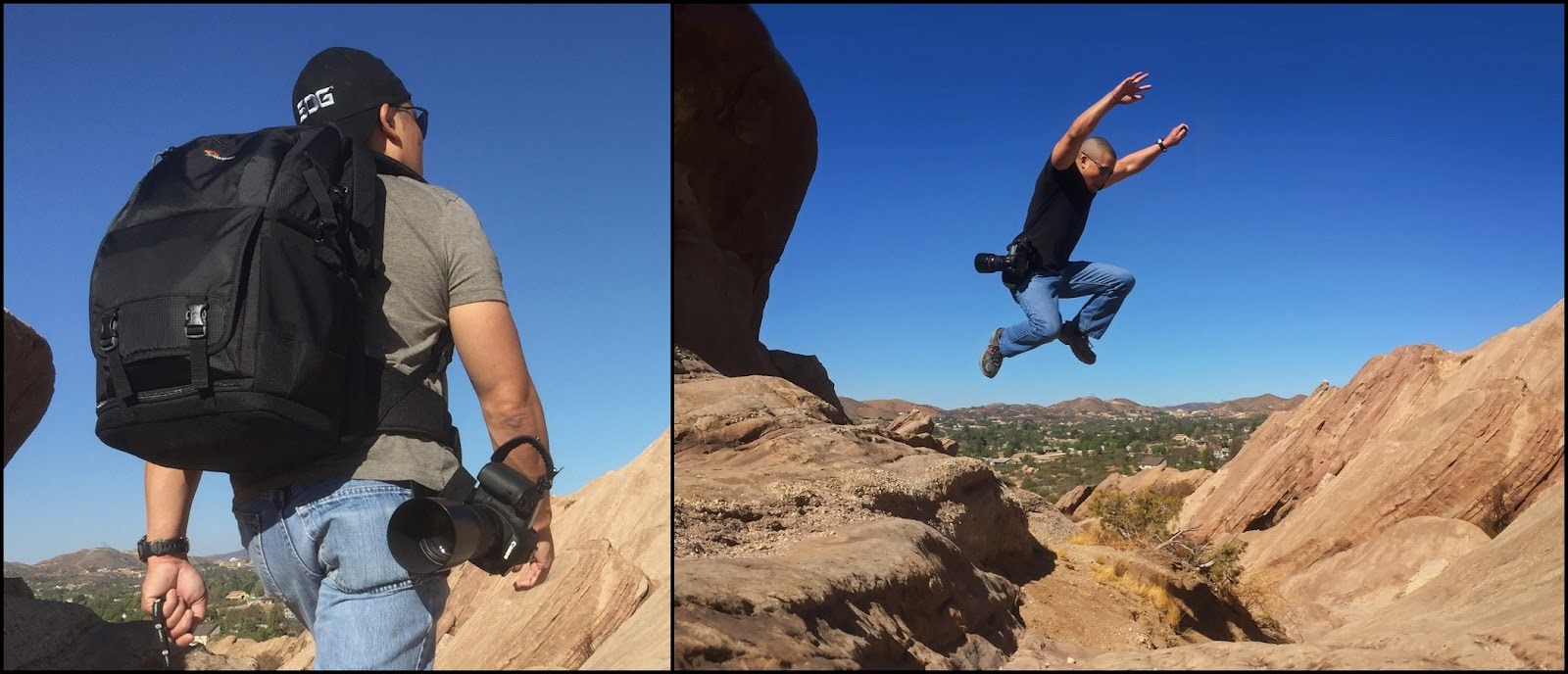
I also use a couple different lighting systems from Manfrotto -- the incredible Lykos Bi-Color LED lights and the small but mighty Lumimuse LED lights (bluetooth controllable). I also use a variety of nearly indestructible Lowepro camera backpacks and bags -- with my primary backpack being the Pro Runner 350, which I find extremely adaptable to most situations. I also use a SpiderPro camera holster, which keeps my camera -- a full-sized DSLR -- securely attached to my waist when in the field and in the studio, leaving my hands free to move around in rugged terrain and set up my scenes. The rocks I've climbed (and jumped from!) while wearing my SpiderPro holster is pretty amazing.
And again, for practical effects, Atmosphere Aerosol is invaluable -- there's no quicker, easier way for me to create atmosphere in my images than with this product.
I often create my own environments and backdrops. Other times I might use a playset/diorama from a company called ReadySetz. Two of their playsets were actually used in the Monsters, Inc. Visine image and The Incredibles image above. When I'm editing photos, I rely heavily on my Wacom Intuos Pro Creative Pen Tablet, which allows me greater control and speed when editing. I also use it to sketch concepts for client approvals prior to proceeding with photography.
IV: Since embarking on this journey, you've developed an enormous fan base around your work. Has interacting and engaging with your fans influenced your work in any way and are there any memorable interactions you can share with us?
MW: I create my personal work first and foremost for me. There are a lot of things that might influence my work, but generally my fans aren't one of them. I allow my personality and unique sense of humor to come through in my work. For personal work, technique is important, but it's not nearly as important as what one says through their work, and the stories they tell. I believe my unique take on things is why I have the audience I do.
With that said, I do love interacting with all of my fans and followers, as well as with others in the toy photography community. I make a point to respond to every single comment I receive. Social media has made a small world even smaller. I have followers and friends on nearly every continent on earth, which is really amazing when you think about it. In fact, I always just assume that the person I'm interacting with lives on the other side of the country, if not the other side of the world. One day I learned that one of my good Instagram friends, who I was sure lived on the other side of the world, lived just up the street, a few miles from me. Now that was bizarre!
IV: Do you have any advice for other creators who want to make a living doing what they love?
MW: First, it's important to try and find a niche to work in that you and you alone can own. The less of a commodity you are the better -- your chances for success are obviously far greater when you have little or no competition. Of course this isn't an easy task, especially in the visual arts. If you aren't able to own your niche, then it's critical to find ways to differentiate yourself from your competitors -- whether through style, quality, service, whatever. Ultimately you have to be able to position yourself as the person to go to in your particular field or expertise.
I consider what I do an extreme niche, one that maybe only a few others work in. I then differentiate myself even further by bringing my clients the professionalism, knowledge and experience I gained while working for large entertainment studios and corporations. I've spent half of my career on their side of the table, hiring and managing creatives, and I know what is valued and important to them. In a nutshell -- clients want you to be a good communicator and to do what you say you're going to do, on time or early. Remember that whoever is hiring you probably has a boss they report to, and they are taking a chance on you. One of your goals is to make the person hiring you look like a hero. Those are the keys to keeping clients happy and getting more work from them. Simple!
Second, value what you do and know your worth. Creatives can be their own worst enemies when it comes to this. So much of our egos and sense of self-worth are tied to what we create, and many are willing to book jobs at all costs because of this. We forget, or never knew, how to be good business people and end up giving our work away for peanuts (and sometimes, for free). Much of this is tied to what I spoke about above -- niche vs. commodity. Bringing something unique to the table means you have greater opportunities and justification to charge a premium rate. When you are a commodity, it's easy for potential clients to walk away to find someone who charges less for similar work.
--
Mitchel Wu is a professional toy photographer based in Los Angeles, CA. Visit Mitchel's website to see and learn more. And follow him on Instagram to catch his latest work: @mitchelwuphotography If interested in learning more about toy photography (business and/or techniques), Mitchel offers in-person and Skype mentoring sessions. More info can be found here.
Tools Mentioned:
Atmosphere Aerosol: https://www.atmosphereaerosol.com [10% off promo code: MW10]
Lowepro: https://www.lowepro.com/us-en/
Manfrotto: https://www.manfrotto.us
NECA Toys: http://necaonline.com
ReadySetz: https://readysetz.com
SpiderHolster: https://spiderholster.com [20% off promo code: SPIDERGEAR20]
Wacom: https://www.wacom.com/en-us/


