

How many creative visionaries come along in a generation? In my highly subjective estimation, adjusting for population and how this might show up across multiple industries, I’d say you’d be lucky if there were 30-50 such individuals walking the Earth at any given time.
What happens when you give a fresh talent - that’d be Tongal filmmaker David Oster - the opportunity to meet one of these real-deal iconoclasts and tell their story in a documentary format? You get Todd McFarlane: Like Hell I Won’t, which follows the legendary creator behind the Spawn comic franchise as his team readies its 300th issue, thereby cementing its legacy as the longest-running independent series in comic book history. Fans can catch the 1-hour world premiere on the SYFY channel this Saturday, July 25th at 11pm ET / 8pm PT.
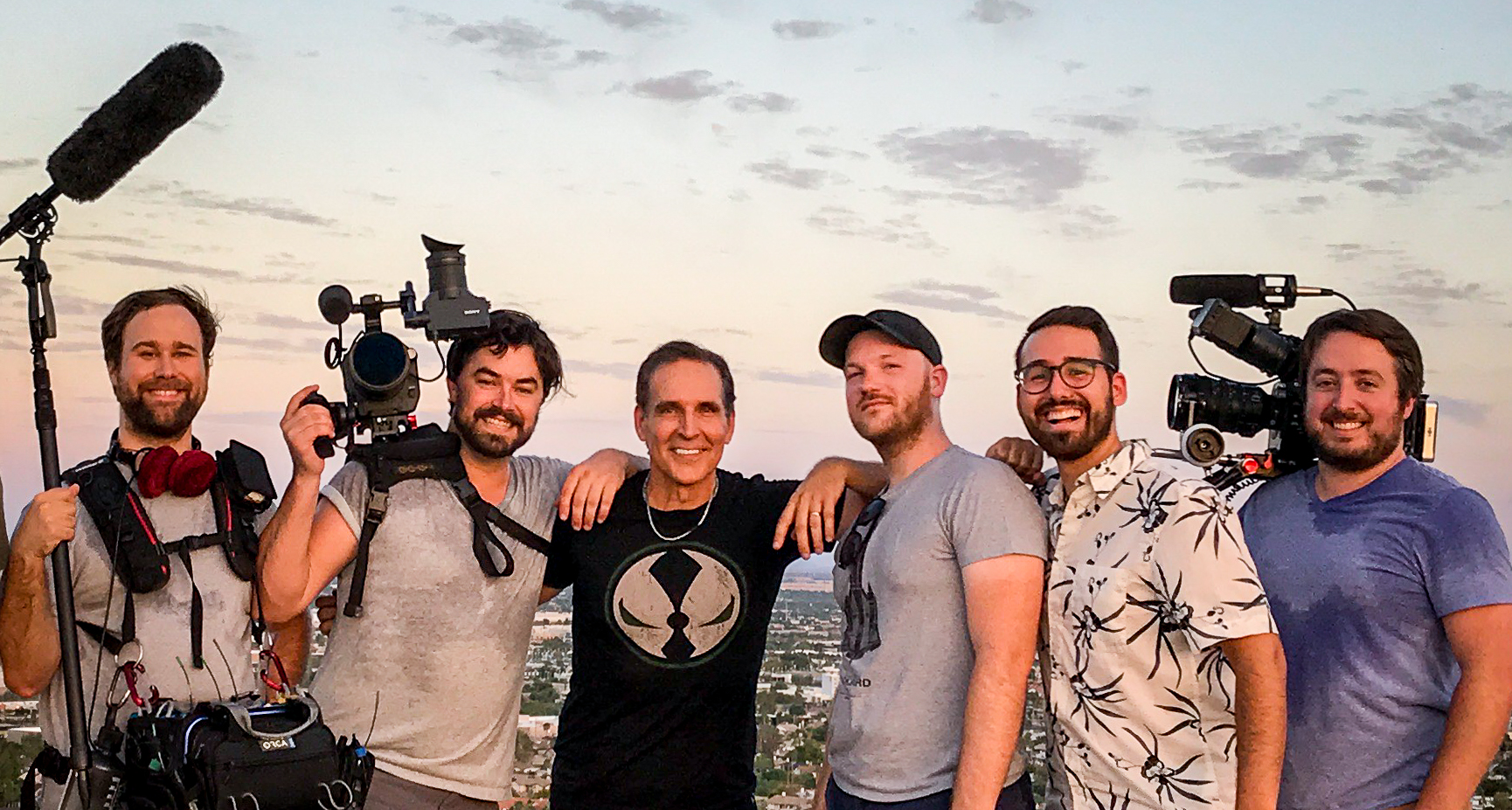
Comprising over 120 hours of footage shot predominantly in late summer 2019 while zig-zagging between SoCal and McFarlane HQ in Tempe, Arizona, Like Hell I Won’t marks SYFY Wire’s first original documentary. It’s also a true Tongal creator collab, pulling in extra help from stop-motion all-star Adam Nies and editor / motion graphics guru Pixeltown Arts.
We caught up with Atlanta-based director David Oster, ahead of this highly-anticipated premiere to talk how it all came together and what it was like working with the man himself, Todd McFarlane.
Marissa: Congratulations on all the work that went into this exciting release! Could you speak about your background in documentary filmmaking and what specifically drew you to this project?
David: I had made some short-form documentary-style films for various brands like FIAT and Allstate with Tongal and other companies. My experience making those absolutely helped prepare me for this project. I developed my own personal style and techniques for how I liked to shoot and direct a doc-style story.
As far as my general background in filmmaking, I have been working in the larger film industry on major professional sets for nearly ten years. That includes films like Hunger Games and Avengers.
I was drawn to this project as an opportunity to direct something where I would be able to tell a complete and compelling narrative story in a cinematic way. I also loved the idea of getting to tell a story in the world of comic books and to have a chance to discover more about that world myself. The prospect of getting to go to San Diego Comic-Con didn’t hurt either!
M: Because of the nature of the project, Tongal and SYFY had to keep the subject under wraps when we launched the initial brief in April 2019. How did you feel when you learned Todd McFarlane was the subject? Did you have any guesses it might be him based on the brief?
D: To tell you the truth, I didn’t really know who Todd McFarlane was then! I actually had to look up who that was. I knew about Spawn, and I also had some awareness of McFarlane toys - mostly from sports figures. Based on the brief, I remember thinking it might be Frank Miller!
It was when I started researching Todd’s life and work that I really became very excited about making a film about him. He has such a larger-than-life persona and a very multifaceted life and career. As a storyteller, there was just so much to dig into and explore. His tenacity and his belief in himself, both as a creative and as a businessman, I found to be infectious and inspiring. It was immediately clear to me that he would be a great subject for a documentary.
Credit: SYFY
M: As a comic book fan, what were your biggest geek-out, “I can’t believe I am here” moments during production?
D: Of course getting to spend time in McFarlane Headquarters was geek heaven. But we also got to visit the DC Comics Headquarters in Los Angeles, and I was definitely geeking out in there! Who wouldn’t?! It was such a cool added bonus to meet Jim Lee and to see where all the DC magic happens. I am also a big fan of Marc Bernardin, who is a fantastic writer of both comics and TV, and spending some time with him at his home was just an absolute pleasure for me.
M: So much has happened in the year since production began! Can you take us back to Comic-Con 2019? What was it like filming there?
D: Chaotic. But also a ton of fun. It all came together very quickly at the last minute. As you mentioned, the project launched in April, and that is also when I pitched for it. But I actually wasn’t officially greenlit to start filming until only about a week before Comic-Con in July! At that time, I was actually working on a Clint Eastwood movie. So I promptly quit that job and quickly got to work hiring a crew and figuring out how to get us all to San Diego in time for Comic-Con.
Comic-Con was a bit of a whirlwind week and I really give my producers, Chenzy from Atlanta and Stephen from Tongal, a lot of credit for getting us through those four days, both logistically and creatively. They were instrumental in making it possible for us to get as much great footage as we did and not have any major setbacks. For anyone who has ever been to San Diego Comic-Con, you know it is just wall to wall people all day. Navigating through the mass of people to get from a panel Todd was on to a signing he was doing on the other side of the convention center was crazy at times!
The most fun filming for me was following Todd through the halls and back tunnels of the convention center and getting to see him interacting with the fans. We tried to plan as much as possible, but there was always going to be a lot of “run-and-gun” filming and simply grabbing whatever we could. One of coolest things that happened was when Todd invited us to his hotel where he was meeting with some of the other artists working on Spawn 300, and we were able to sit in and film some of those conversations. That was also the first time I had a chance to really chat with Todd and start to establish a rapport with him.
M: We noticed that you included a really impressive pitch video with your original submission; can you tell us about what you did there and why you decided to do it?
D: I’ve done a lot of pitches and submissions for Tongal over the years, but I can honestly say that this pitch video we made was the greatest total effort I have ever put into any pitch video. We got a truck full of equipment, and we found a location that looked good to film ourselves in. We bought Spawn toy figures and comic books to film on the Donatello Arm in the studio as examples. We also implemented footage from previous projects and music into our pitch. We really went all in. Thankfully it paid off!
Your pitch videos don't need to be this elaborate...but it doesn't hurt.
M: It’s clear in the doc that Todd McFarlane is very driven and has a singular vision for his work. What was it like working with him as the subject of this doc?
D: Working with Todd was great. He opened up his world to us, and he gave us all the access and personal materials that we asked for. We were in Arizona for ten days in August. It was an extremely stressful time for him and his whole team [because] we were there right as the deadline was approaching for them to finish the seventy-six page long Spawn 300 comic book. It just worked out that this was the only time we could film there in order for us to make our own scheduled deadlines for the documentary and in order to capture the making of Spawn 300 - which became a major throughline of the film. Everyone at McFarlane HQ was amazing though. They were so helpful, so gracious with their time, and always accommodating.
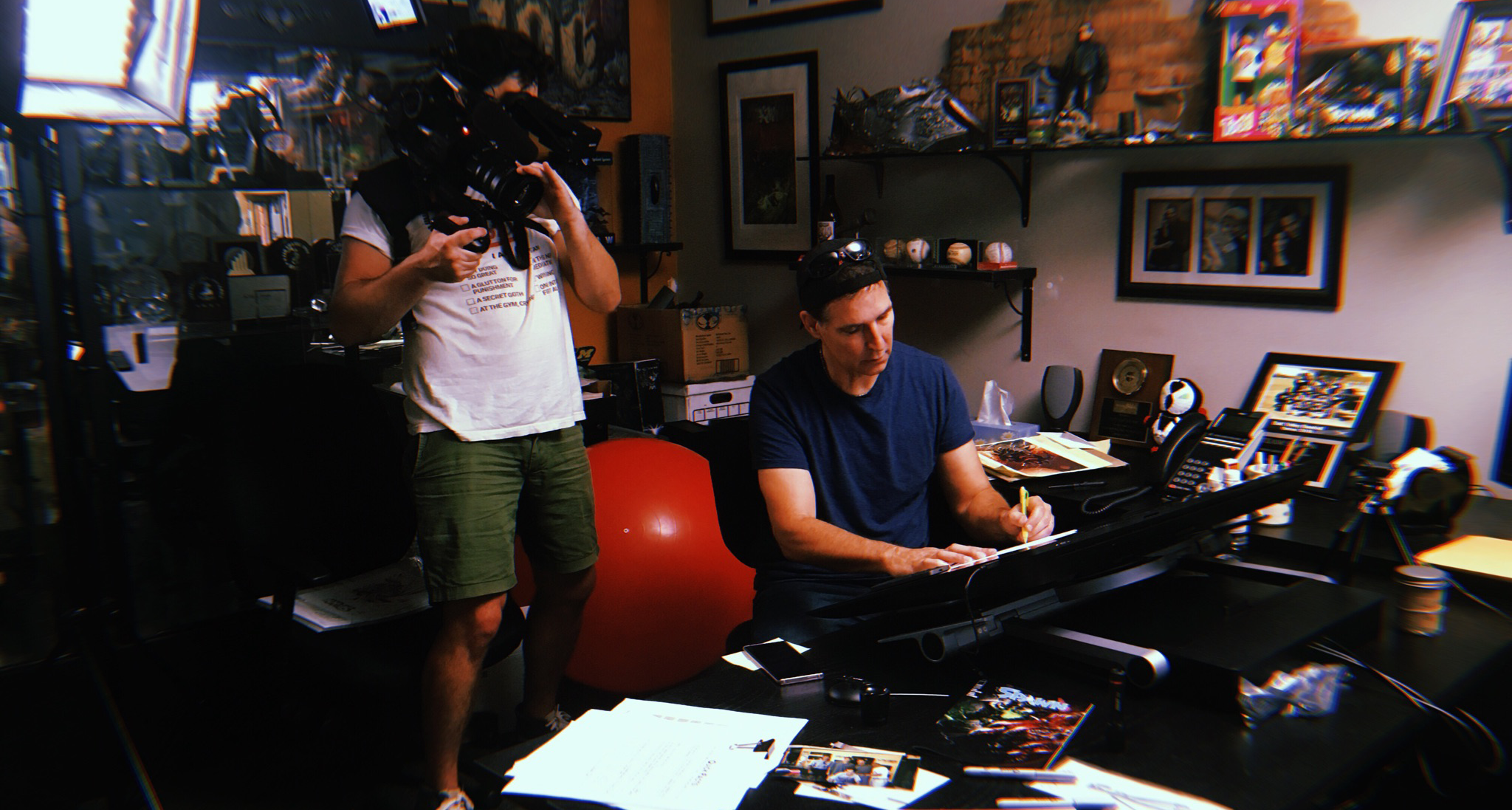
Setting up the main interview with Todd in his home turned out to be a bit of a challenge though. I told Todd that we needed to do a proper, extended sit-down interview with him in his home. He understood that it was something we needed, but he was also getting behind on inking Spawn 300. I knew that this interview would be the crux of the film, so I had to think fast. So, I suggested to Todd that he could ink during the interview. Fortunately he agreed to this compromise. So that is actually why he is inking during some of that interview!
That interview was probably about three hours long. As it went on, it really became more of a conversation. Over the course of that conversation I was able to get to a place where Todd was more willing to open up and even get emotional at one point. When that happened, everyone in the room was emotional too. It was a moment I won’t forget.
He is a fascinating artist and personality, he enjoys talking with people, and he isn’t camera shy in the slightest. On a personal note, though, the conversations I enjoyed the most with Todd were the ones we had off-camera nerding out over movies and fantasy football. He really knows his stuff.
Credit: David Oster
M: The technology that you used to capture some of the Spawn comics and McFarlane toys was incredible. Can you tell us a little bit more about that and what it allowed you to do?
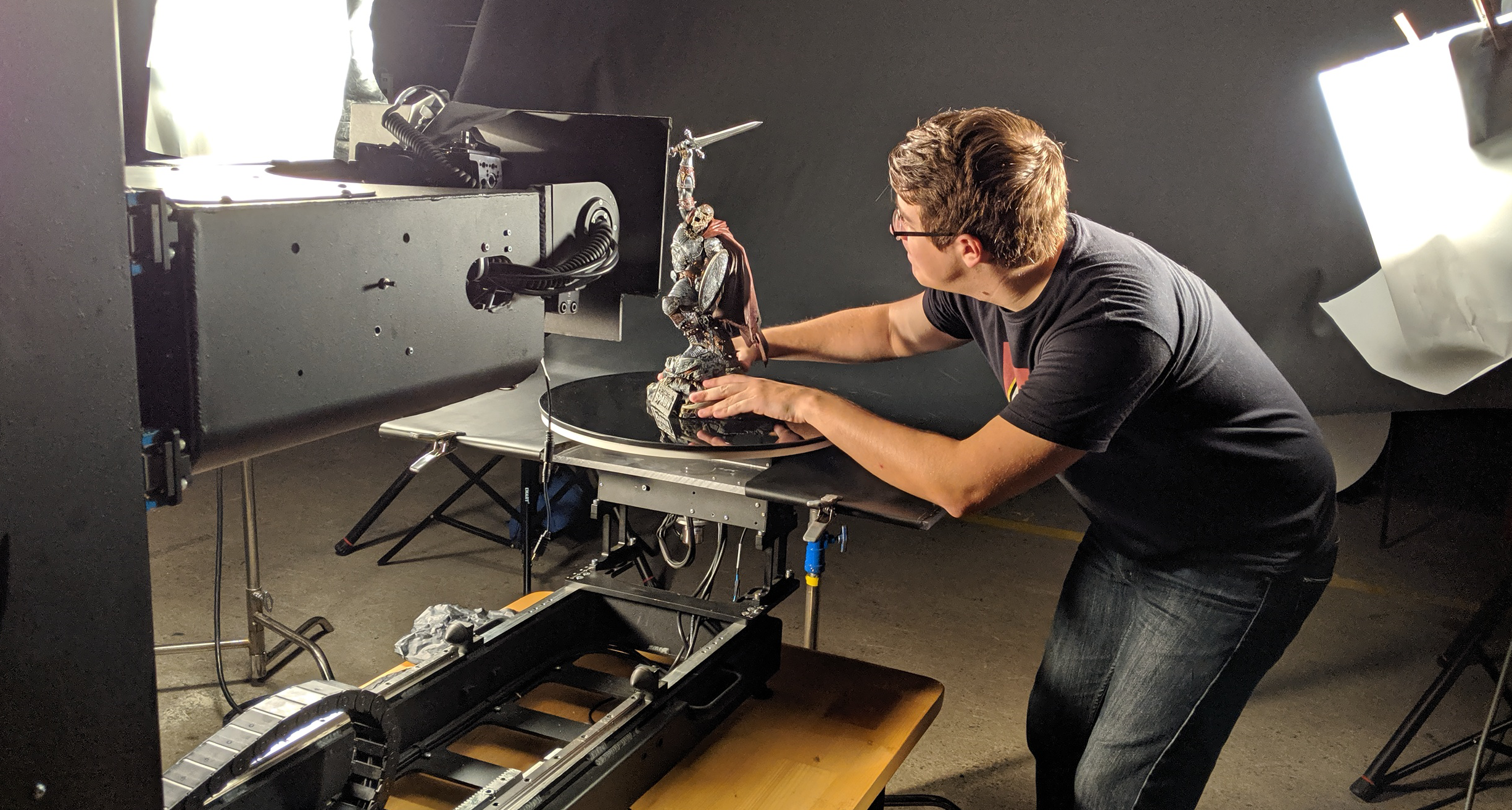
D: The camera technology we used to film toys and comics is called the Donatello Arm. It is a robotic camera system that allowed us to get highly detailed and smooth shots of the comic pages and figures. It allowed us to do wrapping motions and perfectly repeated camera moves to do things like stack up the comic books or get sweeping close-ups of the figures and panels. Being able to use this technology for this documentary was a big part of our pitch and a great way to showcase these elements in a very unique and cool way. Those Spawn figures look awesome with that thing!
Credit: SYFY
M: Todd McFarlane: Like Hell I Won’t doesn’t feel like a typical documentary. How did the style and tone take shape?
D: Thank you! I saw this as an opportunity to tell a story about an artist with an inspiring and complex life journey. Someone who was reaching a new milestone at an advanced stage of his career, who could both reflect on his success and failures while also still looking ahead to an exciting future.
From a stylistic standpoint, I really love what David Gelb has done for documentaries with Chef’s Table and Jiro Dreams of Sushi, which I think was a game-changing film. They are all beautifully shot, compelling and very personal stories, that are really about the artist’s struggle and are often structured on “the hero’s journey”. I definitely used this as an inspiration for what I wanted to go for with this documentary. Whether or not I came anywhere close to that is up to the viewer now, but it is something I aspired to.
That being said, there are definitely a lot of differences in this documentary from others. I wanted to create my own unique signature visual for this with the comics and toy figures, and I think we achieved that with the Donatello Arm. We also needed to structure the story into commercial breaks which is something you wouldn’t do on a streaming platform. So we had to make sure that the end of each “act break” had some sort of tension or cliffhanger moment to it.
My cinematographer Richard Sanborn worked with me to come up with ways to use camera movement, lighting, and slow-motion to make things like drawing and inking, which are pretty static, appear more cinematic and visually arresting.
The making of Spawn 300 was always an idea that I had as a throughline for the story, but actually making that work turned out to be much, much more difficult than I ever imagined. We really did some magic in the editing room to put that together!

Credit: SYFY
M: Lastly, Why do you - as another creator - think it's important to share a story like Todd McFarlane's?
D: Even as I was making this documentary, I could see a lot of parallels between some of the things that Todd was saying and what he went through, and what I have experienced at times in my own filmmaking journey. Creating a film, like creating a comic book, is a very collaborative effort. There are going to be times where your vision and someone else’s don’t align. There will be many times when you have to get a lot of other people’s input, notes, feedback, and ideas, and there will be times when you won’t agree with them. There will of course be plenty of times when you do! What is the right way to navigate these things and still hold on to your vision or your creative integrity? When do you fight for your ideas, and when do you listen and implement others’? What if you don’t have a choice? There is so much more to being creative than simply creating something. That is a big part of Todd’s story.
To me, his story also shows what is possible if you create something that is uniquely personal to you, and what is possible if you can somehow find a way to not have to compromise too much on it. Todd’s success can’t be pinpointed to a singular moment, one simple career decision, or one specific aspect of his artistic abilities and personality, but I think there’s a lot that can be learned from his story for anyone in the pursuit of any creative endeavor.
Credit: SYFY


