

If you’ve been doing a lot of streaming (and haven’t we all), you’ve probably noticed something becoming increasingly common over the past year: Ads.
Once a place for commercial-free viewing, more streaming platforms - from NBC’s Peacock to Amazon Prime - are offering content for free in exchange for ads peppered throughout. And people are taking them up on it.
Ad-based Video on Demand, or AVOD for short, is taking off with consumers and pulling all the biggest players in as a consequence.
“A survey by management consultants Deloitte last year found 43% of consumers wanted free ad-supported video services and 22% wanted low-cost services that had some ads. Only 35% were willing to pay more for ad-free services.”
The Opportunity for Brands
This is a rapidly growing space filled with premium content that provides advertisers with a captive audience, which also means the content has to be exceptional to stand out and keep people hooked during a break from their favorite show.
One way this will manifest for streaming services is a return to longer form storytelling from brands. A favorite recent example of more involved storytelling is Ryan Reynolds’ “Commercial Universe” that includes ongoing characters and crossovers like a Marvel franchise. Ad-supported OTT will allow for more creativity from brands that are willing to experiment with it.
Another benefit is viewers are more tuned in than while scrolling social media (though they may be doing both at the same time), giving you a better chance to earn their attention and elicit a response. Brands that take the time to understand how viewers are shifting to the world of AVOD (Ad-based video on demand) will be able to create content that fits the context of where and how those viewers are watching.
And there’s room for brands to think bigger.
What if you created your brand’s own TV show for streaming? It’s not as hard as it sounds, especially with the right creative partners. It allows you to talk to customers on their terms in a crowded marketplace.
Brands like Pepsi, Mattel, and Thermador are packaging talent, stories, and high-quality production to create series that resonate with their respective customer bases.
“If a brand wants to reach home-and-design fans, they now not only have to consider linear TV, but also Discovery+ and this shift continues to fuel the need for brands to reinvent their comms strategy.”
Tongal partnered with Thermador to create a series based on their premium kitchen appliances hosted by real-life chef, Allan Chappelear, which we’ll be profiling in-depth next week on the blog. Now let’s take a look at the big players and the unique value each provides to advertisers.
The Big Players
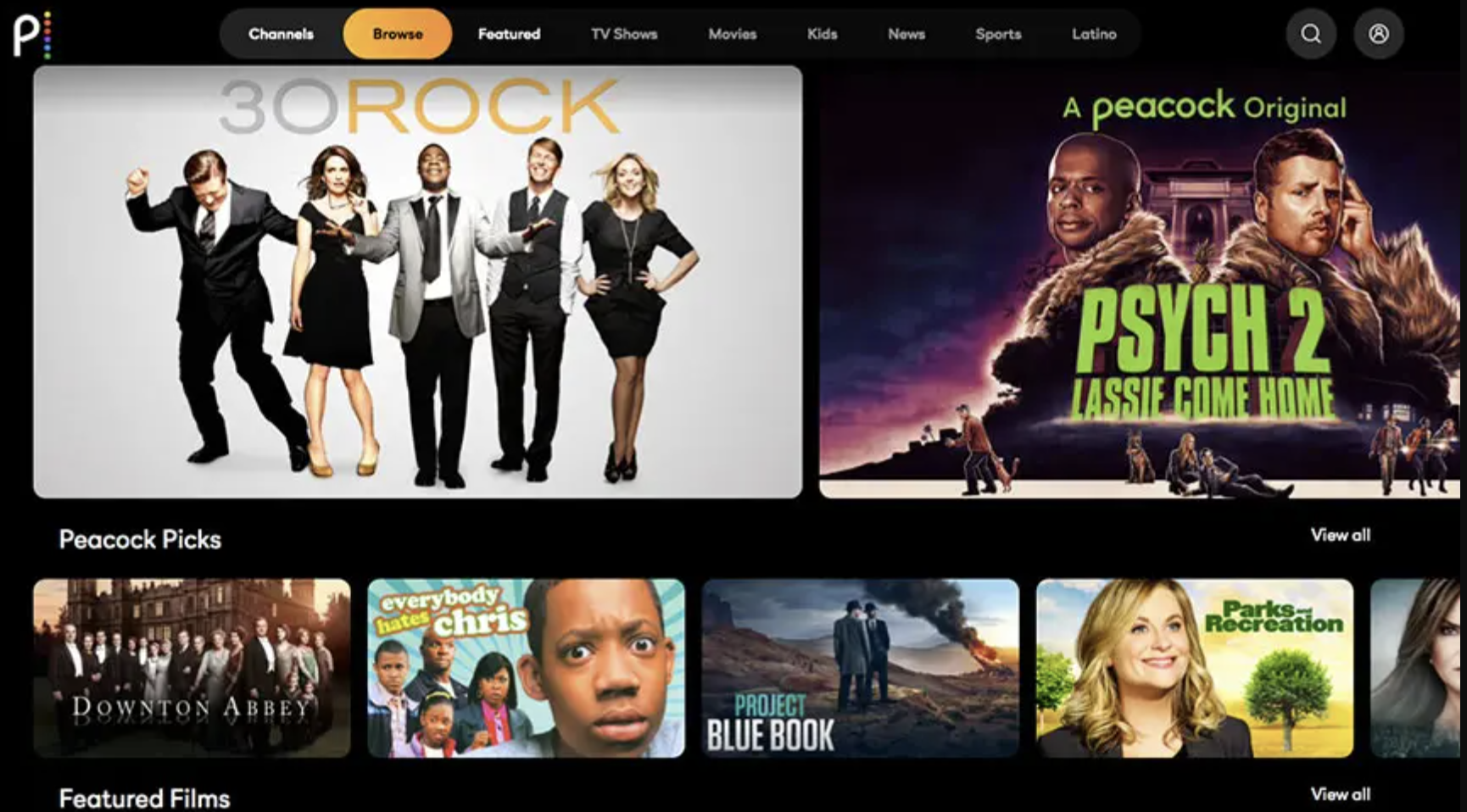
Peacock's Browse Section
Hulu (Disney). The OG of ad-supported streaming that started way back in 2007 and is now part of the Disney empire, hit a whopping 40 million paying subscribers at the start of this year and recently recorded 82 million total viewers including the $5.99 monthly ad-supported option. Being positioned as the adult-friendly companion to Disney Plus has been a big boost to the platform and they have well-established systems for working with advertisers along with their recently developed self-serve platform for small-and-medium businesses. There’s so much value to unlock here that we partnered with Hulu to create the definitive ebook on creating ads for streaming.
Peacock (NBCU). Peacock is one of the largest libraries of free-with-ads content, with over 13,000 hours of films and shows for $5 or $10 per month. The platform recently hit 35 million sign ups (paid and non-paid) and is on track for further growth this year. Another advantage is ads are handled through NBCU’s central ad buying platform and they’ve used the latest technology to improve deliverability for advertisers. NBCU partnered with an Ad-Tech company to reduce the rate of rejected creative from advertisers from 40% to 5%. This was accomplished by putting controls in place to catch problems with creative much earlier in the development process, similar to Facebook Ads Manager.
HBO Max. With a wildly successful paid option, estimated to reach up to 150 million subscribers by 2025, HBO is launching an ad-supported tier in June 2021. One thing that has helped HBO Max stand out is their willingness to put Warner Bros movies out on demand at the same time as they are released in theaters.
Discovery+. An amazing fact is Discovery is already making more money per subscriber on its ad-supported Discovery+ than it does from its traditional TV channel. This is more of a niche service for fans of reality TV, cooking, and docuseries. Reviews online knock the interface, but say it has a good library of nonfiction content. The platform recently surpassed 11 million total subscribers with the ad-supported tier starting at $5 per month.
Tubi. Acquired last year by Fox for $440 million, Tubi occupies a unique place amongst streamers, showing classic B movies and TV shows with cult followings. The channel has around 33 million monthly active viewers and has invested in lots of children’s content and older movies that make it a great option for brands to get in front of families, cinephiles, and other audience segments. Another major benefit of working with Tubi is their innovative ad-buying platform, which allows advertisers to allocate budget on a weekly or daily basis compared to weeks and months on other platforms.
Paramount Plus. Originally CBS All Access, Paramount Plus is Viacom’s ad-supported offering. $5.99 a month gets you “limited ads”, and what Rolling Stone calls “an impressive library of shows at a great price.” There is a $4.99 option coming in June for watching NFL games live, which marks a massive discount over traditional options like NFL Redzone, which can cost as much as $60 a month during the season. For advertisers seeking football fans, families (there is an extensive collection from Nickelodeon) or older viewers who tune in for the classics, Paramount Plus represents an interesting opportunity.
Roku Channel. It comes free and pre-installed on millions of Roku devices around the country, and it recently acquired one of the hottest libraries around from Quibi. With 50 million+ monthly active users and strong brand recognition the platform offers another viable option for advertisers.
IMDb TV (Amazon). Launched in 2019 by Amazon-owned film database IMDb, IMDb TV quickly signed licensing deals with Warner Bros., Sony Pictures, and MGM Studios, providing them with an impressive library of content. Advertisers can find a rapidly growing audience (weekly streaming viewership grew 387% between Q1 2019 and Q3 2020, and total weekly streaming hours increased 519% during the same time period) that recently hit 55 million viewers. According to Amazon, IMDb TV also skews young, male, and overlaps significantly with cord cutters, giving brands access to a unique and growing segment.
FuboTV. The perfect option if your audience is into sports and moving away from traditional television. FuboTV offers more top Nielsen-ranked sports, news, and entertainment networks in its base package than any similar service and recently announced that total content hours streamed by fuboTV users during the third quarter increased 83% year-over-year to 133.3 million hours while its monthly active users (MAUs) watched 121 hours per month on average in the quarter, an increase of 20% year-over-year.


