

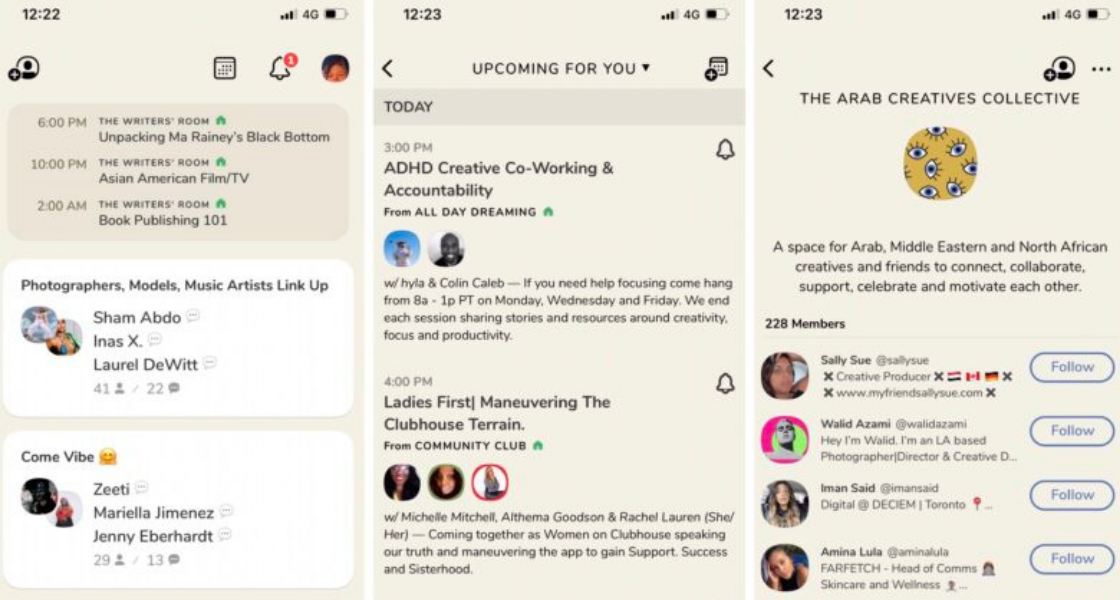
What has ten million downloads, two million weekly users, and is valued at $1 billion?
It’s Clubhouse. The app that still requires an invite from an existing user and an iPhone to join the fun is quickly becoming the new frontier for brands. More professional than TikTok, and more engaging than another Zoom call, the audio-only experience is proving the perfect frontier for adventurous brands willing to adapt their identity to the format.
Before you can build an audience on Clubhouse, there are some fundamental things you should know that make the platform unique amongst social apps.
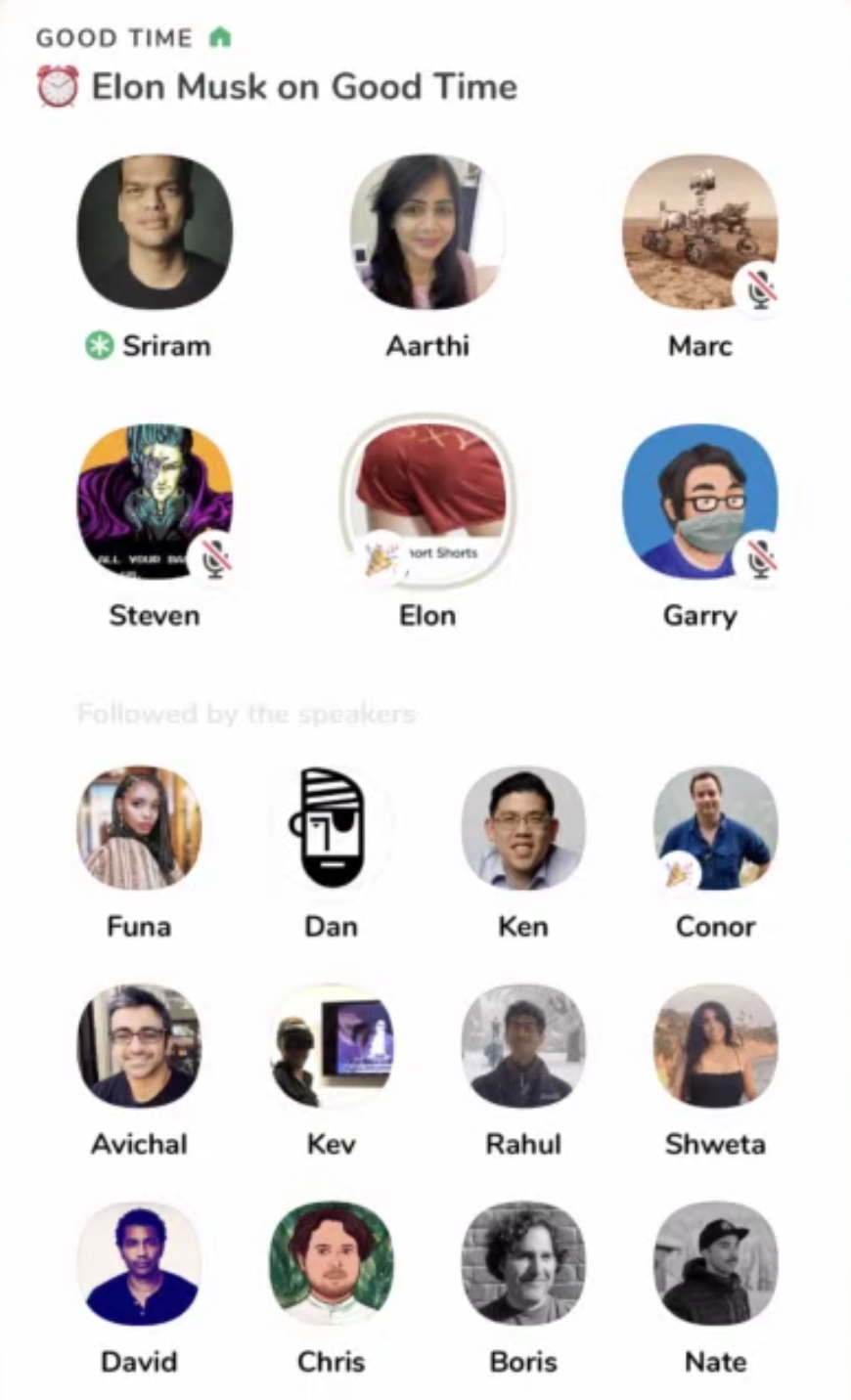
A recent talk with Elon Musk that quickly exceeded capacity
It’s Audio Only. This is in the running for most obvious statement of the year, but it is where the magic lies on Clubhouse. It’s 7pm on a weeknight and you’ve been working all day. What could sound worse than another Zoom call, no matter the topic? Clubhouse feels more like a laid back conversation with friends over the phone than another social obligation. As someone with social anxiety, I love Clubhouse. But audio has other benefits, too. You can listen to it while you cook dinner or drive to work, like a real-time podcast where you have the ability to join in.
It’s Invite Only. Clubhouse has perfected the art of generating FOMO - one of the biggest factors in their early growth. Clubhouse invites have become a hot commodity and some are even profiting off the hype. And while the invite system has received valid criticism for creating a sometimes insular community, it also creates protection against the trolls and other bad actors that have made sites like Facebook less than advertiser-friendly. If you invite a friend to the app and they are removed for violating the terms of conduct, your profile is also removed, encouraging you to invite only your most trusted friends and colleagues.
How Rooms Work. From weekly talk shows with thousands of listeners to support groups, birthday parties, and even speed-dating, there’s already a room for it on Clubhouse. Anybody can create their own room and after hosting three rooms yourself, you get the option to create a “Club,” which is a hub of rooms based on a theme like mental health or running. When you host a room, you are known as the moderator. As the moderator of a room, you literally control the “stage” - the section of the room where the speakers are. You can bring anyone on stage, make others a moderator, or remove troublesome audience members.
How do Brands Join the Club?
Until recently, Clubhouse has been mostly free of branded content. However, that is changing quickly. As Digiday recently put it:
“It offers what every advertiser wants: a highly targeted group of influential individuals in one place."
Since there aren’t ads on Clubhouse yet, the main way marketers are testing the waters is through influencers, the most popular moderators in various topics on the app. Pernod Ricard stood out when they partnered with Karen Civil to celebrate black female entrepreneurs during Black History Month. Because the moderator has control of their room, brands can feel safe about the content, so long as they trust their influencer. Justin Kline, in the same Digiday piece, describes the benefits to brand leaders:
“With this model, an advertiser can view a particular room as a very dedicated audience ripe for ads and brand activations released to the room’s subject matter, knowing that everyone in the room has a vested interest in the topic and was chosen to participate in the discourse.”
Clubhouse supports this small, but growing group of popular moderators with their Influencer Program, a collection of 40 or so of their top creators. The group is always expanding and reaching different audiences.
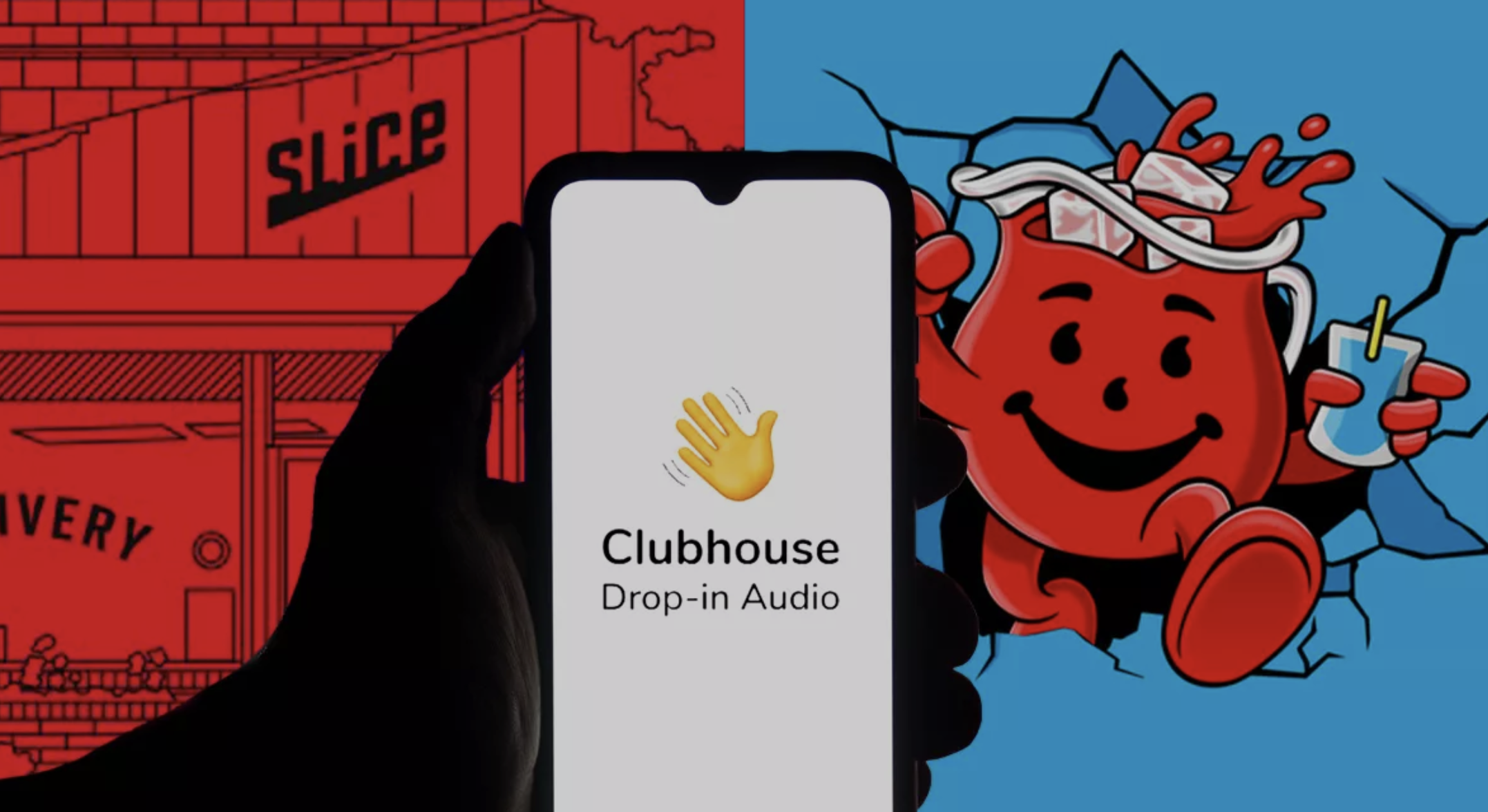
Image: AdWeek
Beyond partnering with influencers, the most intrepid brands are creating their own profiles on the platform and creating a presence for themselves. I was recently exploring the app one evening when I stumbled into a room moderated by “The Kool Aid Man,” a verified representation of the brand on Clubhouse. More than a thousand people were asking questions to the beverage-man, but he would only respond with, “Oh Yeah.”
More practical uses of the platform include Restaurant Brands International (owner of Burger King, Popeye’s, and Tim Horton’s) hosting an earnings call with their top brass for anyone to attend and ask questions.
So you found a way onto the platform. How do you behave once you get there?
Adweek recently looked at two distinct cultures on Clubhouse; Large and Small room culture. Large rooms are like SXSW. You’re bouncing from one huge venue to another, occasionally stumbling into an incredible conversation. There’s a fair amount of distance between audience members and speakers, who are separated by a virtual stage. While audience members can raise their hands to chime in, the experience is inevitably more passive, with thousands of people in some rooms. For these types of rooms, Adweek suggests brands create episodic content that promotes their own mission, along with a larger cause, such as Dove organizing a weekly room with influencers discussing what real beauty means to them.
Small rooms might have less reach, but can provide levels of intimacy and engagement that aren’t seen on other major platforms. Figma and Chill is one event, hosted daily by collaborative design tool Figma, that strikes the perfect balance between value-add and laid-back. Team members with lots of design and product expertise are on hand to talk users through problems or help them find new ways to use the tool.
In a sea of social platforms, Clubhouse has stood out by putting the focus back on people. So brands that are going to stand out on the platform will have to connect with people on a deeper level than they might on Twitter or Facebook.
Until the app opens up to more traditional forms of advertising, brands have the safe and effective option of teaming up with influencers, or the riskier, but potentially higher pay-off option of creating their own profile and facilitating conversations that their target audience will find interesting. Both paths start with understanding your unique audience and what value you’ll bring to them.


