

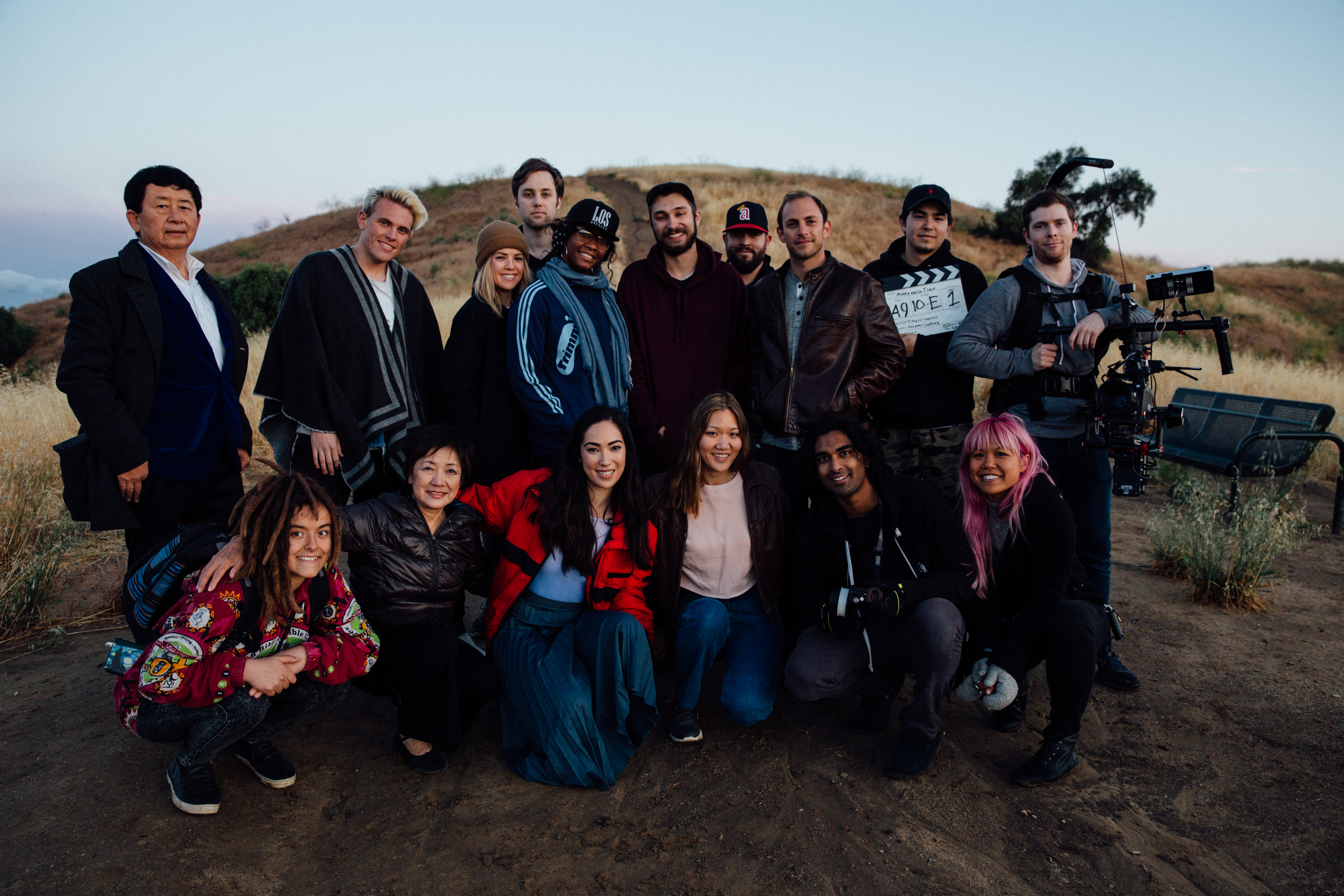
Photo Credit Rayana Chumthong
When National Geographic launched the 'Genius' Short Film Project on Tongal in early April, director Tiffany Frances knew she had to submit a Pitch. She was one of 8 Tongal community members selected to move forward with production and her short film "Movement" was recently featured as part of National Geographic's "10 Days of Genius Film Festival." This was Tiffany’s first Pitch win on Tongal, so we’re excited to jump into her experience bringing this film to life.
In support of their new TV series Genius (which is now up for an Emmy this September!), National Geographic was looking to greenlight a slate of films inspired by famous Einstein quotes. Tiffany chose the quote: “Our death is not an end if we have lived on in our children and the younger generation. For they are us; our bodies are only wilted leaves on the tree of life.” “Movement” is a hybrid dance and narrative film that focuses on a grief-stricken family dealing with the aftermath of losing a loved one. You can watch “Movement” now on National Geographic’s YouTube channel:
Maddie: Tell us a little about yourself and what sparked your interest in becoming a film director.
Tiffany: My passion for storytelling really started when I was in theater during high school, but it wasn’t until I was an undergraduate student at UCSD that I realized I wanted to pursue a career in film. It was there that I began studying film history and theory, and I really loved avant garde film and thinking about film by deconstructing it. One of my professors, Jean Pierre Gorin (a frequent collaborator with Jean-Luc Godard), really influenced me to analyze film in a frame by frame method and I’m so grateful to have come from that background.
It was later at Art Center College Design that I put my abstract and weird little ideas into real practice, shooting loose, experimental narrative films and music videos on 8mm and 16mm. I graduated knowing I was going to pursue a lifelong career as a director. I’ve since turned my full attention to narrative and commercial work.
M: The Genius Project was your very first win on Tongal. Congrats! What originally drew you to Pitch on this project, and what were you most excited about when you found out you were green lit?
T: Thank you! It was such an amazing, dream project. It really was all about timing - I had only recently discovered Tongal as a resource for filmmakers so I was lucky I noticed this project at the right time! This particular one caught my attention because I’ve been reading National Geographic since I was young. I immediately cancelled my plans for the weekend to work on the pitch because I knew I had to go for it.
I didn’t believe it when I found out I got it. I was most excited about telling my mom, because she has subscribed to their magazine as long as I can remember.
M: You chose a really interesting quote to base your short film on. Can you tell us about what inspired you to select this quote and how it's expressed through your film?
T: This quote is so directly personal to me - my father passed away last year and I’ve been searching since to explore that pain. The quote reminded me of something my sister said to my family moments after he died - that he was never truly gone, he would always live on through us.
Days later, my mother and I were looking through his belongings, and it made me look at him in a different light. He had this stack of paperwork dedicated to dancing - lyrics, steps, specific movements. I was in awe of his devotion and I loved that it reconnected my parents in a new way. So I thought it would be interesting to play with the idea of discovery after someone is gone. In a way, this film is to comfort my family - that everything he’s sacrificed for us will pay off.
M: How did your film evolve over the production process? Did it end up the same as you envisioned it would be when you Pitched?
T: There was a very tight deadline on this project so it was a challenge to fit all the pieces in the right places. I’m normally a perfectionist - but in this case I had to make decisions quickly and not overthink it. I actually was debating at first whether to shoot in NYC or LA, or even both. I ultimately decided to shoot in LA so my family could also be a part of the process, which really shaped the story, locations and mood of the film. Rachel Feinberg and Steve Iwanyk from Tongal also passed on some key notes from both them and Nat Geo on script revisions, which made it much more focused, and gave me the idea to play around with VHS footage.
Looking back, shooting in the suburbs of LA was the right choice because my mom, Tina Chang, was an incredible partner in the production process and also a great collaborative cast member. She also helped me find the right actor & dancer, Victor Hung, for the father character - whose demeanor and understanding of the Taiwanese American community really lent itself to the film.
M: Dance plays a key part in this film, and it's choreographed beautifully in the way it embodies both grief and joy. Did you bring on a professional choreographer to help develop the steps? If so, what was this process like?
T: I initially searched for a choreographer and dancer separately, but then by extreme luck, I discovered Chloe Noelle Crade online through a music video - and I thought she would be perfect for the lead and also as choreographer. It was a match made in heaven; she used to be a member of a Chinese dance company, so we were able to incorporate a fan into her choreography.
We had several discussions about the story and the arc of each dance number, and we had rehearsals both across the country (she was in New York until 2 days before the shoot), and on location with the DP, Jeremy Lundborg. It was important for us to have the dance speak in a cinematic language so that step was vital.
For the opening dance number, my mom and I worked on it together through many sleepless nights. Since it was a personal dance that felt so close to home, we had many debates before deciding on what felt right. A couple days before the shoot, Chloe came in and helped shape it along with the last number, the one with all three characters. It was a true collaboration.
M: I won’t give away the ending, but the last scene is shot in a stunning location during magic hour. How did you find this location and what were some of the challenges in capturing all the shots you needed within a short period of time?
T: I always knew that last scene had to be shot during magic hour, and to have this ethereal feel. So finding that location was not just about finding a picturesque location - it was also about finding a landscape that was elevated and facing the right direction. My mom actually helped me location scout. I thought it was perfect - it had that suburban feel I wanted to have for the story, but also was stunning and magical.
Jeremy and I had planned our shoot very specifically for each exterior scene to be shot at a certain time of day. The days leading up to the shoot had some trying moments, because I would be checking the weather report all the time, which consistently said it would be raining throughout the shoot. A rain day was out of the question budget-wise, so honestly, I prayed to the film gods any chance I got. Half our exterior scenes turned out cloudy - we had no choice but to embrace the look. As for the last scene, it stormed really hard before our company moved to the park, and it was still sprinkling when we ran a rehearsal. Then the clouds starting clearing and even a mini rainbow appeared - a true miracle. Our rehearsals on location a few days earlier really paid off. Everyone was prepared to be on their game and nail the final scene within a few takes before the sun went down.
M: Your film is now featured on the National Geographic YouTube channel. What has the response been like from people who have seen your film?
T: A lot of friends and family reached out to me when it was released - I think for some of them the film felt very personal too, having known my dad and family. I think most everyone told me they cried after watching it. One even called me sobbing. I promise I wasn’t going for that.
Some found out about the film on their own since they follow National Geographic on social channels, and recognized either my mom or her house - and then asked either of my sisters - did you know your mom is on National Geographic? That was the fun part.
M: Did you watch any of the other Genius films from fellow Tongalers? Which was your favorite and why?
T: I watched all of them of course! It was great seeing what other people did after being so immersed in my own film. I enjoyed checking out what quotes from Einstein inspired other filmmakers’ ideas and what they created based on the same background and objectives.
I personally loved “Take Me Back”, by Michael A. Livingston and Amanda Dreschler. I think it was a powerful quote that was executed really well in its story and direction.
---
Ready to get involved? Check out all our current Projects here: https://tongal.com/projects.


