


Photo credit Rebecca Lando
Armenian film director, Sonia Megerdichian, has done it all, from car commercials to music videos to short films and documentaries. Last year, she captured our imaginations with her surreal stop-motion short, Curiosity, for National Geographic’s Genius Short Film Project.
This year, she’s directing two digital spots for Bayer, both based on a refreshingly straightforward concept by Ideator Yehudit Mam, “On top of everything, women deal with periods, too", using Ideator Lisa Steen’s equally effective tagline “Periods Happen. Midol Helps”.
For both spots, Sonia captured a series of honest vignettes showing how women deal with their period pain while powering through their day. The spots are relatable and empowering, depicting how women deal with, manage, and overcome their pain in different ways.
We spoke with Sonia about what initially drew her to Yehudit’s concept, how she creatively approached and executed it, and why she believes more women need to be in the creative commercial space.
M: You've done a little bit of everything. Tell us about how you got started in both photography and filmmaking?
After graduating from UCLA, my plan was to go to law school, but I knew I had a creative personality and I was going to be a miserable lawyer. I knew I had stories to tell. So I decided to take filmmaking classes, and I enjoyed them too much. Photography was just an afterthought. When I started making films on DSLRs, friends and family kept asking me to take their photos, so I learned photography, and I enjoy taking portraits very much. I enjoy doing a variety of work; whether it’s a commercial, short-film or a portrait - they all tell stories using different formats.
M: You directed a beautiful, surreal short for National Geographic’s Genius Short Film Project. Tell us how you achieved the look for Curiosity - particularly the contrast between the two worlds.
Thank you! Surrealism is one of my favorite styles. My favorite films usually have surreal elements in them. For “Curiosity", I knew it had to be done in black and white and minimalist because I wanted to show the difference between his world in contrast with his memories and imagination. We always tend to think of our dreams as more colorful and vibrant than our reality, so choosing color vs B&W would show the contrast between the two worlds.
M: For the recent Midol is on a Mission Video Project, you Pitched on the concept "On Top of Everything: Women Deal With Periods, Too" by Ideator Yehudit Mam. What originally drew you to this concept?
Well, it was a very true concept to begin with. I think all women have been in those situations when you are having a challenging day and you get your period, so you just deal with it. I thought all women could relate to that idea. This concept also had the most creative potential. I liked that I could shoot it in an authentic way and capture candid vignettes.
M: Clearly a lot of work went into creating those vignettes. What advice would you give filmmakers working on a "vignette-heavy" shoot? What were some of the challenges you faced?
With vignette-heavy shoots, you have to have a variety of locations. Once you get to the location and set up, the shots don’t take long, because you’re essentially capturing one line or one reaction. My advice would be to choose your locations wisely. The challenge is to capture as much variety as possible while avoiding too many company moves. I tried to make the most out of each location. For example, the office building for the young professional is the same location as the place where she is eating pizza in her living room; we just had to point the camera to a different angle and do a little bit of set design. This allowed us to get two vignettes out of one location.
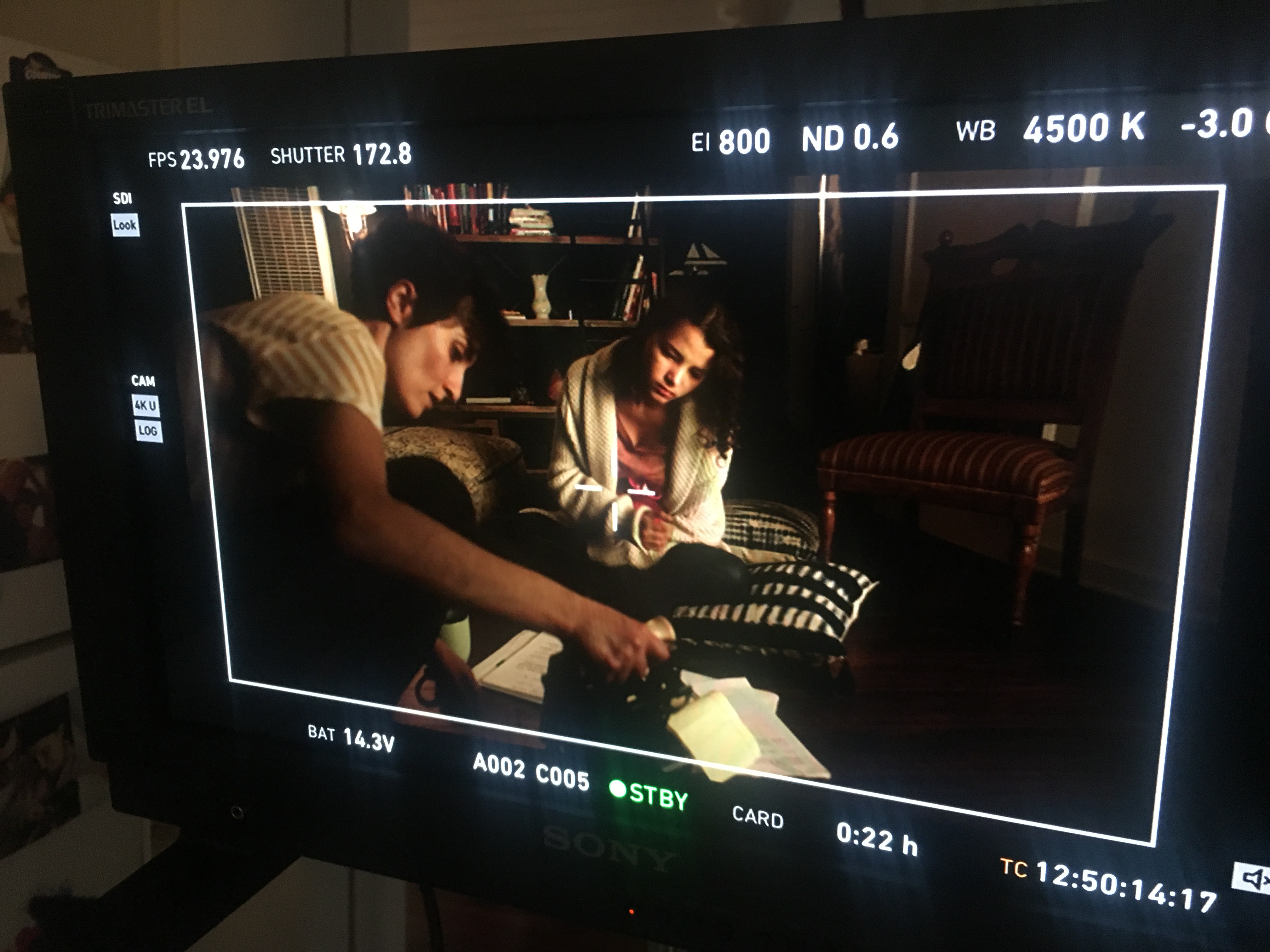
Photo credit Rebecca Lando
M: There's something very approachable about the way you captured each actor. Were most of the shots pre-planned or did you improvise?
I like getting organic performances out of actors especially for a concept like this. Because we were approaching it in a very realistic way, my goal was to capture what seemed like real moments out of their daily lives. I usually try to plan the environment as much as possible, but let the actors improvise while they are in that environment. For example, with the mom and baby scenes, once we composed the shot, if the baby was cranky I would tell the mom to try to calm the baby so we can get that shot. But if the baby was happy and smiling, I would tell the mom to play with her.
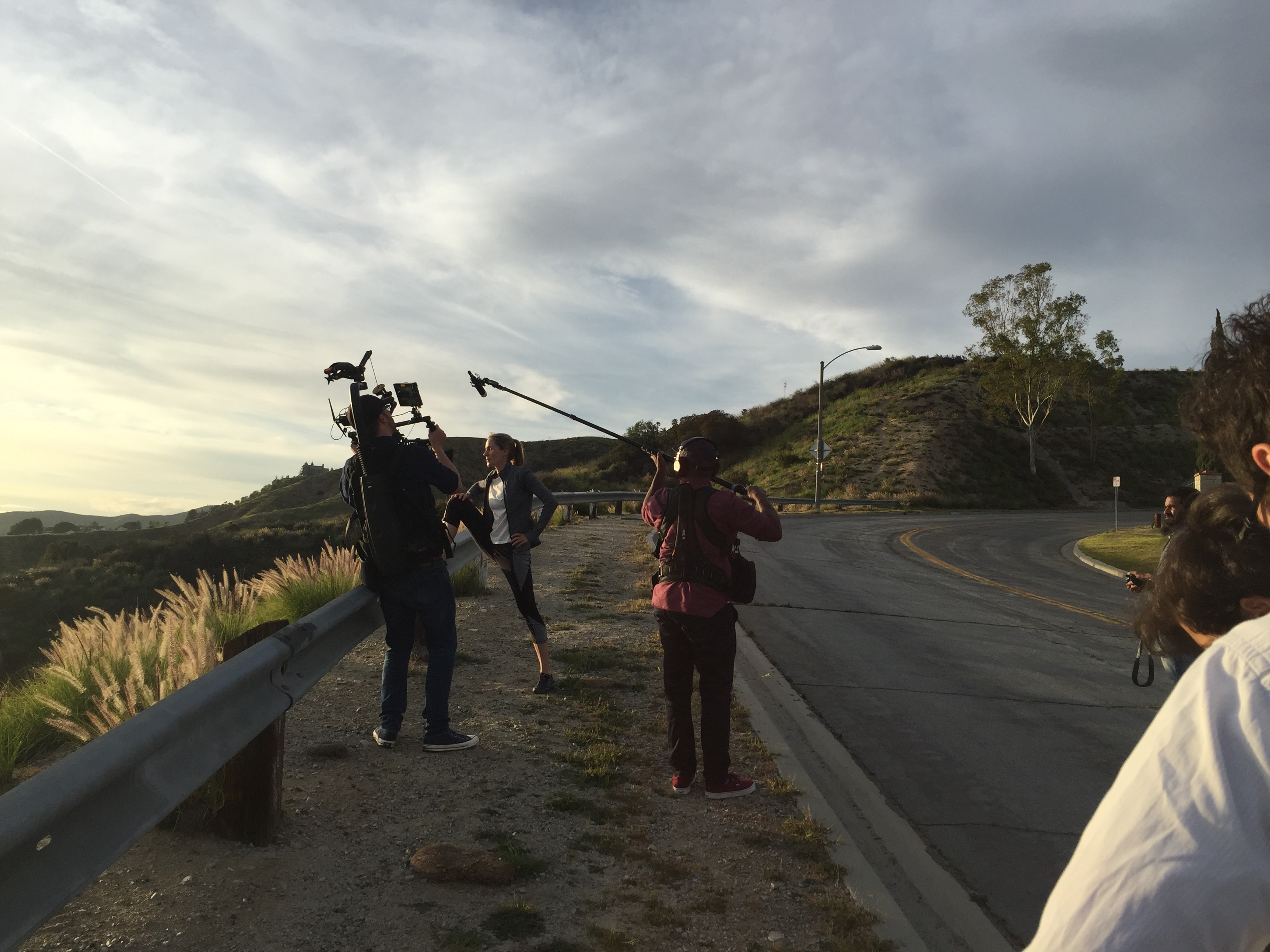
Photo credit Rebecca Lando
M: What do female filmmakers bring to the table in the commercial space, and what opportunities would you like to see more of for them?
Female filmmakers bring a female perspective that is very absent in the commercial space, especially for female-related topics such as period pain. It is a well-known fact that currently, our industry is very imbalanced. Females are almost always vastly outnumbered on sets. But I’m hopeful that with the recent changes, things are moving in the right direction. To step back and look at the big picture, I don’t want to see female filmmakers only getting the female-related topics; I want to see female filmmakers direct all kinds of commercials and be seen equally capable as their male counterparts.
-------
We couldn't agree more with Sonia. Data from both film and advertising industries show the number of opportunities granted to female directors, producers and writers are far fewer than their male counterparts. At Tongal, we believe female filmmakers should have equal access to exciting, career-changing opportunities and we're proud to say that over 42% of filmmakers who've created content with us in the past two years have had at least one female producer or director on their team. We realize there's still more work to be done, but it all starts with having a more open process and open dialogue with our creators.
So in that spirit of openness, what types of projects would you like to see more of on Tongal?


